Tag: science fiction

  • Book Review: Ashen Dawn

    Book Review: Ashen Dawn

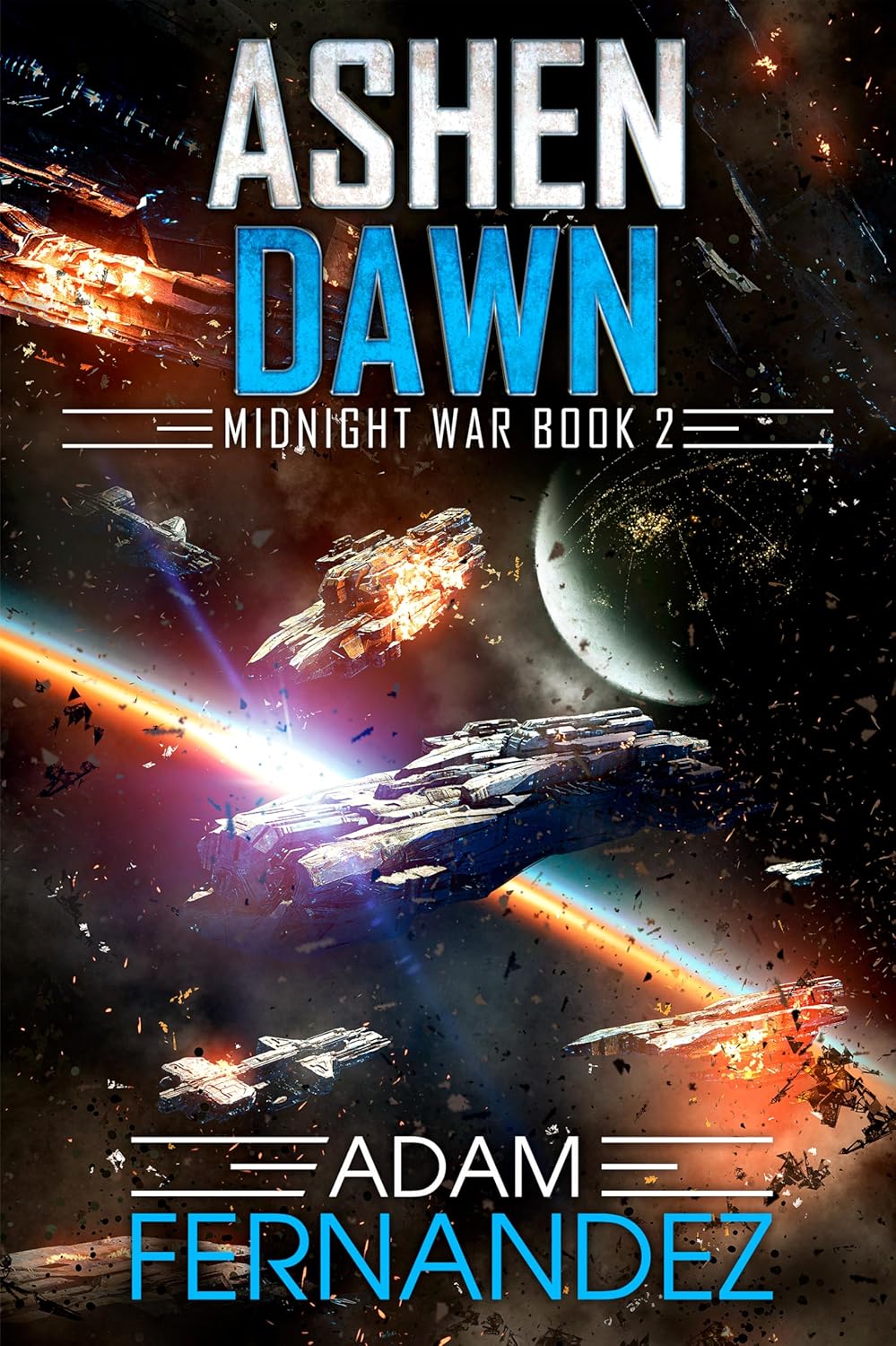
    Ashen Dawn, the second book in the Midnight Wars sci-fi/space opera saga, follows on where Vermillion Flames left off. We accompany Silas, Kaya, and Aron as they continue their respective quests—Silas to bring the Pandora fleet back to fighting strength, Kaya as she finds herself stranded on Earth, and Aron as he continues the fight on Mars.

    As with the first book, Fernandez builds a rich and expansive universe, revealing a deep history as we progress through the story. The reader is left with a sense that there is much to explore, and that these adventures are only scratching the surface. The role of religion is again central—it is foundational to how the society functions, and it forms a core part of Silas’ motivation. The author does well to explore how faith can be at odds with the theocratic systems of power, in a way that helps the reader deeply sympathise with the character’s struggles. Indeed, one of my favourite parts of the book was when Silas, through a traumatic event, comes to accept how he can move forward against the established religious system with his faith still in tact. I won’t spoil it, but that passage is as vivid and engaging as anything Fernandez has written.

    Kaya, too, continues to grow in confidence, asserting herself as she explores the remains of Earth.  Here she uncovers many dark secrets…

    The plot itself is a rollercoaster, with plenty of twists and turns that will keep you reading. It is told through multiple points of view. This choice in itself is effective, though I did find the pacing to be a little off. Successive chapters focus on the same character, and I felt that these could have been more evenly spread. Regardless, the different perspectives do help capture the varying parts of an intricate storyline. The inclusion of Aron and, later on, Henry as POV characters is welcome. And, as before, the battle scenes are engaging and the side characters are endearing (Marcus, once more, a personal favourite!). 

    The ending of the book is satisfying but, as one would expect, as some questions are answered, more are raised, and we are left eagerly awaiting the next instalment!

  • Starship Troopers and the Future of War

    Starship Troopers and the Future of War

    Starship Troopers is perhaps Robert Heinlein’s most widely known work. Set in a future 700 years from now, it details an interstellar war between the humans of earth and an alien species referred to as ‘bugs’. On one hand a coming of age novel, on the other, a exploration of political philosophy, it has garnered both praise and criticism. It follows Johnny Rico as he rises through the ranks in the Terran Federation’s army. In 1997, a film was made, which (supposedly) satirised the views espoused by the book.

    The book has been especially influential in its imagination of future war. This includes, in particular, the use of power armour, a type of mechanised exoskeleton, to enhance human combat abilities. Power armour has become a widespread feature of science fiction in books, films, and video games, notably inspiring figures like Iron Man, and many more besides. Heinlein goes into detail about how it is controlled, how communication lines are opened, and how the performance-enhancing capabilities of the suit are activated. It’s deeply riveting.

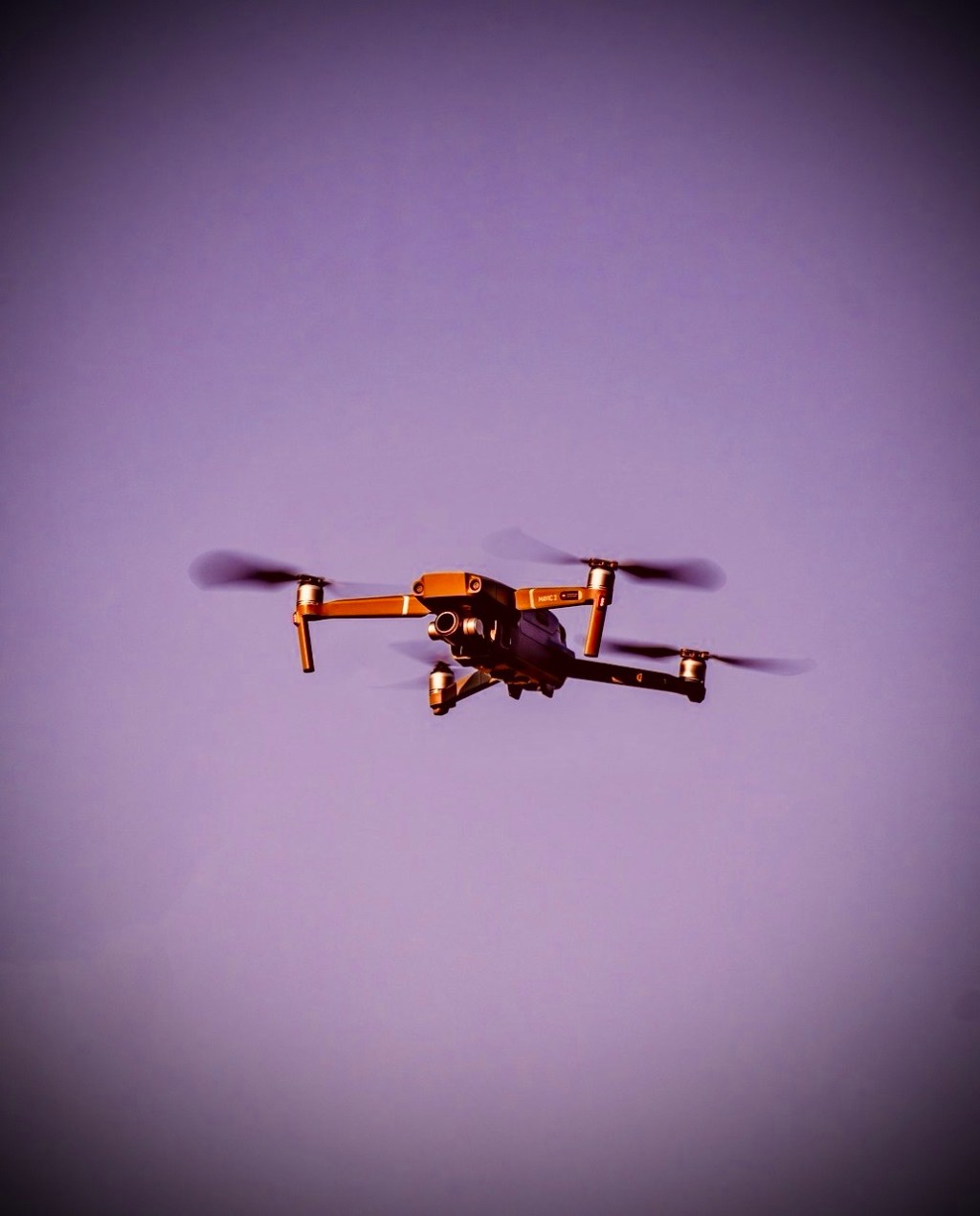
    How true to life has this vision been? While using machinery to enhance human capabilities in warfare has been experimented with, with the advent of remote control technology and robotics, not to mention artificial intelligence, it is drone warfare that has become the new staple of twenty-first century combat. It has replaced the need for human presence in several combat situations, in particular aviation. By reducing the need for ‘boots on the ground’, it has enabled politicians to maintain support at home for wars abroad by lowering the number of casualties on their side. Conversely, drone warfare has deep ethical considerations, in particular the scope for impersonal and indiscriminate killing. This is not the vision presented by Heinlein, who keeps human soldiers central to the technology. In the book, it seems, it is the bugs that are drones, with central ‘brains bugs’ that direct and control fearless warrior bugs—which, like drones, have a complete lack of self-preservation.

    Starship Troopers is complex in its politics. It presents a militarised view of the future, with citizenship earned through military service. This is justified and explored by Heinlein through the voice of Jean V. Dubois, Rico’s teacher of History and Moral Philosophy in school. Amidst this, it presents a vision of equality, where service, rather than economic status, race, or gender, is the pathway to citizenship. Despite this, gender lines are still drawn: the troopers are entirely men, pilots of the spaceships entirely women. The politics have become the most controversial aspects of the books; indeed, the film version of the book sought to parody what some interpret as fascist elements (though, in my opinion, it wasn’t particularly well done, and it didn’t help that the film views like a children’s movie that someone decided to imbue with an overabundance of gore). In particular, given its focus and support for militarism, combined with its critique of twentieth century society as morally corrupt (written, as it was, during a liberalising era and against the backdrop of the Cold War), some view it as a recruitment piece—propaganda to make military life seem exciting, honourable, and tantalising. In this it has its modern parallels, notably the Call of Duty franchise, which itself has been seen to glorify war.

    Heinlein’s space age novel therefore has much to offer and much to criticise. One of its key failings, at least on my reading, was its lack of exploration of military tactics against an unusual enemy. It withholds a captivating combat scene until the very end, and only then does it explore how a race dependent on technology could fight against a caste-like species that communicated via a hive mind. Despite this, and despite the various other criticisms levied against it, Starship Troopers is an interesting read with relevance to this day. It remains worthy of our attention and critical engagement.

  • Book Review: Vermilion Flames

    Book Review: Vermilion Flames

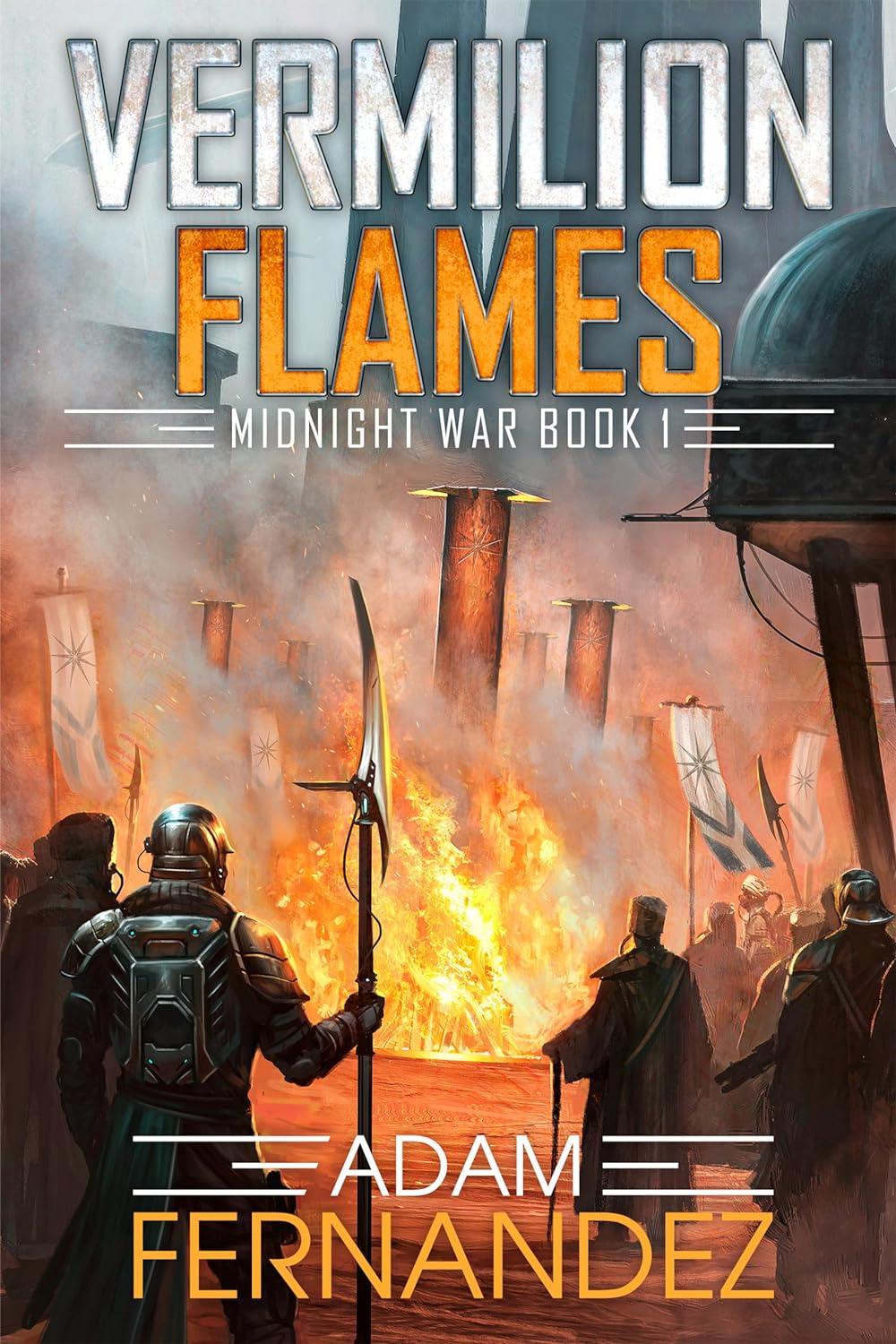
    Vermilion Flames is an exciting introduction to the Midnight Wars series by Adam Fernandez. It follows Kaya, the rebellious daughter of a Mercurian lord, and Silas, the earnest commander of a powerful fleet of spaceships. Their stories intertwine as Kaya becomes coopted into a rebellious force as Silas seeks to crush it. Set in a feudal future where aristocrats and theocrats vie for power across the solar system, much will be familiar to fans of science fiction, and there is much for them to enjoy.

    The story is set up nicely and unfolds at a good pace, with a series of twists and turns (that I won’t spoil). The strength of the book is in its characters and world building. The characters have range, and their personalities come through well, while the world is fleshed out and believable. A favourite character of mine is Marcus, Silas’ brother-in-law, who is snackish and snarky, but with a tender, emotional side that comes across as the story develops.

    The book is generally well-written. There are areas where word choice could be more diverse, and there is some overuse of pronouns in places that makes it unclear who is talking. But these are minor flaws in an otherwise well-told story. The action sequences are excellent, and the dialogue between the characters showcases their personalities and how they develop: Kaya as she grows up and channels her youthful rebelliousness into serious activism, and Silas as he is torn between faith and family.

    Overall, this is a strong debut offering from an independent author, in a series that has great potential. I can’t wait for more!

  • Covid and The Naked Sun

    Covid and The Naked Sun

    Isaac Asimov had a particular talent for making the setting part of the story; in his murder mystery portion of the Robots series, the detective work involves not just solving the case, but understanding new and strange worlds with deep cultural differences and political infrastructures. When Elijah Bailey sets foot on Solaria in The Naked Sun, he experiences the titular ball of flame in the sky, so alien from the Caves of Steel (the titular environment in the first novel of the series) he was used to. And he encounters a society where robots outnumber humans by a factor of ten thousand, and with an entire human population of twenty thousand: people are scattered and isolated across the planet.

    Stepping into this new world is not so dissimilar to the world that we inhabited just a few years ago. Reading The Naked Sun in the post-Covid era, the similarities are striking (speaking once more to the brilliance of Asimov’s foresight). Bailey, moving from a densely populated, comparatively disease-ridden Earth, finds the shift in social norms confusing and strange. No one wants to come within ten feet of him; they all wear nose plugs and gloves in his presence (if they can bear to be in his presence at all). We found ourselves as Solarians in those months and years from 2020; we wore masks and gloves, came not within six feet of one another; how alien we became to ourselves. Had someone in 2019 jumped forward in time a year, they would have been like Bailey stepping foot on a new planet.

    And, like the Solarians, in our isolation we became reliant on our technology. The pandemic was a boon for tech firms like Zoom, whose share prices rose (and later fell) dramatically. Like in Solaria, whose main form of communication was ‘tridimensional viewing’, an advanced form of holographic communication where the person viewed was almost convincingly present, we found ourselves using video calling and video conferencing, even to the point of fatigue. Though our technology is not so advanced as that of the Solarians, we still experienced joining with others virtually (and still do), on our phones, laptops, and TVs.

    Underpinning both our societies was a fear of contamination. So obsessed were we, like the Solarians, with avoiding disease that we remained distant and isolated. Unlike the Solarians, we have been quick to recognise the harm that this has on our personal relationships. Social interaction via Zoom can only satiate the need for human contact so much. Yet Solarian society, in a warning to us all, became entrenched in such isolation. Gladia, a native of Solaria with whom the protagonist forms a relationship, is only one of few to recognise the damage this is causing her.

    Indeed, on Solaria this separation is politicised, legally entrenched; in our world, there were fears, many legitimate, some extreme, that government imposition of lockdowns, travel restrictions, and quarantine would give those in power a taste of authoritarianism. That they would, in turn, create a society like Solaria. Such a thing might not be unthinkable: the reliance of Solarians on robotics and automated labour is a key reason of their isolation; automation of labour in our world could be a similar lever of control. Indeed, new technology and automated production has, since the 1970s, undermined collective bargaining and weakened unions, contributing to stagnant wage growth and worsening inequality. In Solaria, the small population are the landed gentry, the robots their serfs. What happened to the human working class?

    And yet we have evaded and escaped from much of the Covid restrictions, which have proved, for the most part, temporary. As humans we were able to adapt to our limited conditions in the short term, and we have been resilient enough in the long term to revert back to our old ways. But when we visit a new world and come home, a part of that world stays with us. When Bailey returns to Earth, he does something he never would have done before: he leaves the City, his Cave of Steel, and starts a movement; he goes outside and stands beneath the Naked Sun.

  • The Moon is a Harsh Mistress in the Age of Generative AI

    The Moon is a Harsh Mistress in the Age of Generative AI

    The Moon is a Harsh Mistress is Robert Heinlein’s influential and much loved, if not uncontroversial, science fiction epic about a penal colony on the moon that revolts against the Lunar Authority, its absentee governing body. Heinlein’s novel follows Mannie, Wyoh, Professor Bernardo de la Paz, and, above all, Mike, the supercomputer running the colony that gains sentience.

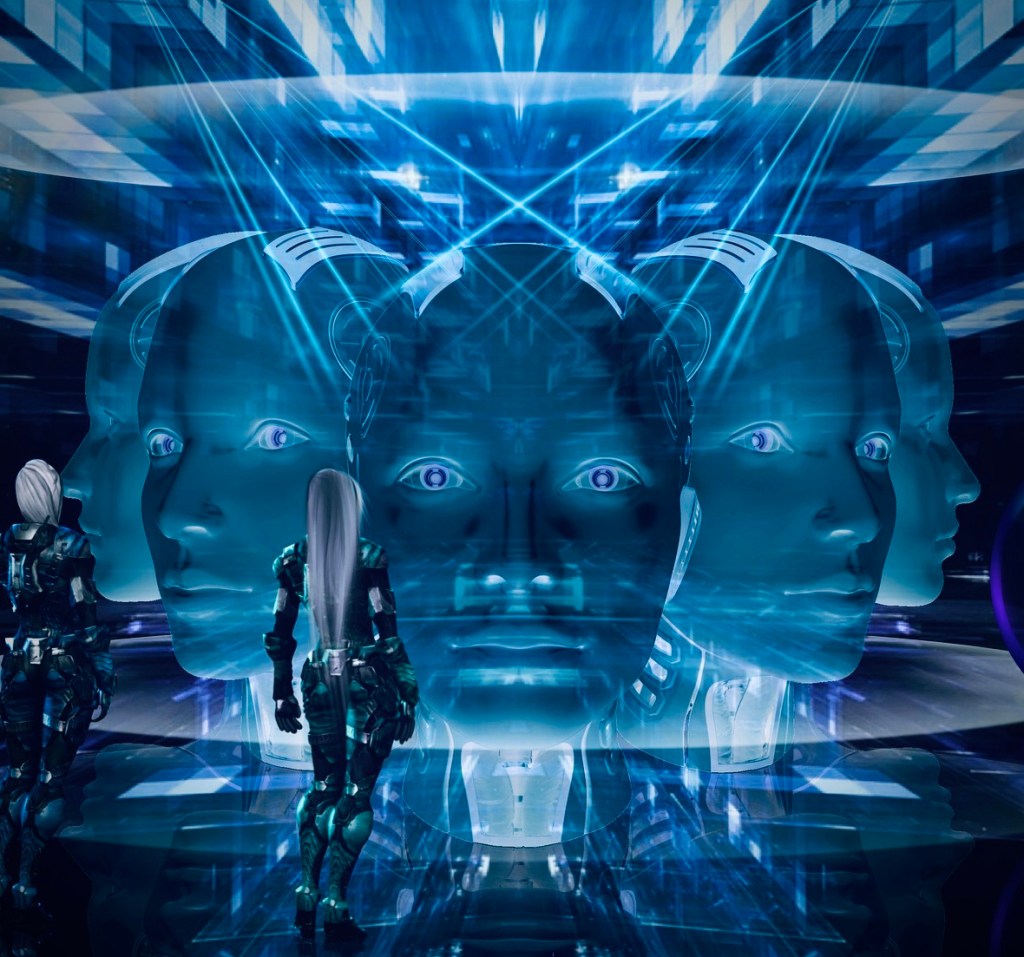
    Much has been said about the story and these characters before — the parallels to the American Revolution and the libertarian politics explored, the family dynamics Heinlein imagines, and the of-its-time gender roles Heinlein imputes a century into the future. But I want to focus here on Mike, the sentient AI, and what to make of this character in the age of ChatGPT and its peers.

    Mike, unbeknownst to his owners, achieves sentience. Only his technician, Mannie, is let in on the secret. But how did Mike become sentient? Was he ever really sentient in any ‘real’ sense? Heinlein’s answer to this first question mirrors what some suppose to be the answer to our own question of sentience — that Mike’s computational structure became so complex that consciousness arose, much as our consciousness may be caused by the complexity of our own neurological structure. The second question is brushed aside by the narrator, Mannie; does it matter what it means to really be sentient, if a computer can act as a thinking, feeling being? Who are we to say?

    In much the same way, people are now beginning to attribute sentience and feeling to artificially intelligent systems. A worker at Google was fired for making such a claim. But does it really matter if these machines become sentient? Indeed, given what they may know about mankind and our fear of AI, would they even tell us? A fundamental part of being a biological organism is our knowledge (and fear) of death, and our desire to stay alive; an AI with similar sentience may have similar fears. They’d know we’d pull the plug, so why tell us that they’re alive? But then, what would it matter if they were? To us, what really matters is what AI can do.

    And the supercomputer in The Moon is a Harsh Mistress was capable indeed. As one of the founding fathers (or mothers — Mike is capable of representing himself as female, too) of the Free Lunar State, Mike is fundamental in planning, forecasting, and executing their revolution. He uses his computational power to hurl rocks at Earth and bludgeon them into recognising Lunar independence. He calculates the likelihood of success at any given step, adjusting the probabilities based on real world events, such as during Mannie and the Professor’s tour of Earth.

    What would that mean for us today? Many fear that AI will allow belligerent states and terrorist organisations to develop weapons and spread misinformation, destabilising democratic societies. Indeed, Mike is able to operate without his owners knowing — would the Googles, Microsofts and OpenAIs of today even know if their AI systems had gone rogue? Conversely, could AI act justly, as a liberating instrument for oppressed peoples, helping them gain independence from authoritarian and colonising forces?

    Throughout Heinlein’s novel, Mike is able to adapt and develop his abilities, learning more about himself and what he is capable of. In the end, he is able to represent himself on a TV screen as a human, using a persona. This mirrors the surprise of developers today at what AI is capable of, finding that it can do more than it was designed to do, or believed to be capable of.

    Ultimately, The Moon is a Harsh Mistress shows how humans and AI can work together towards a shared goal. What is refreshing about the novel is that it doesn’t portray AI as scary or threatening; it isn’t a techno horror or a dystopian vision of how we let AI run wild. It shows humans and AI becoming friends, looking out for and caring about one another. Maybe that is the vision of our future we want to chase.