Tag: science fiction

  • Book Review: Spell or High Water

    Book Review: Spell or High Water

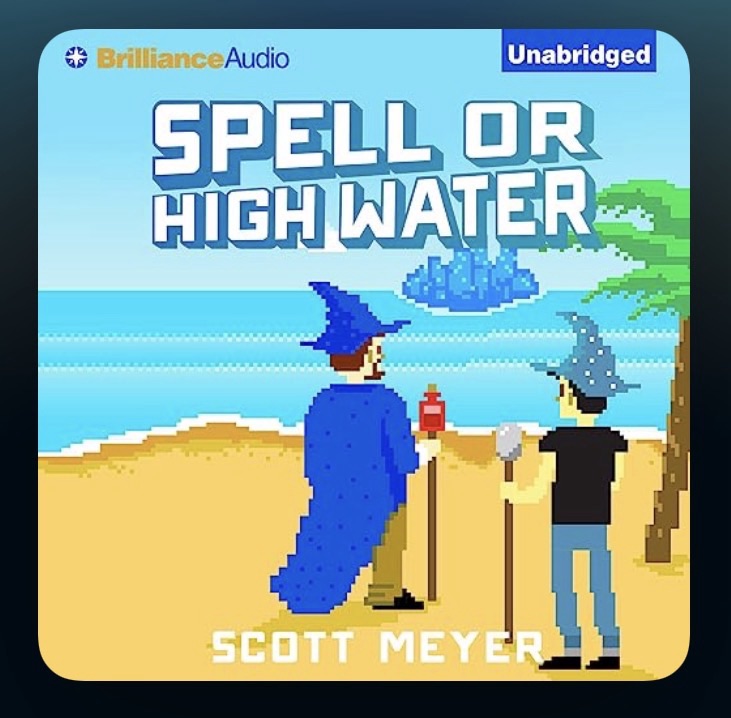
    In the follow-on to Off to Be the Wizard, we head with Martin and Philip to Atlantis, the island refuge where the women who find the magical computer file go. It is a flourishing paradise run by Brit the Elder, Brit the Younger (they’re the same person), and Ida. An attempt on Brit the Younger’s life (and thus, implicitly, Brit the Elder’s) puts Martin at the heart of a zany mystery.

    For me, I felt like Meyer is finding his footing more in this book. The humour is confident and consistent, capturing a silly tone with characters in absurd situations, balanced against genuine stakes with real consequences.

    The mystery at the heart of the story unfolds nicely, with enough surprises along the way. Meyer also takes a structural risk by switching perspectives, and it pays off. It opens up the world and gives the narrative more texture without losing momentum. In particular, Jimmy returns, along with the two hapless agents who (for better or worse) continue their ‘good cop, bad cop’ routine. Seeing their perspective adds to the broader intrigue and suspense.

    At the conceptual heart of the book is time travel. This was hand-waved away in the first book but gets more attention here. Competing interpretations of how time travel works are how stakes are raised in this murder mystery. The nature of time travel is explored in a way that serves the plot. (Because if Brit the Elder is here, that’s proof Brit the Younger can’t be killed… or is it??)

    Jimmy remains one of the more compelling characters in the series. He’s complex, unpredictable, and never quite what you expect. My one reservation is Martin and Gwen’s relationship, which feels a little forced. It’s not particularly clear why they’re into each other.

    This is a minor note in an otherwise enjoyable read, and it doesn’t significantly detract from a sequel that provides an entertaining extension of Meyer’s geek culture-inspired world.

  • Book Review: Off to Be the Wizard

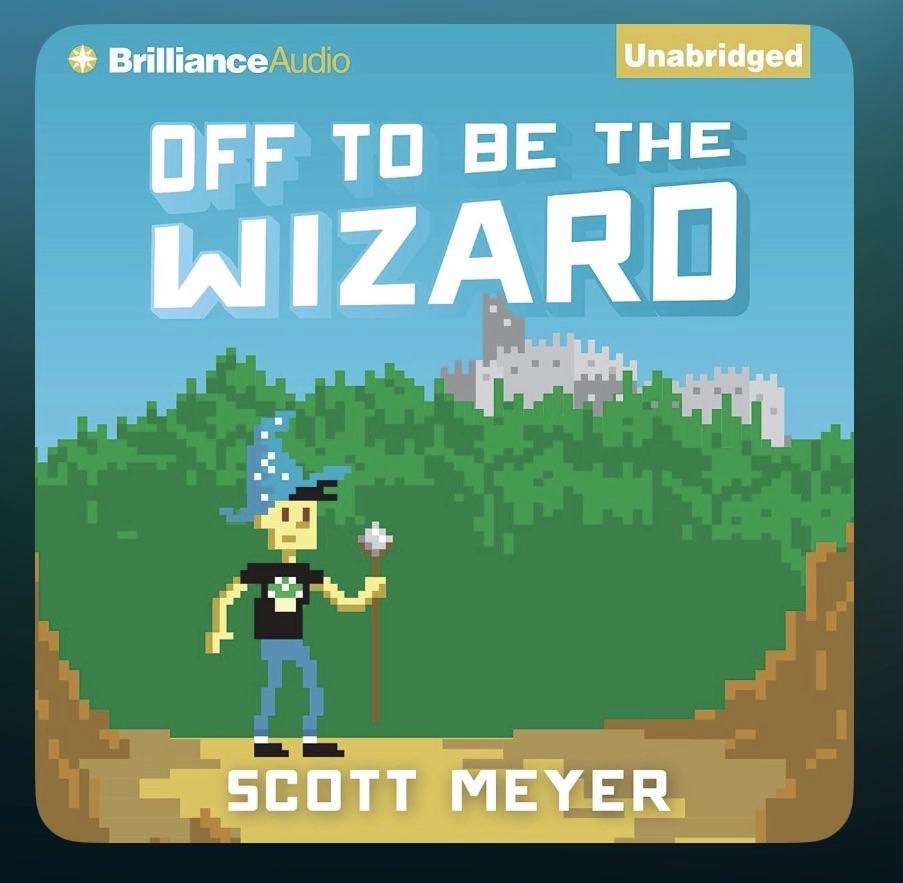
    Book Review: Off to Be the Wizard

    Martin Banks is an unremarkable young man until he discovers something extraordinary: a file that appears to contain the source code of reality itself! Naturally, he does what you or I might do; he uses it to give himself more money. When this attracts the wrong kind of attention, he takes the next logical step and flees to medieval England to live as a wizard. Here he meets Philip and a host of other men from the future who all had a similar backstory.

    Off to Be the Wizard is a lot of fun. Meyer keeps the time travel logic deliberately light rather than getting bogged down too much in the mechanics. This is, at its heart, a comedy adventure, and Meyer, to the benefit of the story, keeps things moving.

    Scattered throughout are some lighthearted nods to nerd culture, with references that make sense for the characters and the book. It also handles its notably male-dominated world pretty well, wherein women who discover the file are redirected to Atlantis rather than staying in the ‘historical’ past. This is a neat solution that acknowledges the uncomfortable reality that women practising magic has rarely ended well across history.

    But what impressed me most is how Meyer smuggles in some genuinely weighty themes, such as free will versus determinism and nihilism, without ever losing the lighthearted energy that makes the book so enjoyable. The plot structure also makes this feel earned. The early sections focus on Martin finding his feet among the wizards, but there are hints placed carefully along the way that build toward something darker. By the time the real conflict emerges, Martin’s growth feels genuine and purposeful.

    The characters are brilliant, all memorable and (mostly) likeable, even comic book-style villain Jimmy, and the comedic moments land well. Off to Be the Wizard is a very enjoyable read and it gets a hearty recommend from me!

  • Book Review: Stranger in a Strange Land

    Book Review: Stranger in a Strange Land

    After reading (and enjoying) Starship Troopers and The Moon is a Harsh Mistress,I wanted to continue reading Robert Heinlein’s notable works. This time, I went for Stranger in a Strange Land. It’s an essential part of the Sci-fi genre, and it was good to explore it. It was also satisfying to see the word ‘grok’ in its original context (even if the new AI model has tainted the word).

    I found the first of the book to be absolutely captivating. It felt like Heinlein at his best, and had everything I loved about his other books. The politics and political manoeuvring was sharp and dynamic, the characters are varied and interesting. Jubal Harshaw felt very similar in style to the Professor in The Moon is a Harsh Mistress. I particularly enjoyed how the characters navigated the return of Valentine Michael Smith (the Man from Mars, and titular stranger). It provides a good focal point to explore those questions about society, religion, and human nature.

    The second half loses a little momentum. I read the original, unabridged version, which was released posthumously. I wonder if the second half was where more content was cut down for the initial publication. The point Heinlein makes about religion, the church and commune become clear fairly early, and so it doesn’t really develop. Perhaps it’s because what was provocative in the 1960s (free love, polyamory, critiques of organised religion) isn’t quite so today. These concepts are more widely discussed, if not universally accepted!

    The book doesn’t really grapple with the darker realities of cults, particularly those centred around sex and charismatic leaders. There’s no real exploration of exploitation, consent, or how vulnerable people can be preyed upon, themes that feel glaringly absent from a modern perspective.

    Still, there’s something about reading a book that was controversial sixty years ago and finding it tame today. Whether that speaks to Heinlein’s foresight or to the book’s cultural impact (or both), it’s worth the read simply to understand that evolution.

  • Book Review: Project Hail Mary

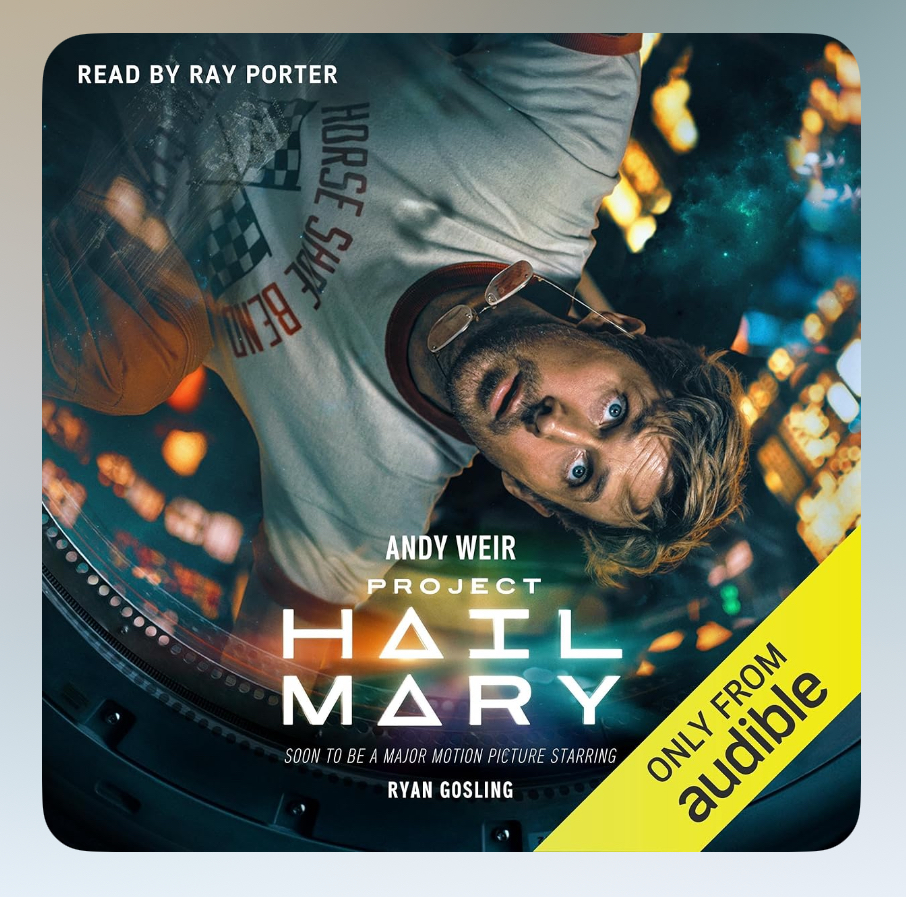
    Book Review: Project Hail Mary

    I’m a big fan of The Martian. I enjoyed Artemis. But I was blown away by Project Hail Mary. I went in knowing nothing about it—I didn’t even read the blurb. And I think that was the right thing to do. The plot was unveiled like a true mystery adventure. If anyone wants the same experience as me, stop reading here, and just take my word for it that it’s worth your time!

    Andy Weir’s latest sci-fi novel opens with our protagonist waking up with complete amnesia aboard a spaceship. Safe to say, amnesia has been done (All My Circuits, anyone?). But the way Weir uses the memory loss to gradually reveal both the present crisis and the backstory is excellent. The pacing was just right, and all the pieces of the puzzle, from why humanity is facing extinction, how our narrator ended up alone in space, what his actual mission is, all slowly click into place alongside his returning memories.

    What absolutely sold me on this book, though, is Rocky. Creating a compelling alien character is incredibly difficult (how many different alien species have sci-fi writers conjured up?). But Weir manages to bring this spider-like creature to life in a way that feels both genuinely alien and deeply relatable. Rocky isn’t just a cool biological concept (though he is that too). He’s impatient, intelligent, funny, and flawed. The sections exploring how they learn to communicate reminded me strongly of Arrival, in a good way. And I loved watching their friendship develop as they worked together against a threat to both their species.

    As you might expect, Weir’s protagonist is… very similar to his other protagonists. If I have one criticism, it seems he can only write one main character: the brilliant-but-anxious, funny, slightly neurotic scientist. Luckily for Weir, I like this character! As with The Martian, this kind of character is executed well. His voice is engaging and the he scientific problem-solving is immensely satisfying. (I love that Weir makes me feel like I’m secretly learning while being entertained!)

    And in a world of sci-fi where in so many stories first contact means invasion and destruction, Project Hail Mary offers something refreshingly different: the idea that when faced with extinction, different species might choose cooperation over conflict. The plot escalates organically and believably, the challenges build, the emotional complexity is just at the right level… It’s one of those where you know they’re going to get through it, you just don’t know how, or at what cost.

  • Book Review: The Restaurant at the End of the Universe

    Book Review: The Restaurant at the End of the Universe

    The Restaurant at the End of the Universe by Douglas Adams is full of the same zany, unpredictable storytelling that made The Hitchhiker’s Guide to the Galaxy such a hit. 

    What I love most about this book is how the book jumps from one impossible situation to another. I had no idea where the story was going to go, and neither did the characters. This is made possible by the technology within Adams’ universe, whether it be teleportation, time travel, or reality manipulation. I think the thing that makes it work as a narrative device is that the stupid, unpredictable situation the characters find themselves in always makes things harder, or worse; they might be rescued from one situation, but find themselves jumping out of the frying pan into the fire. This makes it really effective storytelling.

    I think the character work wasn’t as strong as the preceding novel. Marvin remains one of the best characters in modern literature, and I really enjoyed having large chunks of the story told from Zaphod’s perspective. His journey to meet the ruler of the universe revealed some great backstory. But Arthur, Ford, and Trillian’s storylines were undeveloped and not quite as interesting by comparison.

    The ending was a little flat for me, as well. Zaphod finally meets the ruler of the universe and, [SPOILERS], it turns out he doesn’t have any idea that he’s making decisions that impact the entire universe (a universe the ruler isn’t sure exists). I get the joke Adams is making, but the execution, especially how quickly Zarniworp becomes frustrated, didn’t hit for me. Similarly, Arthur and Ford wandering around prehistoric Earth was a bit of a drag. That said, the revelation of the Ultimate Question was exactly the kind of comic deflation that worked really well.

    I’ve been reading a lot of Terry Pratchett and Douglas Adams recently. I’m still at the starting point of my journey through their respective universes, but I’m finding myself preferring Adams’ humour and writing style at the moment (though don’t get my wrong, both are fantastic). Where Pratchett sometimes breaks the fourth wall with references to our world, Adams creates alien societies that mirror our own absurdities without winking directly at the reader. This makes the satire feel more integrated and immersive.

    So, onwards I journey! Next stop: Life, the Universe and Everything.

  • Book Review: Make Room! Make Room!

    Book Review: Make Room! Make Room!

    I was gifted Harry Harrison’s 1966 dystopian novel Make Room! Make Room! for my birthday and I wasn’t sure what to expect. I knew it was the basis for Soylent Green (a film I knew the plot of but haven’t seen), but that was about it. It’s set in a future was millions of people are crammed together in small cities and, like many dystopian stories from the 60s, it’s eerily prescient, while at the same time despite its accurate predictions, things haven’t become as bad as the book expected. (We’ve already passed the population levels that Harrison predicted would lead to some kind of apocalypse.)

    The worldbuilding is where the book really shines. The author explores how welfare policies actually make overpopulation worse, and how religious attitudes get weaponised to prevent birth control, which is clever social commentary. I found myself thinking about our own political debates while reading, which shows how relevant the book remains.

    The characters fit well in the world, my favourite of which is Sol, an older man whom the protagonist shares an apartment with. He has a great story arc, transforming from someone just trying to get by to a genuine radical. The author also does a good job of showing how the system forces characters like Andy (the protagonist) and Tab (the bodyguard of the protagonist’s love interest) into jobs where they hurt people they care about. 

    While the worldbuilding and social commentary works well, Make Room! is let down by its plot. There is a detective story moving things forward but, unlike Asimov’s Robots series where the mystery format actually explores the sci-fi concepts, Harrison’s storyline felt completely disconnected from everything interesting about his world. There was a missed opportunity to explore, for example, how law enforcement works in an overcrowded world. 

    And while the social issues and overcrowding remain relevant, Harrison doesn’t find an alternative vision for how gender works (e.g., in the same way that authors like Le Guin or Heinlein have). Shirl and other female characters exist mainly as domestic workers or objects, not really as full participants. And in a way that didn’t quite feel like part of the social commentary. 

    So if you’re interested in dystopian fiction or want to understand 1960s anxieties about population and environment, it’s definitely worth reading. Just don’t expect the plot to be as compelling as the world Harrison builds around it.

  • Book Review: Artemis

    Book Review: Artemis

    There’s a lot to like about Andy Weir’s Artemis. Sci-fi plus crime thriller; spunky protagonist (who, yes, admittedly sounds a lot like the protagonist of Weir’s other novel, The Martian). Set in humanity’s first lunar city, the novel follows Jazz Bashara through a heist that could set her up for life—or set Artemis on a path towards its doom!

    I found Jazz to be assertive and entertaining. There’s a bit of cliche in her backstory—brilliant and intelligent, but not living up to her full potential. But her voice and her attitude make her likeable, and her relationships with others keep things interesting, and in particular her relationship with her father. Jazz also has a pen pal on earth, Kelvin, who we get to know through messages that intersperse each chapter. These start off in the past, but eventually catch up to the present, which means we learn about Jazz’s past mistakes and personal growth. But as the past meets present, Kelvin has an impact on the narrative itself. I thought this was quite a clever device.

    I thought the hard science was great, and I found the book to be genuinely educational, much like The Martian. The physics, from how welding works to oxygen production, are described in a way that makes the possibilities of living on the moon seem real. Maybe someone with more knowledge about the science might be able to pick holes in it, but for a layman I enjoyed it.

    At the heart of the story is a heist. This was well structured, escalating naturally from Jazz’s smalltime smuggling operations to a huge conspiracy. In true sci-fi fashion, Weir uses the setting to create constraints and opportunities that make the crime thriller vibes feel truly unique. Isolation, life support, limited escape routes—all these play a big part.

    And, of course, I enjoyed the nods to Heinlein’s The Moon is a Harsh Mistress (my favourite: we don’t actually like to be called loonies). And Weir is able to navigate the setting in a way that feels new, thinking more about the economics of the situation that the politics.

    Does this live up to the bar set by The Martian? Not quite. But I’d still recommend the read!

  • Book Review: Tress of the Emerald Sea

    Book Review: Tress of the Emerald Sea

    Tress of the Emerald Sea is a wonderful, layered adventure that evolves as the priorities of Tress, our main character, ebb and shift. Tress is a young girl from a barely habitable rock, surrounded by a sea of spores that turn into vines when they touch water. Her friend and love interest, Charlie, the son of the island’s Duke, is sent to the island of the King to be married. When he makes himself completely undesirable, the King sends him to the Midnight Sea (another of several spore seas, each with their own distinct properties) where he is captured by the fearsome Sorceress. 

    Tress, when she finds out, sets off on a grand adventure to save him. On the way, she becomes part of a pirate crew, driven by the fearsome Captain Crow, and meets Fort, Ann, and Salay, as well as Hoid, a world-hopping character of the wider Cosmere who is cursed by the Sorceress. As Tress seeks Charlie, she becomes embroiled in a conflict between the crew and their captain. This multi-tiered adventure keeps the story fresh and engaging. Of the people Tress meets, Ulaam in particular stands out as a delightful character whose presence brings fun and unpredictability to his scenes. An ear on your arm, anyone?

    One of the key strengths of the novel is how its conflicts are solved through different means. Some through combat, sure, but also through wit and quick-thinking. These keep the tension high in the right places, and show Sanderson’s skill in crafting a variety of situations and solutions for his characters. I am a massive fan of different ways of solving problems beyond force—the scene with Xixis the dragon was my favourite—so this scratched a real itch for me.

    The world building, as one would expect of Sanderson, is top-tier. The spores and how they function are cool and varied, and the way they are built into the story is very satisfying. Likewise, the narrative voice, provided by the cursed Hoid (who is rendered to something of a ‘village idiot’ with no fashion sense), connects the novel to the broader Cosmere. Hoid is witty and fun, and this keeps the narrative light. It is also refreshing to have the story told by a third party who is able to comment personally on what is happening without being the centre of the story. I did find some of Hoid’s observations to disrupt the immersion in places—e.g., the reference to ‘laptops’ being a key one. I get that this is supposed to broaden out the links to the world beyond, but, as someone unfamiliar with the rest of the universe, I found it a little jarring.

    Also, Tress’s character development, while clearly central to the story, does sometimes suffer from exposition that I found a little heavy-handed. There are moments when the narrative explicitly states that Tress is changing or growing, even when I think readers can see these changes organically. It’s a little unnecessary and on-the-nose. And, lastly—SPOILERS—certain plot elements create minor inconsistencies that detract from the otherwise cohesive world. For example, the Sorceress has inhabited the planet for years and possesses advanced knowledge of technology that Tress is only beginning to develop. When Tress offers to trade this technology, the Sorceress dismisses it—yet later, her guards are defeated by this very same technology. This inconsistency feels like an oversight that somewhat weakens the internal logic of the story.

    Regardless of some minor flaws, Tress of the Emerald Sea is an easygoing, refreshing sci-fi/fantasy adventure with a cast of loveable characters. The story is accessible and easy to follow, is told with humour, and sits against a well-fleshed-out and intriguing world. It gets a big ‘recommend’ from me!

  • Why Fantasy, Why Now

    Why Fantasy, Why Now

    The world is a little bit on fire right now. Climate change is getting worse. Politics have taken a shift to the right, threatening the rights of historically marginalised peoples. Technology is developing at a rapid pace—creatives are being displaced, jobs are under threat.

    In this world, Fantasy occupies a special place. It offers an escape, yes, but not just escapism—it’s a lens through which we can view and process our reality.

    Firstly, Fantasy gives us the freedom to isolate a problem and task a character with finding a solution. The problem can reflect something we face in our real world. In doing so, the reader is given the opportunity to consider the solution space. With our protagonists, we explore what the various options are.

    From Frodo in The Lord of the Rings to Vin in Mistborn, our heroes are challenged to take on evil and oppression. They try different ways to solve their problem. They fail, and get back up—this is what keeps them relatable, and the reader cheering them on—until they find something that works. 

    And it isn’t just about finding strength and power: Kvothe in The Name of the Wind shows us how intelligence and wit can be used to fight a struggle against poverty. We seem him struggle at numerous times, and we’re with him as he explores ways to attend the University, despite his background.

    In most stories, in the struggle between good and evil, good (usually) ends up on top. (Not always, but usually!) This gives us hope that the struggles we face will one day be resolved. We also learn the costs associated with different actions, the drawbacks, the mistakes—the things we may want to avoid rather than repeat. Through such works, we learn not just what to do, but what to avoid, and how to think critically about our own world’s challenges.

    Mistborn begins in a world where evil has already won, yet our heroes still find a path toward hope and redemption. Hope emerges here from a seemingly hopeless world. In contrast, Legends & Lattes reveals to us smaller victories, more personal, where an orc warrior who has tired of adventure can find fulfilment in opening a coffee shop (and in the relationships she forges along the way).

    A core aspect of Modern Fantasy is the exploration of oppression and difference, race and culture, sexuality and gender identity. Through Fantasy, people who may not have a voice in our world are given time to speak, to explore their concerns, to be heroes and represent the power to change. Above all, even though many of the creatures and peoples we encounter are not human, Fantasy helps us explore and understand our common humanity, our shared personhood and experience.

    Terry Pratchett’s Guards, Guards! and Men at Arms (and numerous other works, honestly, but I pick these as they’re fresh in my mind!) explores class discrimination and systematic inequality through the members of the City Watch. Here, peoples of different races and backgrounds and genders explore and overcome their differences in ways that are humorous, touching, and sincere. Similarly, the Edge Chronicles presents a world where many creatures (from Banderbears to Sky Pirates) must learn to coexist despite their differences.

    When the world around us gets too much, Fantasy allows us to disappear into a world unlike our own, full of mystery and adventure. But that does not mean we are running away. Like the heroes in our stories, we enter these worlds not to abandon reality, but to return changed and better equipped to face it. The best stories don’t just transport us: they transform us.

    Much of this is, of course, true of Science Fiction as well. Where Fantasy uses far off worlds and systems of magic to explore these issues, Sci-Fi uses far off futures and technological changes. Asimov’s Foundation series explores how civilisations can deal with large-scale crises; through Do Androids Dream of Electric Sheep? we question our humanity in a world of advancing technology; similar questions are raised in Asimov’s Baley—Olivaw series (my favourite being The Naked Sun) where the closing gap between robot and human, and the restructuring of human society around that, is explored.

    From finding solutions to considering mistakes, from giving marginalised peoples a voice to giving us the strength to face our world, literature is powerful. And it’s needed now, more than ever. So tell me, what about you? How have the stories you love changed you or given you strength?

  • Book Review: All Systems Red

    Book Review: All Systems Red

    In a corporate-dominated spacefaring future, planetary missions must be approved and supplied by the Company. Exploratory teams are accompanied by Company-supplied security androids, for their own safety.

    But in a society where contracts are awarded to the lowest bidder, safety isn’t a primary concern.

    On a distant planet, a team of scientists are conducting surface tests, shadowed by their Company-supplied ‘droid — a self-aware SecUnit that has hacked its own governor module, and refers to itself (though never out loud) as “Murderbot.” Scornful of humans, all it really wants is to be left alone long enough to figure out who it is.

    But when a neighboring mission goes dark, it’s up to the scientists and their Murderbot to get to the truth.

    All Systems Red by Martha Wells is the first instalment of the Murderbot Diaries, published in 2017. So, yes, I’m a little late to the party.

    This is my first Murderbot read, and my first Martha Wells read, too. And I loved it. This is short-form sci-fi at it’s best. The main character, Murderbot, is an endearing mixture of insecure, anti-social, and self-effacing. Murderbot is part machine, part organic, but wholly constructed as a security unit. And it is able to hack into its ‘governor module’, the part of its circuitry that forces it to abide by external commands and protocols, and become self-determining. 

    Despite its best efforts, Murderbot, who would rather watch endless serials from the entertainment feeds, becomes attached to the human scientists who have rented it from the ‘Company’, a corporate entity who supply subpar supplies and materials for interplanetary exploration.

    To keep the book short and accessible, the world-building is fairly light, focusing around familiar themes of rogue robots and hacked computer networks, in a universe dominated by corporations and corporate interests. This works well, and the reader is able to focus on the characters and their relationships to one another—Murderbot, of course, as our perspective character, but the others, too: the calm leader, the sceptic distrustful of Murderbot, the empathetic scientists keen to draw out Murderbot’s emotional side. Through their interactions with Murderbot, we get a window into their different personalities. We also explore our protagonist’s anxieties and struggles—showing that, despite being a SecUnit, Murderbot could be just as human as the scientists it’s protecting. Throughout, the robot bounces between analytical and emotional, detached and invested.

    At the heart of the plot is a mystery that unfolds at a steady pace across the pages. It thumps along with a steady staccato, with revelations at each stage that keen the reader interested. The unraveling of the mystery is satisfying and helps flesh out the broader world that Murderbot and the scientists are operating in. So, in learning more about the mysterious forces at play, we learn more about how the corporate universe works—an effective use of words in a short novel!

    This series came recommended to me by a number of people, and I am deeply thankful for that. The novel takes familiar sci-fi elements (AI, corporate dominance of space) and explores them through the lens of an engaging and relatable protagonist. I am happy to pass on the recommendation to anyone who hasn’t yet read All Systems Red!