Tag: fiction

  • Book Review: Tress of the Emerald Sea

    Book Review: Tress of the Emerald Sea

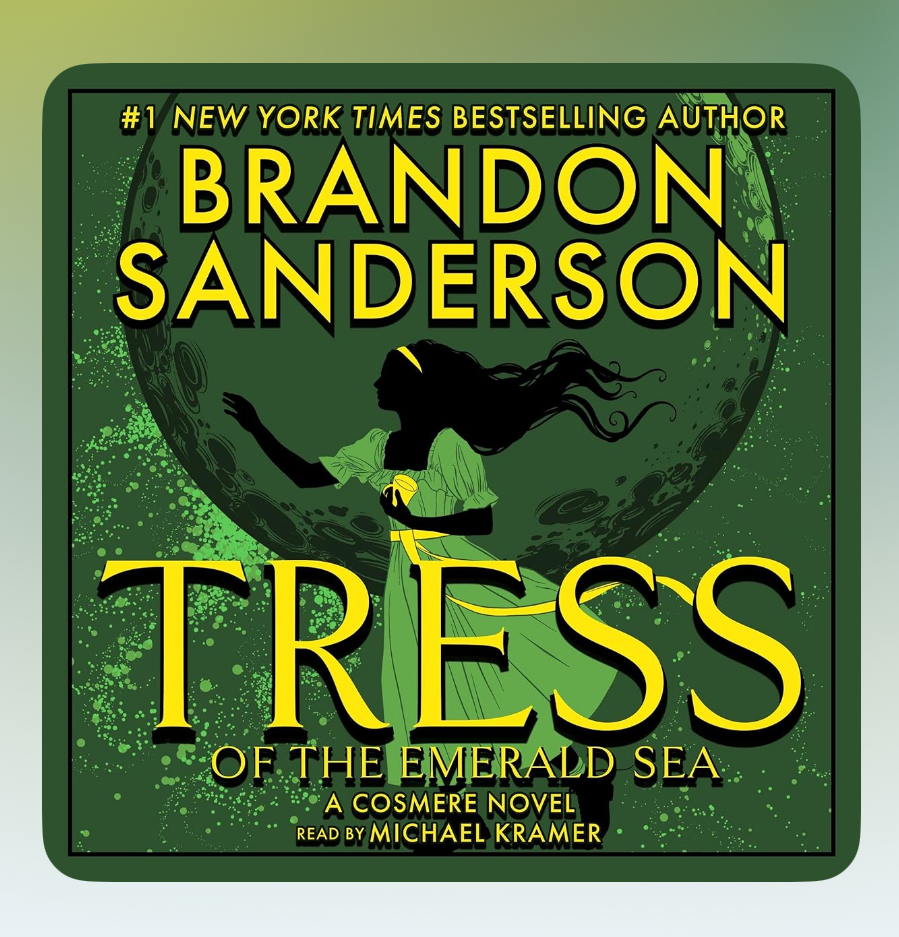
    Tress of the Emerald Sea is a wonderful, layered adventure that evolves as the priorities of Tress, our main character, ebb and shift. Tress is a young girl from a barely habitable rock, surrounded by a sea of spores that turn into vines when they touch water. Her friend and love interest, Charlie, the son of the island’s Duke, is sent to the island of the King to be married. When he makes himself completely undesirable, the King sends him to the Midnight Sea (another of several spore seas, each with their own distinct properties) where he is captured by the fearsome Sorceress. 

    Tress, when she finds out, sets off on a grand adventure to save him. On the way, she becomes part of a pirate crew, driven by the fearsome Captain Crow, and meets Fort, Ann, and Salay, as well as Hoid, a world-hopping character of the wider Cosmere who is cursed by the Sorceress. As Tress seeks Charlie, she becomes embroiled in a conflict between the crew and their captain. This multi-tiered adventure keeps the story fresh and engaging. Of the people Tress meets, Ulaam in particular stands out as a delightful character whose presence brings fun and unpredictability to his scenes. An ear on your arm, anyone?

    One of the key strengths of the novel is how its conflicts are solved through different means. Some through combat, sure, but also through wit and quick-thinking. These keep the tension high in the right places, and show Sanderson’s skill in crafting a variety of situations and solutions for his characters. I am a massive fan of different ways of solving problems beyond force—the scene with Xixis the dragon was my favourite—so this scratched a real itch for me.

    The world building, as one would expect of Sanderson, is top-tier. The spores and how they function are cool and varied, and the way they are built into the story is very satisfying. Likewise, the narrative voice, provided by the cursed Hoid (who is rendered to something of a ‘village idiot’ with no fashion sense), connects the novel to the broader Cosmere. Hoid is witty and fun, and this keeps the narrative light. It is also refreshing to have the story told by a third party who is able to comment personally on what is happening without being the centre of the story. I did find some of Hoid’s observations to disrupt the immersion in places—e.g., the reference to ‘laptops’ being a key one. I get that this is supposed to broaden out the links to the world beyond, but, as someone unfamiliar with the rest of the universe, I found it a little jarring.

    Also, Tress’s character development, while clearly central to the story, does sometimes suffer from exposition that I found a little heavy-handed. There are moments when the narrative explicitly states that Tress is changing or growing, even when I think readers can see these changes organically. It’s a little unnecessary and on-the-nose. And, lastly—SPOILERS—certain plot elements create minor inconsistencies that detract from the otherwise cohesive world. For example, the Sorceress has inhabited the planet for years and possesses advanced knowledge of technology that Tress is only beginning to develop. When Tress offers to trade this technology, the Sorceress dismisses it—yet later, her guards are defeated by this very same technology. This inconsistency feels like an oversight that somewhat weakens the internal logic of the story.

    Regardless of some minor flaws, Tress of the Emerald Sea is an easygoing, refreshing sci-fi/fantasy adventure with a cast of loveable characters. The story is accessible and easy to follow, is told with humour, and sits against a well-fleshed-out and intriguing world. It gets a big ‘recommend’ from me!
  • Why Fantasy, Why Now

    Why Fantasy, Why Now

    The world is a little bit on fire right now. Climate change is getting worse. Politics have taken a shift to the right, threatening the rights of historically marginalised peoples. Technology is developing at a rapid pace—creatives are being displaced, jobs are under threat.

    In this world, Fantasy occupies a special place. It offers an escape, yes, but not just escapism—it’s a lens through which we can view and process our reality.

    Firstly, Fantasy gives us the freedom to isolate a problem and task a character with finding a solution. The problem can reflect something we face in our real world. In doing so, the reader is given the opportunity to consider the solution space. With our protagonists, we explore what the various options are.

    From Frodo in The Lord of the Rings to Vin in Mistborn, our heroes are challenged to take on evil and oppression. They try different ways to solve their problem. They fail, and get back up—this is what keeps them relatable, and the reader cheering them on—until they find something that works. 

    And it isn’t just about finding strength and power: Kvothe in The Name of the Wind shows us how intelligence and wit can be used to fight a struggle against poverty. We seem him struggle at numerous times, and we’re with him as he explores ways to attend the University, despite his background.

    In most stories, in the struggle between good and evil, good (usually) ends up on top. (Not always, but usually!) This gives us hope that the struggles we face will one day be resolved. We also learn the costs associated with different actions, the drawbacks, the mistakes—the things we may want to avoid rather than repeat. Through such works, we learn not just what to do, but what to avoid, and how to think critically about our own world’s challenges.

    Mistborn begins in a world where evil has already won, yet our heroes still find a path toward hope and redemption. Hope emerges here from a seemingly hopeless world. In contrast, Legends & Lattes reveals to us smaller victories, more personal, where an orc warrior who has tired of adventure can find fulfilment in opening a coffee shop (and in the relationships she forges along the way).

    A core aspect of Modern Fantasy is the exploration of oppression and difference, race and culture, sexuality and gender identity. Through Fantasy, people who may not have a voice in our world are given time to speak, to explore their concerns, to be heroes and represent the power to change. Above all, even though many of the creatures and peoples we encounter are not human, Fantasy helps us explore and understand our common humanity, our shared personhood and experience.

    Terry Pratchett’s Guards, Guards! and Men at Arms (and numerous other works, honestly, but I pick these as they’re fresh in my mind!) explores class discrimination and systematic inequality through the members of the City Watch. Here, peoples of different races and backgrounds and genders explore and overcome their differences in ways that are humorous, touching, and sincere. Similarly, the Edge Chronicles presents a world where many creatures (from Banderbears to Sky Pirates) must learn to coexist despite their differences.

    When the world around us gets too much, Fantasy allows us to disappear into a world unlike our own, full of mystery and adventure. But that does not mean we are running away. Like the heroes in our stories, we enter these worlds not to abandon reality, but to return changed and better equipped to face it. The best stories don’t just transport us: they transform us.

    Much of this is, of course, true of Science Fiction as well. Where Fantasy uses far off worlds and systems of magic to explore these issues, Sci-Fi uses far off futures and technological changes. Asimov’s Foundation series explores how civilisations can deal with large-scale crises; through Do Androids Dream of Electric Sheep? we question our humanity in a world of advancing technology; similar questions are raised in Asimov’s Baley—Olivaw series (my favourite being The Naked Sun) where the closing gap between robot and human, and the restructuring of human society around that, is explored.

    From finding solutions to considering mistakes, from giving marginalised peoples a voice to giving us the strength to face our world, literature is powerful. And it’s needed now, more than ever. So tell me, what about you? How have the stories you love changed you or given you strength?

  • Book Review: Ashen Dawn

    Book Review: Ashen Dawn

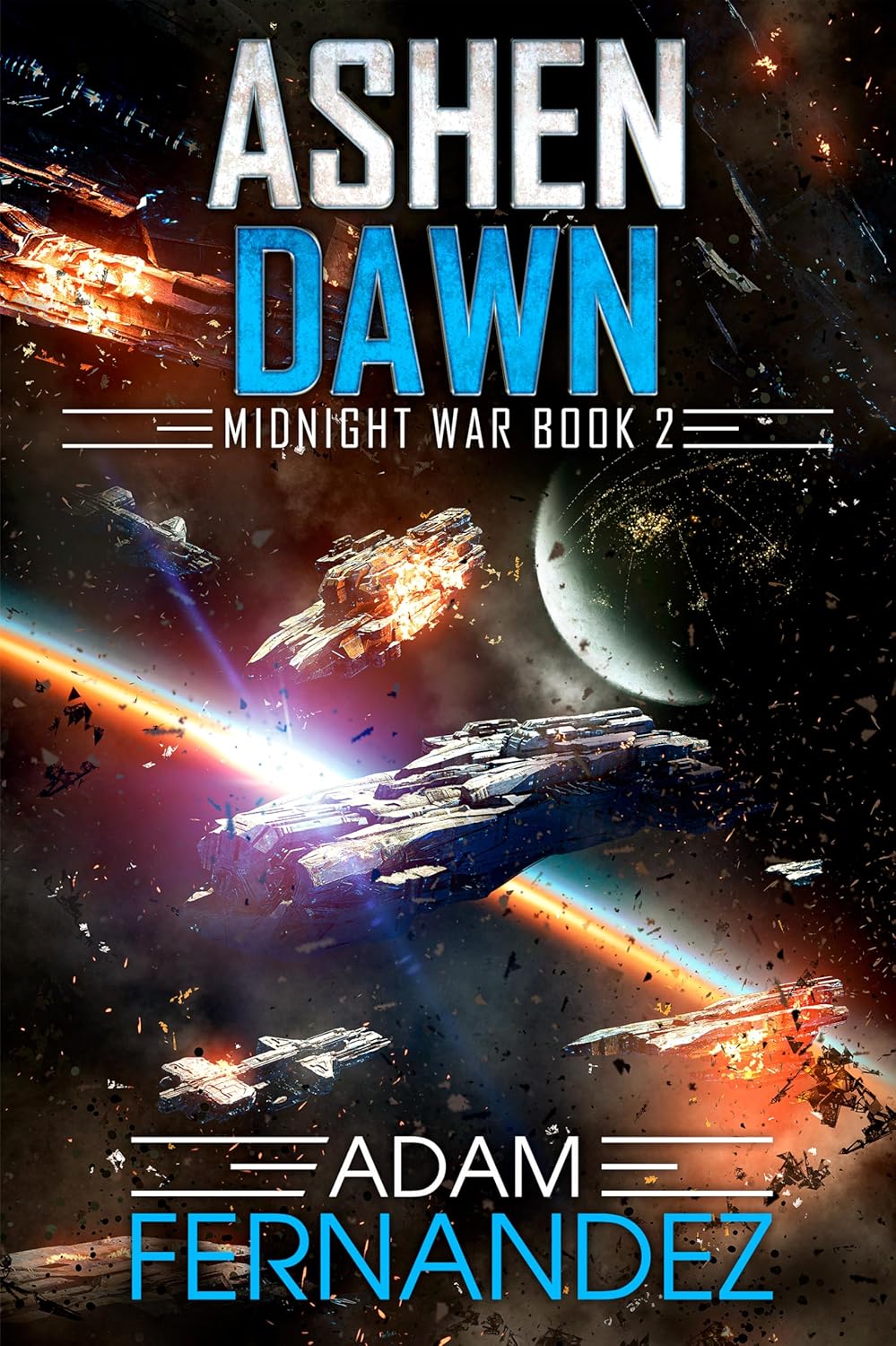
    Ashen Dawn, the second book in the Midnight Wars sci-fi/space opera saga, follows on where Vermillion Flames left off. We accompany Silas, Kaya, and Aron as they continue their respective quests—Silas to bring the Pandora fleet back to fighting strength, Kaya as she finds herself stranded on Earth, and Aron as he continues the fight on Mars.

    As with the first book, Fernandez builds a rich and expansive universe, revealing a deep history as we progress through the story. The reader is left with a sense that there is much to explore, and that these adventures are only scratching the surface. The role of religion is again central—it is foundational to how the society functions, and it forms a core part of Silas’ motivation. The author does well to explore how faith can be at odds with the theocratic systems of power, in a way that helps the reader deeply sympathise with the character’s struggles. Indeed, one of my favourite parts of the book was when Silas, through a traumatic event, comes to accept how he can move forward against the established religious system with his faith still in tact. I won’t spoil it, but that passage is as vivid and engaging as anything Fernandez has written.

    Kaya, too, continues to grow in confidence, asserting herself as she explores the remains of Earth.  Here she uncovers many dark secrets…

    The plot itself is a rollercoaster, with plenty of twists and turns that will keep you reading. It is told through multiple points of view. This choice in itself is effective, though I did find the pacing to be a little off. Successive chapters focus on the same character, and I felt that these could have been more evenly spread. Regardless, the different perspectives do help capture the varying parts of an intricate storyline. The inclusion of Aron and, later on, Henry as POV characters is welcome. And, as before, the battle scenes are engaging and the side characters are endearing (Marcus, once more, a personal favourite!). 

    The ending of the book is satisfying but, as one would expect, as some questions are answered, more are raised, and we are left eagerly awaiting the next instalment!