Tag: fiction

  • Book Review: Spell or High Water

    Book Review: Spell or High Water

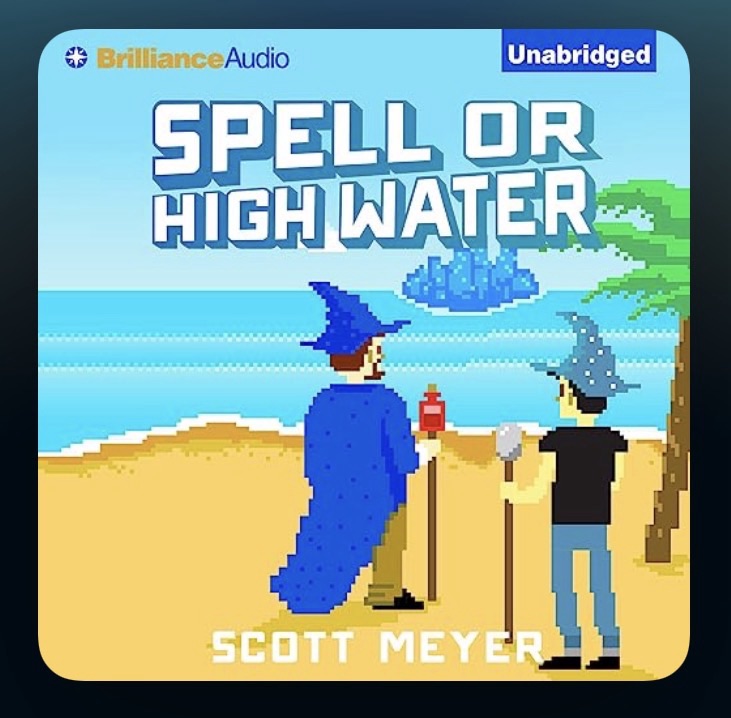
    In the follow-on to Off to Be the Wizard, we head with Martin and Philip to Atlantis, the island refuge where the women who find the magical computer file go. It is a flourishing paradise run by Brit the Elder, Brit the Younger (they’re the same person), and Ida. An attempt on Brit the Younger’s life (and thus, implicitly, Brit the Elder’s) puts Martin at the heart of a zany mystery.

    For me, I felt like Meyer is finding his footing more in this book. The humour is confident and consistent, capturing a silly tone with characters in absurd situations, balanced against genuine stakes with real consequences.

    The mystery at the heart of the story unfolds nicely, with enough surprises along the way. Meyer also takes a structural risk by switching perspectives, and it pays off. It opens up the world and gives the narrative more texture without losing momentum. In particular, Jimmy returns, along with the two hapless agents who (for better or worse) continue their ‘good cop, bad cop’ routine. Seeing their perspective adds to the broader intrigue and suspense.

    At the conceptual heart of the book is time travel. This was hand-waved away in the first book but gets more attention here. Competing interpretations of how time travel works are how stakes are raised in this murder mystery. The nature of time travel is explored in a way that serves the plot. (Because if Brit the Elder is here, that’s proof Brit the Younger can’t be killed… or is it??)

    Jimmy remains one of the more compelling characters in the series. He’s complex, unpredictable, and never quite what you expect. My one reservation is Martin and Gwen’s relationship, which feels a little forced. It’s not particularly clear why they’re into each other.

    This is a minor note in an otherwise enjoyable read, and it doesn’t significantly detract from a sequel that provides an entertaining extension of Meyer’s geek culture-inspired world.

  • Flash Fiction: Infinite Reruns

    Flash Fiction: Infinite Reruns

    About this post

    This is the result of a writing exercise. The goal is to come up with something short and focused without spending too much time editing and revising. It might read a little raw and unpolished, but that’s the nature of the beast! With this piece, I was trying to find a particular character voice, something a little chaotic and irreverent. I settled on something to do with time travel to raise the stakes a little and play around with a few ideas there, too.

    The hands on the clock just wouldn’t stop turning. I sat there for hours, watching, trying to make them stop.

    I know it was hours because I was sat watching a clock.

    The thing no one ever tells you about time control is how long it takes to figure out how to do it.

    But when I cracked it, oh boy. You better believe I did some heinous shit.

    It all started when the minute hand went backwards.

    That was when I first knew I could control time.

    You see, time moves like water. It’s fluid. It fills up whatever container you put it in. And once you figure that out, you’re in control. Have you ever poured water from one glass to another? Well, that’s me, but with the fourth dimension.

    A river doesn’t go in a straight line, and neither does time. It curves and bends and goes back on itself. And sure, if you leave a river alone it’ll forge its own path. But I’m the guy who comes in with a construction crew and digs a canal.

    The first thing I did when I found out I could control time was go back and win an argument with my dentist from 2003. Not even an important argument.

    Well, it was important to me.

    She said I should floss more and I said I flossed plenty. This was a lie. But I’ll be damned if I let her be right about it. So I went back, flossed for three months straight, then returned to that appointment just to prove a point. She didn’t notice. Just said the same damn thing.

    Dentists…

    The second thing I did was become president of the United States of America. Let me tell you how I did it.

    It was pretty simple, really.

    So, the thing is, I still age, but only linearly. I can’t go back further back than when I was born, and I can’t go further forward than when I’ll die (I tried once to push past it and I did not like when I saw).

    But I can do what I want in the middle. Go back and forth as much as I like and change what I want. I’m just the age I am at that point in time.

    This 76 year period is mine to do what I like with. Cool, right?

    Okay, now, take your mind back to probability class. Random variations in how shit works out mean that anything can happen. Monkeys and typewriters and whatever.

    You put your name on the ballot box, do nothing else, maybe a couple of people tick it by accident. No big deal. The odds of a couple people ticking your name are good. Enough to win the presidency, pretty slim.

    But the odds are there. And I’m fluid like water, baby, I’ve got infinite reruns.

    Took me a little over 847,000 tries total. Election day 2016 (come on, you know why I picked that one).

    I voted for myself and went home. Lost. Rewound. Voted for myself and went home. Lost.

    You get the idea. Around try 31,000 I got bored and started seeing how many hot dogs I could eat while waiting for the results. Personal record is 23, in case you’re wondering.

    By try 400,000 I’d memorised all the lottery numbers and had myself a little splurge. By around 700,000 I was going insane. But on try 847,356? I won. By four votes. In Wyoming, of all places.

    So the universe blinked first, and now I’ve got the nuclear codes. Which… brings me to the third thing I did.

    Have you ever launched a nuclear bomb? I wouldn’t recommend it.

    I was destined to live until 76, that much I knew. But I could sure as hell die before that.

    So, yeah, it was me. I turned the world into a post apocalyptic hellscape.

    No big deal, right? Wrong.

    Whatever the fuck mutation meant that I could change time was shattered by the radiation from the nuclear fallout.

    Fuck me, right?

    I spent a while fussing with clocks. Started by turning the minute hand back with my finger.

    It made the clocks show a different time. But it didn’t do a damn thing about where I sat on the continuum.

    I was stuck moving in one direction at the same speed as everyone else.

    Why did I even do it? I know what you’re thinking.

    China.

    Russia.

    North Korea.

    Wrong. Wrong. Wrong.

    You’re stumped. Was it France?

    No, you idiot. Don’t you get it? I was bored. The world is my plaything.

    Infinite. Fucking. Reruns.

    Well, not anymore.

    Now, I’m just like everyone else. At least, everyone who survived the nuclear holocaust. Which isn’t that many. (Being president nets you a few perks, not least having a nuclear bunker.)

    And yeah, sure, I shouldn’t have left the bunker. But I was curious. And let me remind you: I didn’t know that the radiation would cook the one interesting thing about me!

    So I get up each morning, if I make it through the night, and try to survive. It was months of eating mutated pork chips and drinking irradiated water.

    Until the unthinkable happened. My body started to mutate again. I got that familiar pull, like when you take the plug from a bath tub.

    Except here I’d be pulling the plug from a dam.

    After all those months, I knew deep down I could go back.

    But I also knew that it would kill me to do it. One last jump, one last reset, take everything back to how it was.

    How did I know? I just knew. It’s that same sinking feeling you get like when the cops show up at your door. You just know it’s bad news.

    Fuck me, I’m a coward. Every day I don’t do it, is a day I could get my head bitten off by some mutated creature that would make those fucked up fish in the Mariana Trench blush. And with me goes humanity’s last chance at survival.

    But if I do it, I’m gone. Permanently. And so what would it matter if I got things how they were if I couldn’t be there to enjoy it?

    So, yeah… Here I am. Sorry, not sorry, I guess.

  • Book Review: Off to Be the Wizard

    Book Review: Off to Be the Wizard

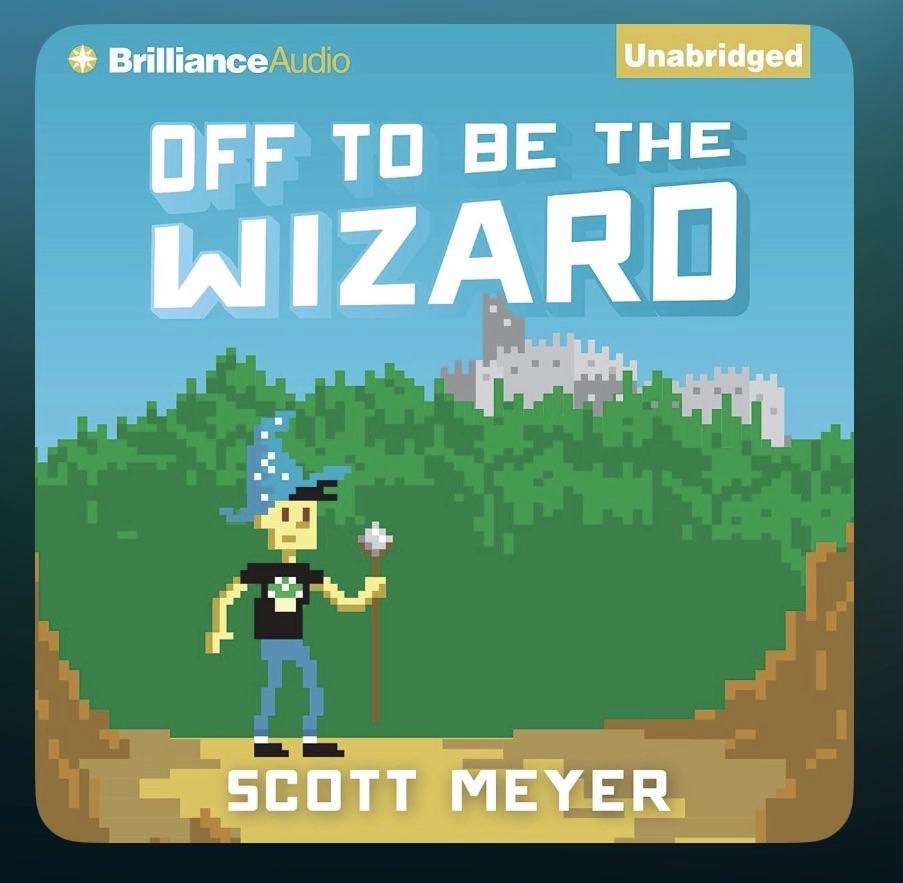
    Martin Banks is an unremarkable young man until he discovers something extraordinary: a file that appears to contain the source code of reality itself! Naturally, he does what you or I might do; he uses it to give himself more money. When this attracts the wrong kind of attention, he takes the next logical step and flees to medieval England to live as a wizard. Here he meets Philip and a host of other men from the future who all had a similar backstory.

    Off to Be the Wizard is a lot of fun. Meyer keeps the time travel logic deliberately light rather than getting bogged down too much in the mechanics. This is, at its heart, a comedy adventure, and Meyer, to the benefit of the story, keeps things moving.

    Scattered throughout are some lighthearted nods to nerd culture, with references that make sense for the characters and the book. It also handles its notably male-dominated world pretty well, wherein women who discover the file are redirected to Atlantis rather than staying in the ‘historical’ past. This is a neat solution that acknowledges the uncomfortable reality that women practising magic has rarely ended well across history.

    But what impressed me most is how Meyer smuggles in some genuinely weighty themes, such as free will versus determinism and nihilism, without ever losing the lighthearted energy that makes the book so enjoyable. The plot structure also makes this feel earned. The early sections focus on Martin finding his feet among the wizards, but there are hints placed carefully along the way that build toward something darker. By the time the real conflict emerges, Martin’s growth feels genuine and purposeful.

    The characters are brilliant, all memorable and (mostly) likeable, even comic book-style villain Jimmy, and the comedic moments land well. Off to Be the Wizard is a very enjoyable read and it gets a hearty recommend from me!

  • Book Review: Godkiller

    Book Review: Godkiller

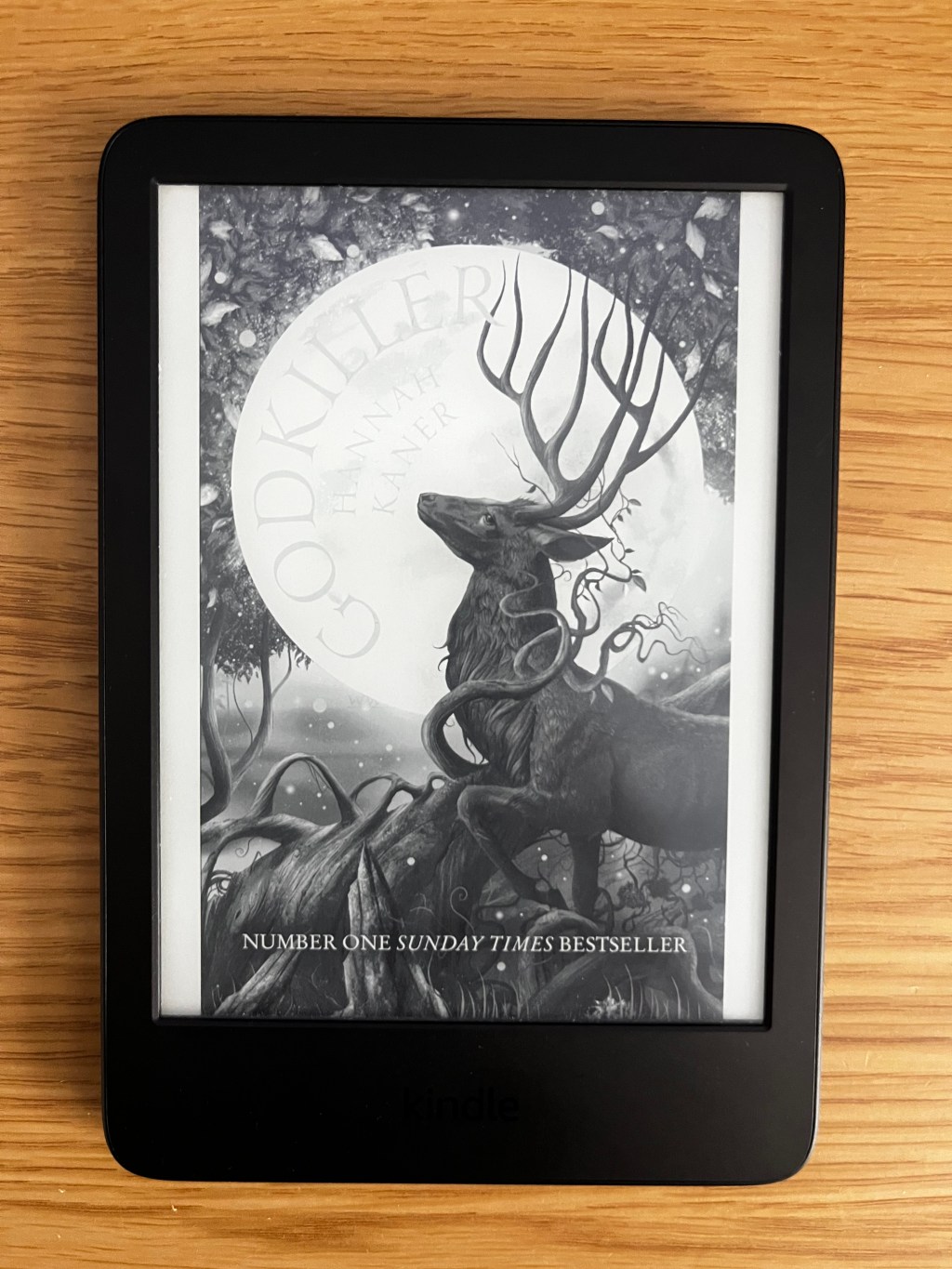
    Kissen’s family were killed by zealots of a fire god. Now, she makes a living killing gods, and enjoys it. That is until she finds a god she cannot kill: Skedi, a god of white lies, has somehow bound himself to a young noble, and they are both on the run from unknown assassins.

    What immediately drew me in to Hannah Kaner’s Godkiller was the way she conceptualises the gods. In this world, gods are born from human belief and need. The more people worship them, the stronger they become. It’s both simple and complex in how it works, with a symbiotic system that creates genuine stakes for both mortals and deities. It was interesting to explore how this dynamic shaped everything from village politics to divine hierarchies.

    The relationship between Kissen (the godkiller herself) and young Inara, the young noble tied to Skedi, anchors the story well. Their unlikely partnership (the woman who destroys gods paired with a girl who might be tied to one) creates natural tension. Watching their bond develop as they navigate this dangerous world together was another highlight of the book.

    The prose is the kind of prose that gets the job done, and the dialogue serves its purpose. In a sense it’s good that the writing doesn’t get in the way of the story (that can be an issue with some books where writers can be a little self-indulgent with their flare!). But I could have done with maybe a little more imagery and metaphor to bring the scenes to life.

    That being said, the story is well structured. The pacing doesn’t drag and the plot progression feels logical and well thought out. Each revelation builds naturally on what came before, and I never felt lost or confused about the world’s rules or the characters’ motivations.

    And the worldbuilding really is Godkiller’s strongest suit. Beyond just the god creation concept, Godkiller has a setting that feels authentic. The political tensions, the way different regions handle their divine relationships, the consequences of godkilling, it all hangs together convincingly. This was enough to make it an enjoyable read.

  • Book Review: A Wizard of Earthsea

    Book Review: A Wizard of Earthsea

    Ursula Le Guin’s A Wizard of Earthsea is a cornerstone of fantasy literature… is it bad that it took me a while to fully connect with it?

    What did I love about it? Well, it was the world building that hooked me. Earthsea is an expansive and rich archipelago world, filled with distinct cultures, peoples, and creatures. We follow Ged, a gifted young wizard, on an adventure across Earthsea’s different islands, and get to know the people he encounters. The voyages by boat feel treacherous in the way that seafaring adventures should, and the maritime setting lends to the atmosphere. The magic system, too, is mystical and complex. Built around the true names and fundamental nature of things, it has a beautiful sense of knowledge and responsibility.

    Ged is a well-crafted protagonist. He’s cocky, talented, and absolutely believable as a teenager who thinks he knows everything. His catastrophic mistake early in the story (summoning a shadow creature while showing off) feels earned by his character, and watching him grapple with the consequences as he matures gives the book proper emotional weight. I wanted him to get some comeuppance early on, and it was gratifying when he did!

    But I struggled with Le Guin’s writing style, especially in the opening sections. It reads more like a historical chronicle rather than an intimate character study. We’re told about Ged’s actions and development, but we don’t really feel his journey, at least not at first. This made it difficult for me to root for him initially. The writing does become more engaging as the story progresses, particularly when Ged interacts with his friend Vetch and we get more genuine character moments.

    You can see A Wizard of Earthsea in the DNA of modern fantasy: the archipelago setting finds itself in Katherine Rundell’s Impossible Creatures, the power of names in Patrick Rothfuss’s Name of the Wind, and the issues with shapeshifting in Terry Pratchett’s Equal Rites. It is undeniably important, but it requires a specific mood and patience with its more… distant narrative style. I’m glad I read it for the perspective it gives on the genre, though I’m probably not going to rush back to Earthsea soon.

  • Book Review: Project Hail Mary

    Book Review: Project Hail Mary

    I’m a big fan of The Martian. I enjoyed Artemis. But I was blown away by Project Hail Mary. I went in knowing nothing about it—I didn’t even read the blurb. And I think that was the right thing to do. The plot was unveiled like a true mystery adventure. If anyone wants the same experience as me, stop reading here, and just take my word for it that it’s worth your time!

    Andy Weir’s latest sci-fi novel opens with our protagonist waking up with complete amnesia aboard a spaceship. Safe to say, amnesia has been done (All My Circuits, anyone?). But the way Weir uses the memory loss to gradually reveal both the present crisis and the backstory is excellent. The pacing was just right, and all the pieces of the puzzle, from why humanity is facing extinction, how our narrator ended up alone in space, what his actual mission is, all slowly click into place alongside his returning memories.

    What absolutely sold me on this book, though, is Rocky. Creating a compelling alien character is incredibly difficult (how many different alien species have sci-fi writers conjured up?). But Weir manages to bring this spider-like creature to life in a way that feels both genuinely alien and deeply relatable. Rocky isn’t just a cool biological concept (though he is that too). He’s impatient, intelligent, funny, and flawed. The sections exploring how they learn to communicate reminded me strongly of Arrival, in a good way. And I loved watching their friendship develop as they worked together against a threat to both their species.

    As you might expect, Weir’s protagonist is… very similar to his other protagonists. If I have one criticism, it seems he can only write one main character: the brilliant-but-anxious, funny, slightly neurotic scientist. Luckily for Weir, I like this character! As with The Martian, this kind of character is executed well. His voice is engaging and the he scientific problem-solving is immensely satisfying. (I love that Weir makes me feel like I’m secretly learning while being entertained!)

    And in a world of sci-fi where in so many stories first contact means invasion and destruction, Project Hail Mary offers something refreshingly different: the idea that when faced with extinction, different species might choose cooperation over conflict. The plot escalates organically and believably, the challenges build, the emotional complexity is just at the right level… It’s one of those where you know they’re going to get through it, you just don’t know how, or at what cost.

  • Review: 1984 by George Orwell (Audible Dramatisation)

    Review: 1984 by George Orwell (Audible Dramatisation)

    I’d seen this advertised and, finding that listening to this wouldn’t cost an Audible credit, I thought I’d give it a go.

    1984, of course, is a classic—for me, it stands next to Brave New World and The Handmaid’s Tale as one of the three greatest dystopian novels—so any adaptation has to be good. And, overall, I think they did a good job.

    As a listening experience, it was enjoyable. Andrew Scott is chillingly perfect as O’Brien, bringing that mix of intellectual authority and sinister menace that makes the character so unsettling. Andrew Garfield does solid work as Winston too, though I did find myself questioning whether he played Winston as a bit too much of a wet lettuce (so to speak). He felt a bit more subservient than how I remember him when I first read the book.

    And I knew it was Matt Belamy who did the sound design just from listening. You can hear all that paranoia that’s been baked into Muse’s music over the years (and, of course there’s the little cameo moment for The Resistance). It was like Belamy had been auditioning for this role for years; and, given how obviously inspired Muse have been by dystopian literature, it was a good fit. If I had any criticism, it’s that Belamy probably played it a bit safe. I would have loved him to lean even harder into the dystopian atmosphere he’s so good at creating.

    The adaptation does okay at condensing Orwell’s dense novel while keeping all the essential elements intact. The core concepts (newspeak, doublethink, Big Brother’s surveillance) all come through clearly without feeling rushed or oversimplified.

    Was it perfect? No, I can’t say it was. Winston’s character development and his fluctuating relationship with Julia doesn’t quite work in this compressed version. The significant changes in how they feel about each other and the resistance don’t feel natural. And, I certainly could have done without Garfield’s heavy breathing right in my ears during the sex scene. Some things work better on the page than whispered directly into your headphones…

    I’d take the original over the adaptation any day of the week. But overall it was a solid effort and an enjoyable listening experience.

  • Book Review: The Lies of Locke Lamora

    Book Review: The Lies of Locke Lamora

    Scott Lynch’s debut fantasy novel, The Lies of Locke Lamora, features an elaborate heist set in a beautifully realised seventeeth-century-inspired world.

    Honestly, it hit me in the same way that The Name of the Wind did. We have a physically unimpressive protagonist who makes up for a lack of brawn with guile and pure cunning. Locke Lamora is endearing in the same way the Kvothe is. He executes elaborate cons and talks his way out of deadly situations. He fits the rogue archetype to a tee. And Jean is an excellent companion (and Jean brings the physicality that Locke lacks). He’s not a simpleton or a yes-man in the way that some ‘brawler’ characters can be. He feels well defined in his own right. Above all, their friendship feels genuine and lived in. It’s easy to care about them.

    As fantasy heists go, the plot is near perfect. It’s well structured and escalates in just the right way. Just as you think you have a handle on what’s going on, something else happens and it all spirals into some bigger and more dangerous; the stakes are raised organically and plausibly at each turn. And they’re raised in ways I couldn’t see coming. There’s also backstory interwoven throughout (the kind of backstory that again reminded me of The Name of the Wind, albeit delivered in a different way). Information important to the present moment is delivered via these backstories, keeping them timely and relevant.

    The worldbuilding is immersive without being overwhelming. None of the protagonists are magic, but they encounter others who are—and so Lynch has to create problems that are challenging for the protagonists, whilst giving them scope to overcome them. I think he strikes the right balance between power and limitation, and the rules are clear enough for some satisfying loopholes to be exploited without feeling contrived.

    It’s not without its flaws. There’s hints at a romantic subplot that never quite develops. And [MODERATE SPOILERS] Locke’s heroic turn at the climax didn’t feel completely earned. I understand the choices made, but I didn’t fully buy it. There were also some stretches where plot threads were left unattended, as other parts of the plot moved forward. 

    But these complaints are relatively minor. I was entertained enough by the characters, the dialogue, and the rich world. It has enough clever problem solving and good character work to scratch the same itch as The Name of the Wind.

  • Book Review: The Restaurant at the End of the Universe

    Book Review: The Restaurant at the End of the Universe

    The Restaurant at the End of the Universe by Douglas Adams is full of the same zany, unpredictable storytelling that made The Hitchhiker’s Guide to the Galaxy such a hit. 

    What I love most about this book is how the book jumps from one impossible situation to another. I had no idea where the story was going to go, and neither did the characters. This is made possible by the technology within Adams’ universe, whether it be teleportation, time travel, or reality manipulation. I think the thing that makes it work as a narrative device is that the stupid, unpredictable situation the characters find themselves in always makes things harder, or worse; they might be rescued from one situation, but find themselves jumping out of the frying pan into the fire. This makes it really effective storytelling.

    I think the character work wasn’t as strong as the preceding novel. Marvin remains one of the best characters in modern literature, and I really enjoyed having large chunks of the story told from Zaphod’s perspective. His journey to meet the ruler of the universe revealed some great backstory. But Arthur, Ford, and Trillian’s storylines were undeveloped and not quite as interesting by comparison.

    The ending was a little flat for me, as well. Zaphod finally meets the ruler of the universe and, [SPOILERS], it turns out he doesn’t have any idea that he’s making decisions that impact the entire universe (a universe the ruler isn’t sure exists). I get the joke Adams is making, but the execution, especially how quickly Zarniworp becomes frustrated, didn’t hit for me. Similarly, Arthur and Ford wandering around prehistoric Earth was a bit of a drag. That said, the revelation of the Ultimate Question was exactly the kind of comic deflation that worked really well.

    I’ve been reading a lot of Terry Pratchett and Douglas Adams recently. I’m still at the starting point of my journey through their respective universes, but I’m finding myself preferring Adams’ humour and writing style at the moment (though don’t get my wrong, both are fantastic). Where Pratchett sometimes breaks the fourth wall with references to our world, Adams creates alien societies that mirror our own absurdities without winking directly at the reader. This makes the satire feel more integrated and immersive.

    So, onwards I journey! Next stop: Life, the Universe and Everything.

  • Book Review: Mort

    Book Review: Mort

    I’m about five or six books into Discworld as a series now, and so I’ve seen Death appear as a minor character a few times. But I was very intrigued to read Mort, which sees the whole story revolve around Death and the titular character, his new apprentice.

    Death wants a holiday, wants to explore his other interests, find out what it means to be alive… and who better to take over his work than a gangly farm boy that no one else wanted as their apprentice?

    Death and Mort act as counterpoints to each other. In his time away from his ‘work’, Death struggles with humanity (trying to get drunk, not really getting why people fear him—except cats, that is). 

    Mort, on the other hand, grapples with the weight of having to sever peoples’ souls from their earthly bodies, and the apparent lack of justice when they die (because, in the end, people go where they believe they’re going to go). 

    They both go through steady arcs, with Death finding peace as a chef, and Mort becoming less bumbling and more able to take on the powers of the job, even as he questions his duty.

    One of the things I loved most was the conceptualisation of time. The instigating moment for the plot was Mort’s refusal to take Princess Keli’s soul, which created an inflection point in time. She should have died, and history carries on as if she did, and eventually it all tries to self-correct. It’s clever writing and creates a set-up where the reader isn’t sure how it’s going to be resolved.

    I found the supporting cast to be hit or miss, though. I liked Ysabel and her relationship with Mort, and how it goes from antagonistic to friendship over time. Albert is an excellent character, especially when his mysterious past is unveiled. But I wasn’t so sure about Cutwell—I’m not sure if he was supposed to be annoying and off-putting, but I wasn’t really keen on him!

    This is a really interesting and unusual fantasy book showing how Pratchett continued to have a unique take on the genre. Like I said, I’m five or six books in, and none of them have really felt the same.