Isaac Asimov had a particular talent for making the setting part of the story; in his murder mystery portion of the Robots series, the detective work involves not just solving the case, but understanding new and strange worlds with deep cultural differences and political infrastructures. When Elijah Bailey sets foot on Solaria in The Naked Sun, he experiences the titular ball of flame in the sky, so alien from the Caves of Steel (the titular environment in the first novel of the series) he was used to. And he encounters a society where robots outnumber humans by a factor of ten thousand, and with an entire human population of twenty thousand: people are scattered and isolated across the planet.
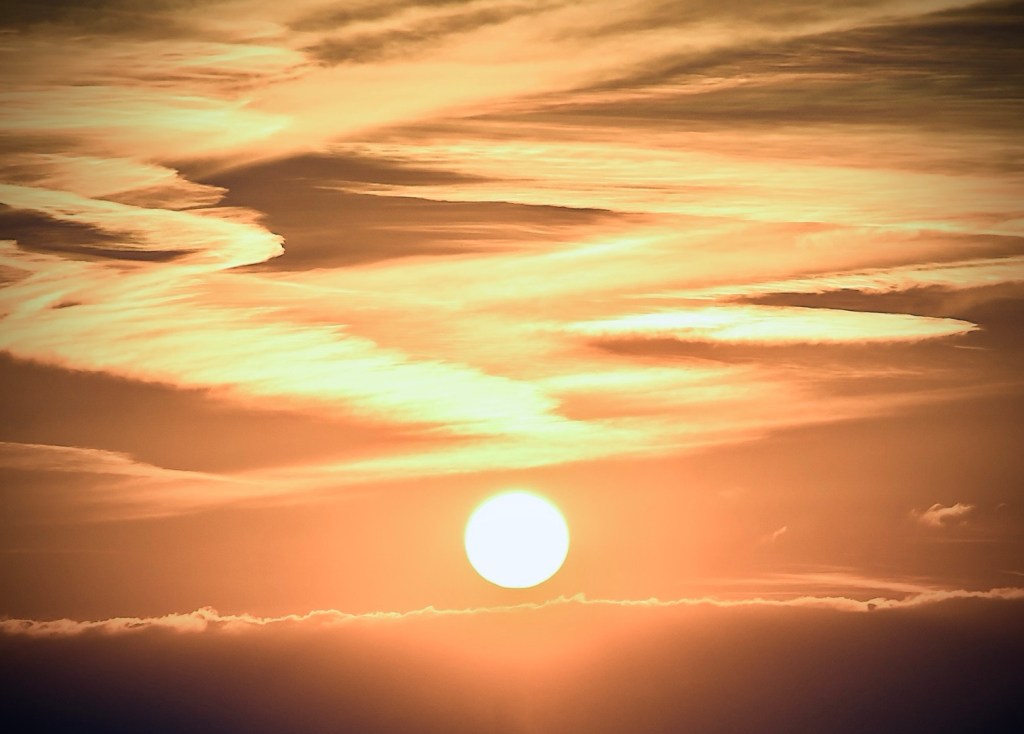
Stepping into this new world is not so dissimilar to the world that we inhabited just a few years ago. Reading The Naked Sun in the post-Covid era, the similarities are striking (speaking once more to the brilliance of Asimov’s foresight). Bailey, moving from a densely populated, comparatively disease-ridden Earth, finds the shift in social norms confusing and strange. No one wants to come within ten feet of him; they all wear nose plugs and gloves in his presence (if they can bear to be in his presence at all). We found ourselves as Solarians in those months and years from 2020; we wore masks and gloves, came not within six feet of one another; how alien we became to ourselves. Had someone in 2019 jumped forward in time a year, they would have been like Bailey stepping foot on a new planet.
And, like the Solarians, in our isolation we became reliant on our technology. The pandemic was a boon for tech firms like Zoom, whose share prices rose (and later fell) dramatically. Like in Solaria, whose main form of communication was ‘tridimensional viewing’, an advanced form of holographic communication where the person viewed was almost convincingly present, we found ourselves using video calling and video conferencing, even to the point of fatigue. Though our technology is not so advanced as that of the Solarians, we still experienced joining with others virtually (and still do), on our phones, laptops, and TVs.
Underpinning both our societies was a fear of contamination. So obsessed were we, like the Solarians, with avoiding disease that we remained distant and isolated. Unlike the Solarians, we have been quick to recognise the harm that this has on our personal relationships. Social interaction via Zoom can only satiate the need for human contact so much. Yet Solarian society, in a warning to us all, became entrenched in such isolation. Gladia, a native of Solaria with whom the protagonist forms a relationship, is only one of few to recognise the damage this is causing her.
Indeed, on Solaria this separation is politicised, legally entrenched; in our world, there were fears, many legitimate, some extreme, that government imposition of lockdowns, travel restrictions, and quarantine would give those in power a taste of authoritarianism. That they would, in turn, create a society like Solaria. Such a thing might not be unthinkable: the reliance of Solarians on robotics and automated labour is a key reason of their isolation; automation of labour in our world could be a similar lever of control. Indeed, new technology and automated production has, since the 1970s, undermined collective bargaining and weakened unions, contributing to stagnant wage growth and worsening inequality. In Solaria, the small population are the landed gentry, the robots their serfs. What happened to the human working class?
And yet we have evaded and escaped from much of the Covid restrictions, which have proved, for the most part, temporary. As humans we were able to adapt to our limited conditions in the short term, and we have been resilient enough in the long term to revert back to our old ways. But when we visit a new world and come home, a part of that world stays with us. When Bailey returns to Earth, he does something he never would have done before: he leaves the City, his Cave of Steel, and starts a movement; he goes outside and stands beneath the Naked Sun.
 Peter R. S. Thomas
Leave a comment