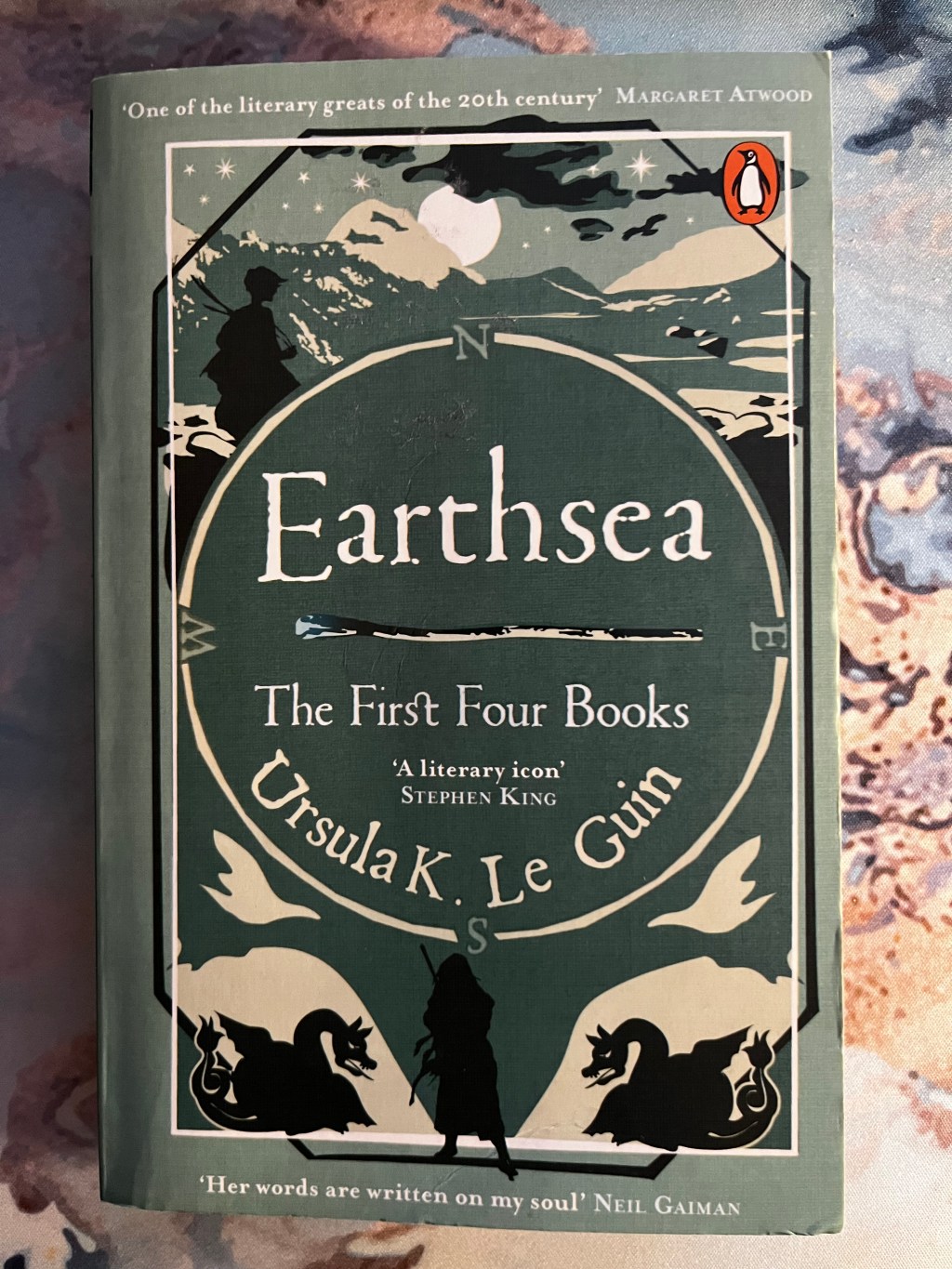
Ursula Le Guin’s A Wizard of Earthsea is a cornerstone of fantasy literature… is it bad that it took me a while to fully connect with it?
What did I love about it? Well, it was the world building that hooked me. Earthsea is an expansive and rich archipelago world, filled with distinct cultures, peoples, and creatures. We follow Ged, a gifted young wizard, on an adventure across Earthsea’s different islands, and get to know the people he encounters. The voyages by boat feel treacherous in the way that seafaring adventures should, and the maritime setting lends to the atmosphere. The magic system, too, is mystical and complex. Built around the true names and fundamental nature of things, it has a beautiful sense of knowledge and responsibility.
Ged is a well-crafted protagonist. He’s cocky, talented, and absolutely believable as a teenager who thinks he knows everything. His catastrophic mistake early in the story (summoning a shadow creature while showing off) feels earned by his character, and watching him grapple with the consequences as he matures gives the book proper emotional weight. I wanted him to get some comeuppance early on, and it was gratifying when he did!
But I struggled with Le Guin’s writing style, especially in the opening sections. It reads more like a historical chronicle rather than an intimate character study. We’re told about Ged’s actions and development, but we don’t really feel his journey, at least not at first. This made it difficult for me to root for him initially. The writing does become more engaging as the story progresses, particularly when Ged interacts with his friend Vetch and we get more genuine character moments.
You can see A Wizard of Earthsea in the DNA of modern fantasy: the archipelago setting finds itself in Katherine Rundell’s Impossible Creatures, the power of names in Patrick Rothfuss’s Name of the Wind, and the issues with shapeshifting in Terry Pratchett’s Equal Rites. It is undeniably important, but it requires a specific mood and patience with its more… distant narrative style. I’m glad I read it for the perspective it gives on the genre, though I’m probably not going to rush back to Earthsea soon.
 Peter R. S. Thomas