Tag: worldbuilding

  • Book Review: A Wizard of Earthsea

    Book Review: A Wizard of Earthsea

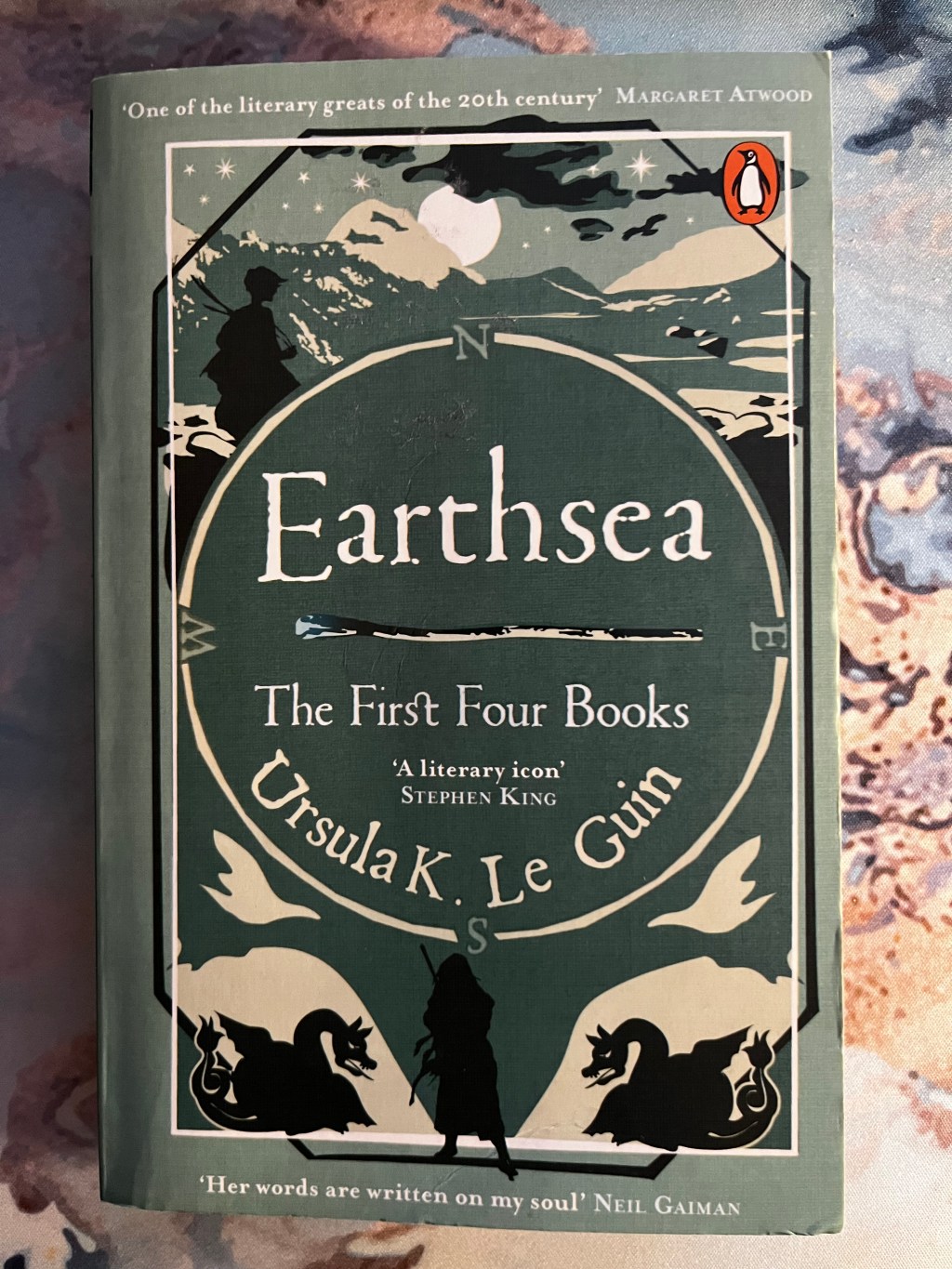
    Ursula Le Guin’s A Wizard of Earthsea is a cornerstone of fantasy literature… is it bad that it took me a while to fully connect with it?

    What did I love about it? Well, it was the world building that hooked me. Earthsea is an expansive and rich archipelago world, filled with distinct cultures, peoples, and creatures. We follow Ged, a gifted young wizard, on an adventure across Earthsea’s different islands, and get to know the people he encounters. The voyages by boat feel treacherous in the way that seafaring adventures should, and the maritime setting lends to the atmosphere. The magic system, too, is mystical and complex. Built around the true names and fundamental nature of things, it has a beautiful sense of knowledge and responsibility.

    Ged is a well-crafted protagonist. He’s cocky, talented, and absolutely believable as a teenager who thinks he knows everything. His catastrophic mistake early in the story (summoning a shadow creature while showing off) feels earned by his character, and watching him grapple with the consequences as he matures gives the book proper emotional weight. I wanted him to get some comeuppance early on, and it was gratifying when he did!

    But I struggled with Le Guin’s writing style, especially in the opening sections. It reads more like a historical chronicle rather than an intimate character study. We’re told about Ged’s actions and development, but we don’t really feel his journey, at least not at first. This made it difficult for me to root for him initially. The writing does become more engaging as the story progresses, particularly when Ged interacts with his friend Vetch and we get more genuine character moments.

    You can see A Wizard of Earthsea in the DNA of modern fantasy: the archipelago setting finds itself in Katherine Rundell’s Impossible Creatures, the power of names in Patrick Rothfuss’s Name of the Wind, and the issues with shapeshifting in Terry Pratchett’s Equal Rites. It is undeniably important, but it requires a specific mood and patience with its more… distant narrative style. I’m glad I read it for the perspective it gives on the genre, though I’m probably not going to rush back to Earthsea soon.

  • Book Review: The Lies of Locke Lamora

    Book Review: The Lies of Locke Lamora

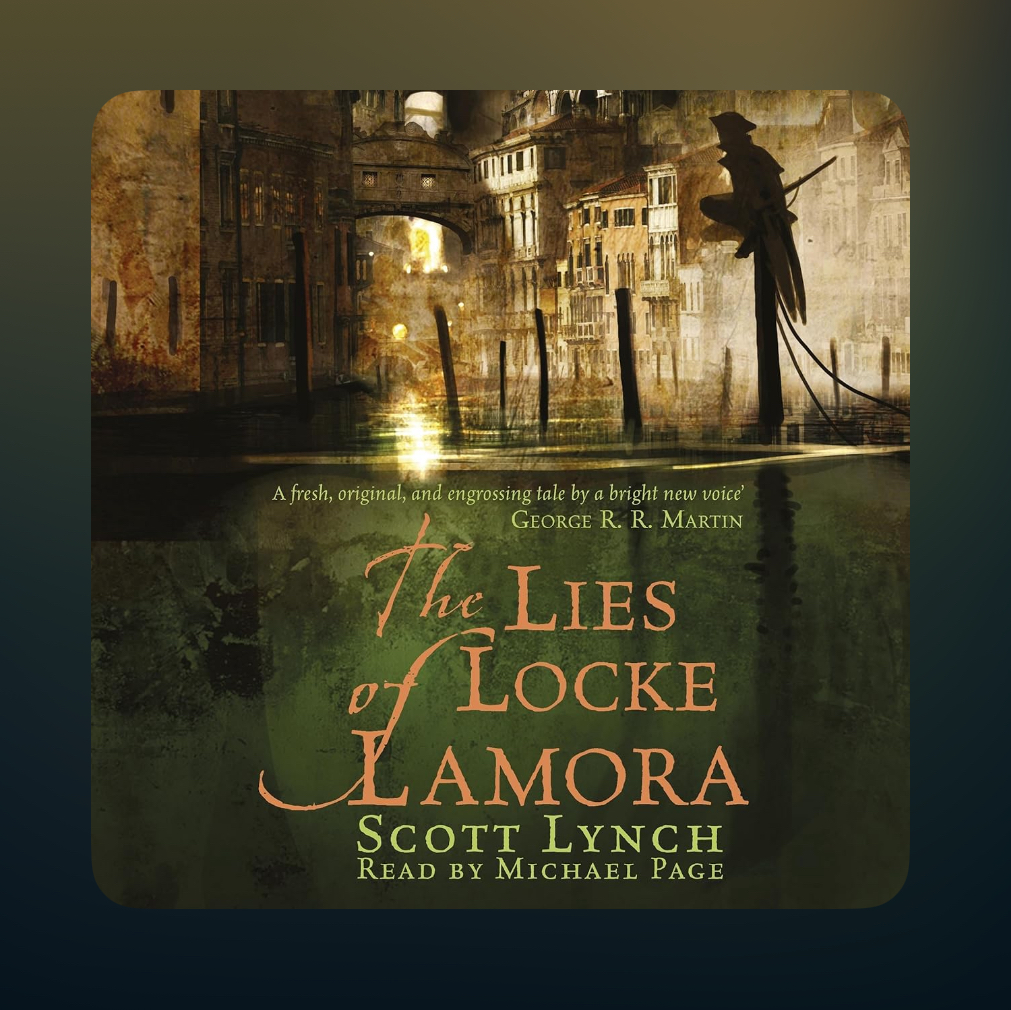
    Scott Lynch’s debut fantasy novel, The Lies of Locke Lamora, features an elaborate heist set in a beautifully realised seventeeth-century-inspired world.

    Honestly, it hit me in the same way that The Name of the Wind did. We have a physically unimpressive protagonist who makes up for a lack of brawn with guile and pure cunning. Locke Lamora is endearing in the same way the Kvothe is. He executes elaborate cons and talks his way out of deadly situations. He fits the rogue archetype to a tee. And Jean is an excellent companion (and Jean brings the physicality that Locke lacks). He’s not a simpleton or a yes-man in the way that some ‘brawler’ characters can be. He feels well defined in his own right. Above all, their friendship feels genuine and lived in. It’s easy to care about them.

    As fantasy heists go, the plot is near perfect. It’s well structured and escalates in just the right way. Just as you think you have a handle on what’s going on, something else happens and it all spirals into some bigger and more dangerous; the stakes are raised organically and plausibly at each turn. And they’re raised in ways I couldn’t see coming. There’s also backstory interwoven throughout (the kind of backstory that again reminded me of The Name of the Wind, albeit delivered in a different way). Information important to the present moment is delivered via these backstories, keeping them timely and relevant.

    The worldbuilding is immersive without being overwhelming. None of the protagonists are magic, but they encounter others who are—and so Lynch has to create problems that are challenging for the protagonists, whilst giving them scope to overcome them. I think he strikes the right balance between power and limitation, and the rules are clear enough for some satisfying loopholes to be exploited without feeling contrived.

    It’s not without its flaws. There’s hints at a romantic subplot that never quite develops. And [MODERATE SPOILERS] Locke’s heroic turn at the climax didn’t feel completely earned. I understand the choices made, but I didn’t fully buy it. There were also some stretches where plot threads were left unattended, as other parts of the plot moved forward. 

    But these complaints are relatively minor. I was entertained enough by the characters, the dialogue, and the rich world. It has enough clever problem solving and good character work to scratch the same itch as The Name of the Wind.

  • Book Review: Shadow of the Gods

    Book Review: Shadow of the Gods

    I’m not sure I was ready to read Shadow of the Gods… It is a brutal, violent dark fantasy. The start of John Gwynne’s Bloodsworn Saga, it journeys through three different perspectives, with characters traversing a world left bloody and divided in the wake of fallen gods.

    The combat sequences are visceral and expertly crafted. Every fight scene is choreographed with brutal precision, from the intimate duels to the massive battles, each one weighted with consequence. The gore—gore that I was not fully prepared for—raises the stakes and makes every confrontation feel genuinely dangerous.

    I had some issues with the three different perspectives. They had strong thematic coherence—overall, Shadow of the Gods is an intertwined story of family bonds and revenge. But I found Orka and Varg’s storylines to be much more interesting, and the characters more compelling, than Elvar’s. It put me in that uncomfortable position where (and I don’t like feeling this) I felt I was waiting for her parts to be over so I could go back to the other perspectives. It’s only in the final act that Elvar’s storyline finally started to engage me.

    What I loved was the worldbuilding. It is built on the same mythological foundation as Skyrim, and that gave me a certain sense of nostalgia. The echo of the dead gods and the impact it has on the characters (in particular the ‘tainted’) drives the story, making it feel truly epic in scope. The magic system integrates well into this world, providing moments of genuine wonder and power.

    On balance, the atmosphere and immersive worldbuilding overcome what I personally felt were structural weaknesses in combining the different storylines. But I admit that I may be in the minority in feeling this. And I certainly feel driven to keep going with the series!