This series will forever be one of my favourites. It was my favourite as a boy and, rereading the books now, I’m still in love. And how could I not be? The world is expansive and diverse, the characters are relatable and compelling, and the illustrations are beautiful (especially in the print books—the ebook version, perhaps not so much… the limitations of technology! Though the maps and many illustrations are available from the official website).
The series is set on The Edge, a jutting piece of rock that sits amidst a vast expanse—no one has travelled far enough over the edge (outward, upward, or downward) and returned. A river flows into nothingness. But on The Edge are lush and dangerous forests, barren wastelands, marshes and mires, towns and cities (including the floating city of Sanctaphrax). The world is populated by a wide variety of different creatures, some coexisting, some not, from humans to humanoid beings, spindly-legged spider-like creatures, flesh-eating trees, giant banderbears, and much more in between.
The series follows The Edge at different stages, with storylines focusing on a core of interrelated characters, all descendants of the same family across different generations. The epochs are defined by the stages of flight they go through, from ships mounted with lighter-than-air stones (flight rocks) able to keep them afloat in the sky, to specially varnished buoyant woods, to more industrial sky ships powered by stormphrax.
Sky pirates feature heavily, especially in the first two trilogies centred on Twig and Quint (one of the key reasons, obviously, why I love it), and the stories are bound together by sweeping adventures. The reader is taken to the variety of places across The Edge, and they meet numerous different peoples and societies, all wonderfully imagined. Within this world, the stories are able to tackle different themes: race and difference, identity and belonging, nature and industry, slavery and freedom—alongside the more familiar themes of good and evil, right and wrong.
The world created by Paul Stewart and Chris Riddell is captivating and formidable. Enter at your peril, and be prepared to be swept along in breathless adventures to the farthest reaches of the land—and beyond!
Starship Troopers is perhaps Robert Heinlein’s most widely known work. Set in a future 700 years from now, it details an interstellar war between the humans of earth and an alien species referred to as ‘bugs’. On one hand a coming of age novel, on the other, a exploration of political philosophy, it has garnered both praise and criticism. It follows Johnny Rico as he rises through the ranks in the Terran Federation’s army. In 1997, a film was made, which (supposedly) satirised the views espoused by the book.
The book has been especially influential in its imagination of future war. This includes, in particular, the use of power armour, a type of mechanised exoskeleton, to enhance human combat abilities. Power armour has become a widespread feature of science fiction in books, films, and video games, notably inspiring figures like Iron Man, and many more besides. Heinlein goes into detail about how it is controlled, how communication lines are opened, and how the performance-enhancing capabilities of the suit are activated. It’s deeply riveting.
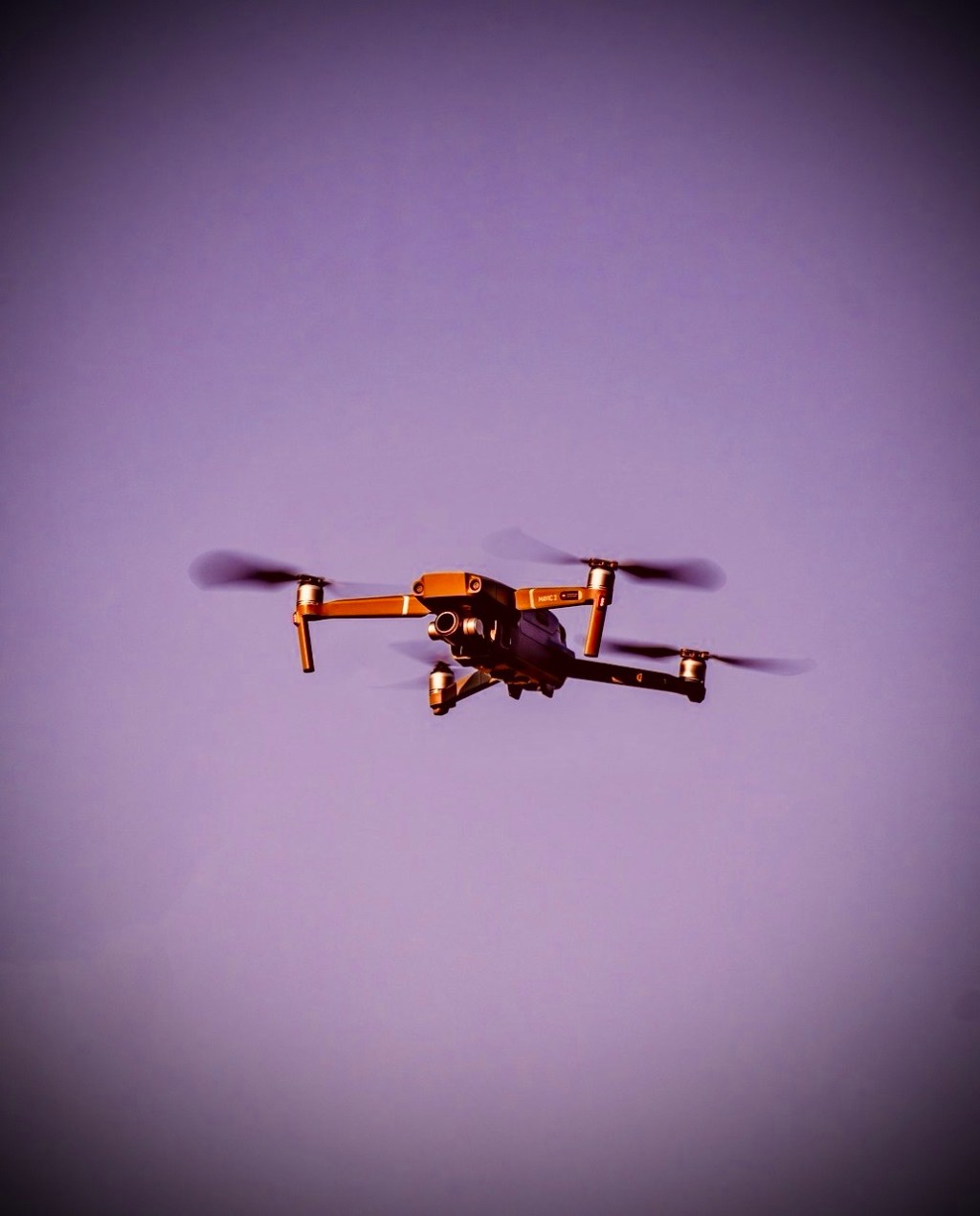
How true to life has this vision been? While using machinery to enhance human capabilities in warfare has been experimented with, with the advent of remote control technology and robotics, not to mention artificial intelligence, it is drone warfare that has become the new staple of twenty-first century combat. It has replaced the need for human presence in several combat situations, in particular aviation. By reducing the need for ‘boots on the ground’, it has enabled politicians to maintain support at home for wars abroad by lowering the number of casualties on their side. Conversely, drone warfare has deep ethical considerations, in particular the scope for impersonal and indiscriminate killing. This is not the vision presented by Heinlein, who keeps human soldiers central to the technology. In the book, it seems, it is the bugs that are drones, with central ‘brains bugs’ that direct and control fearless warrior bugs—which, like drones, have a complete lack of self-preservation.
Starship Troopers is complex in its politics. It presents a militarised view of the future, with citizenship earned through military service. This is justified and explored by Heinlein through the voice of Jean V. Dubois, Rico’s teacher of History and Moral Philosophy in school. Amidst this, it presents a vision of equality, where service, rather than economic status, race, or gender, is the pathway to citizenship. Despite this, gender lines are still drawn: the troopers are entirely men, pilots of the spaceships entirely women. The politics have become the most controversial aspects of the books; indeed, the film version of the book sought to parody what some interpret as fascist elements (though, in my opinion, it wasn’t particularly well done, and it didn’t help that the film views like a children’s movie that someone decided to imbue with an overabundance of gore). In particular, given its focus and support for militarism, combined with its critique of twentieth century society as morally corrupt (written, as it was, during a liberalising era and against the backdrop of the Cold War), some view it as a recruitment piece—propaganda to make military life seem exciting, honourable, and tantalising. In this it has its modern parallels, notably the Call of Duty franchise, which itself has been seen to glorify war.
Heinlein’s space age novel therefore has much to offer and much to criticise. One of its key failings, at least on my reading, was its lack of exploration of military tactics against an unusual enemy. It withholds a captivating combat scene until the very end, and only then does it explore how a race dependent on technology could fight against a caste-like species that communicated via a hive mind. Despite this, and despite the various other criticisms levied against it, Starship Troopers is an interesting read with relevance to this day. It remains worthy of our attention and critical engagement.
The recent boom in the use of generative AI in the writing and visual fields presents a host of opportunities and the same plus interest in challenges. ChatGPT, Bard, Dall-E, Sora, and a long list of others have burst onto the scene at alarming rates. They are powerful tools, but deeply flawed, and pose significant risks to users and artistic communities. They can be used to generate large amounts of text, images, video, and audio, that on the surface appear to be akin to skilled human creations.
Artificially generated images are flooding the internet, thanks to new generative AI tools
And they are only getting better. Their capacity for good must be weighed against their capacity for harm, as these models facilitate the spread of deep fakes and misinformation, amongst other ills. But if these tools are to be accepted by both the artistic community, and society more broadly, at least three things must happen.
AI must be used to augment rather than replace human labour
A fundamental concern with the introduction of generative AI tools is the mass loss of jobs that might result. Technological change is, seemingly, inevitable, and throughout human history tasks that required human (and animal) labour have been replaced by increasingly sophisticated machinery. This has had the effect of both eliminating or deskilling jobs and increasing productivity by augmenting skilled labour.
To ease any transition into new ways of working, change must be slow. Augmentation must be prioritised over replacement, and, if replacement is inevitable (there are reports that large amounts of paralegal work could be outsourced to AI, for example), this must happen slowly, and appropriate safety nets and meaningful retraining must be in place. If productivity gains are used to reduce the inputs to production, non-human inputs must be limited before human labour is limited.
Importantly—and this is a principle that should apply to any form of automation—the gains must go to the workers and labourers, rather than the capitalists. For far too long, productivity gains have made the wealthiest in our societies even wealthier, at the expense of the poorest and middle classes. For people to feel like they have a meaningful stake in society, and for them to accept the expected level of change, they have to stand to benefit.
Working with AI must be regarded as a specialism
As well as economic considerations, a cultural shift must take place. Where artists use AI in their artwork, this must still be seen as an exercise of their talent. It takes some skill to actually use AI tools to proper effect. Prompts require engineering with precision, outputs require altering in a painstaking iterative process. Often, outputs require manual editing or remastering. People will have to come to accept this as a skill in its own right, rather than see it as a form of cheating.
At the same time, knowing what goes into generating an image or a piece of writing in this way, we must also adapt our expectations. We should be increasingly critical of the outputs, holding artists and writers to higher standards. The spread of word processing software with in-built error detection has made us less accepting of spelling and grammatical errors—the same must be true of these new forms of AI. We must also be determined in our questioning: where is the artistry? What effort has gone into this? A fundamental essence of art is the sweat of the labour, the passion; we need to see how the artist has used their knowledge, skill, and experience to modify the output and ensure that it is fit for purpose—that it is fit for the story that they intend to tell.
People whose work or data is used in training models should be compensated
This is one of the most important barriers to acceptance. Given that many of the models available have been trained on artwork and creative works without the artists’ consent, it is regarded as immoral to then used said models to create artworks that replace the efforts of those very artists. The foundation of the image-based generative AI models is the artwork of innumerable creatives that are accessible on the internet; of text-based models, thousands of books that were scraped from eBook hosting sites. These works were offered for free, but, in violation of a fundamental principle of open access works, they were offered gratuit, but not libre. They could be accessed without cost, but that did not mean they could be used for any purpose. The people whose work this is have been wronged.
There is no easy remedy to this. But as a start, big tech firms need to licence peoples’ artwork and creative outputs, and uses must be made explicit in data collection. The artists should be free to name their price, or have their work retracted from the model. Though the outcome of the numerous court cases are far away, every thinking person who has looked upon this topic with a sympathetic eye should see that some form of theft has occurred. If it is too late to licence each and every work or piece of data that has gone into training the models—and if keeping the models rather than eradicating them is deemed a lesser of two evils—then the public deserves a share of the profits or some form of public ownership. Such profits should be earmarked for creative pursuits and education.
These firms have taken from the creative space without consent to create tools that directly harm the people they stole from. If these tools are indeed here to stay, they must be prepared to give back to the community that they have wronged.


 Peter R. S. Thomas