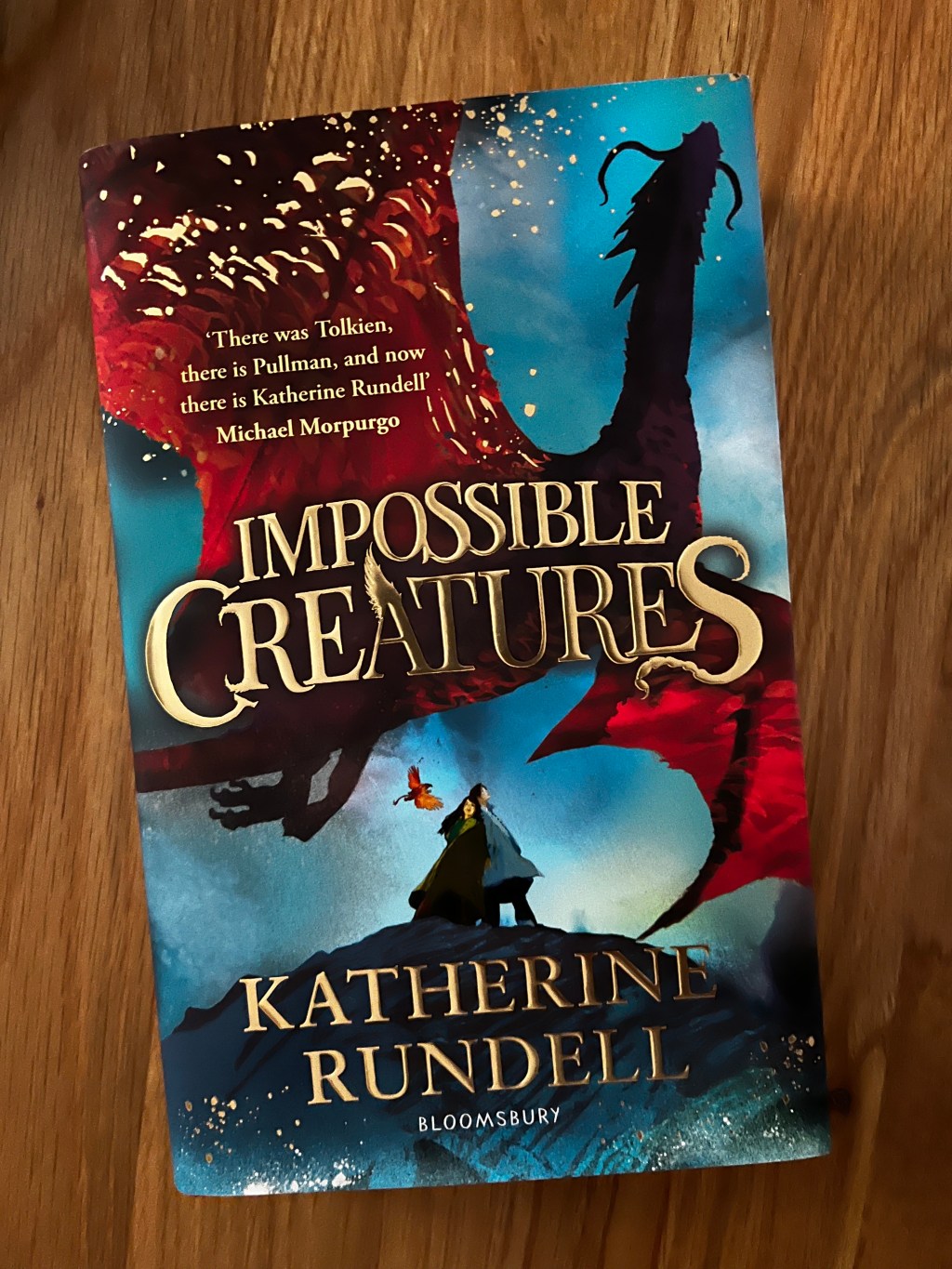
Impossible Creatures is the latest fantasy novel by Katherine Rundell. It follows Christopher, a boy with a special connection to animals, and Mal, a girl with the unusual ability to fly using a special coat, as they try to stop the glimourie (magic) fading from the Archipelago. The Archipelago is, simply, a collection of islands hidden by magic in the Atlantic Ocean that is home to all sorts of mystical and magical creatures—creatures who had been saved there to prevent their extinction.
But the islands are under threat, and the magic is fading, and so Christopher and Mal set off on a journey to save all the creatures who rely on this magic. They are joined by Nighthand, an alcoholic who was formerly a bodyguard to the Immortal, the protector of magic since lost for a hundred years, and Irian, a scientist who is similarly investigating the afflictions affecting the creatures.
It is a wild seafaring adventure that takes the reader to far off places, and we meet, as the title promises, a whole host of mythical beasts. Each has their own personality, their own tendencies, and they are a real joy to behold. I love the creatures—they are the heart and soul of this book. They are present on the island because they were, at some point in history, saved from extinction at human hands. It is curious that other (non-mythical) creatures who became extinct in the years since did not make it on. It would have been nice to encounter a dodo or two. Oh well. Jacques the tiny dragon more than makes up for it.
The story flows nicely, though there are a few convenient moments were information is handed to the characters just at the right time. We have, at one point, a wealthy women flying about the islands on a longma to places otherwise inaccessible to the protagonists and gathering information for them. At another point, a manticore begins, without being prompted, monologuing on a topic that the characters could conveniently do with some more information about. All this is to keep the story moving at a good, consistent pace, but it does pull the reader out a bit.
But otherwise, it is a magical and enjoyable read. I liked the ending, which was heart-breaking and inspiring all at once. The antagonist, who we don’t meet until the end, is set well in the broader lore of the island, so it still feels like a good payoff when we meet. And, above all, the bond that forms between Christopher and Mal is a treasure.
 Peter R. S. Thomas