Tag: Pirates

  • Book Review: Tress of the Emerald Sea

    Book Review: Tress of the Emerald Sea

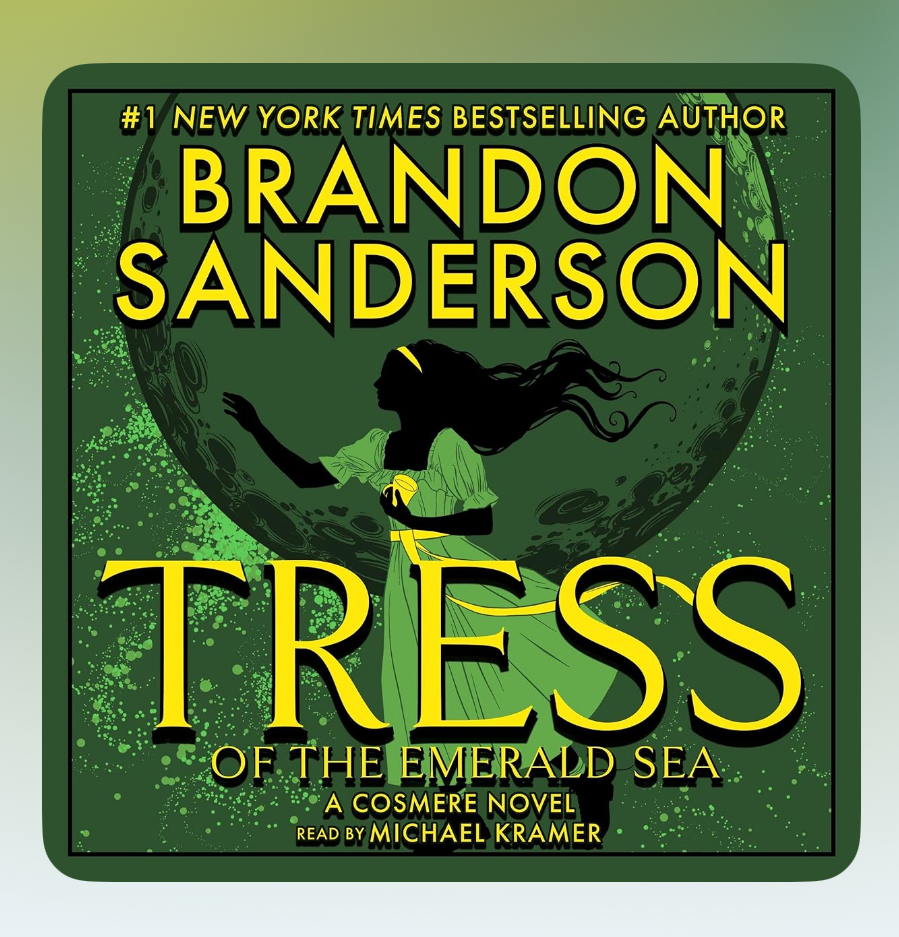
    Tress of the Emerald Sea is a wonderful, layered adventure that evolves as the priorities of Tress, our main character, ebb and shift. Tress is a young girl from a barely habitable rock, surrounded by a sea of spores that turn into vines when they touch water. Her friend and love interest, Charlie, the son of the island’s Duke, is sent to the island of the King to be married. When he makes himself completely undesirable, the King sends him to the Midnight Sea (another of several spore seas, each with their own distinct properties) where he is captured by the fearsome Sorceress. 

    Tress, when she finds out, sets off on a grand adventure to save him. On the way, she becomes part of a pirate crew, driven by the fearsome Captain Crow, and meets Fort, Ann, and Salay, as well as Hoid, a world-hopping character of the wider Cosmere who is cursed by the Sorceress. As Tress seeks Charlie, she becomes embroiled in a conflict between the crew and their captain. This multi-tiered adventure keeps the story fresh and engaging. Of the people Tress meets, Ulaam in particular stands out as a delightful character whose presence brings fun and unpredictability to his scenes. An ear on your arm, anyone?

    One of the key strengths of the novel is how its conflicts are solved through different means. Some through combat, sure, but also through wit and quick-thinking. These keep the tension high in the right places, and show Sanderson’s skill in crafting a variety of situations and solutions for his characters. I am a massive fan of different ways of solving problems beyond force—the scene with Xixis the dragon was my favourite—so this scratched a real itch for me.

    The world building, as one would expect of Sanderson, is top-tier. The spores and how they function are cool and varied, and the way they are built into the story is very satisfying. Likewise, the narrative voice, provided by the cursed Hoid (who is rendered to something of a ‘village idiot’ with no fashion sense), connects the novel to the broader Cosmere. Hoid is witty and fun, and this keeps the narrative light. It is also refreshing to have the story told by a third party who is able to comment personally on what is happening without being the centre of the story. I did find some of Hoid’s observations to disrupt the immersion in places—e.g., the reference to ‘laptops’ being a key one. I get that this is supposed to broaden out the links to the world beyond, but, as someone unfamiliar with the rest of the universe, I found it a little jarring.

    Also, Tress’s character development, while clearly central to the story, does sometimes suffer from exposition that I found a little heavy-handed. There are moments when the narrative explicitly states that Tress is changing or growing, even when I think readers can see these changes organically. It’s a little unnecessary and on-the-nose. And, lastly—SPOILERS—certain plot elements create minor inconsistencies that detract from the otherwise cohesive world. For example, the Sorceress has inhabited the planet for years and possesses advanced knowledge of technology that Tress is only beginning to develop. When Tress offers to trade this technology, the Sorceress dismisses it—yet later, her guards are defeated by this very same technology. This inconsistency feels like an oversight that somewhat weakens the internal logic of the story.

    Regardless of some minor flaws, Tress of the Emerald Sea is an easygoing, refreshing sci-fi/fantasy adventure with a cast of loveable characters. The story is accessible and easy to follow, is told with humour, and sits against a well-fleshed-out and intriguing world. It gets a big ‘recommend’ from me!

  • Book Review: Caraway of the Sea

    Book Review: Caraway of the Sea

    Caraway Auclair has devoted herself to protecting her brother, serving as the ship’s first mate and enforcer. Sacrificing nearly all she is to ensure that he becomes the most fearsome pirate Captain to ever sail the Carnelian Sea. She realizes too late, that the seas have only grown darker, and the waves more fearsome, they threaten to pull her under completely and mold her into something akin to a nightmare.

    Caraway of the Sea, a new novel by Madeline Burget, is a welcome entry to the pirate fantasy/romance space. Billed as a ‘grim cozy pirate tale’, it promises slow-burn romance and lots of paranoia.

    And boy does it deliver.

    Caraway, our titular main character, is a young woman in a man’s world. Here, though she did hide herself as a man in events prior to the story, hiding as a man isn’t the main focus. People accept that she is a woman. But, that does not mean she is free from danger—far from it. Indeed, she is still the subject of violence, and in particular sexual violence. This is explored in some depth.

    But Caraway is herself violent, and we get the sense that this is in some part because she is a woman. To keep herself safe, she has to present herself as someone not to be messed with. And this leads to many a brutal encounter. The action sequences are, indeed, brutal, and bloodthirsty readers will find enough swordplay and gore to satisfy. 

    The main focus is on Caraway’s fracturing relationship with her brother. He, as captain of their crew, is becoming increasingly paranoid and insecure, and she, as his protector, tries to prevent him from following a deadly and ruinous path. But events soon turn for the worse as she becomes the latest subject of his dark suspicions. 

    The story is interspersed with flashbacks, and this mostly works well, though there is one jarring revelation (which I won’t spoil) that made me question how it could take so long for Caraway to come to her eventual realisation. On reflection, it does speak to the nature of gaslighting and abuse in a fundamental way, and made me reevaluate Caraway as something of an unreliable narrator—she is slow to understand what becomes plain to the reader, and we watch her come around.

    My one gripe is the overuse of Caraway recalling memories of things recently passed that the reader was not privy to. The emotional weight of such moments is underwhelming if we weren’t witness to the initial occurrence. This happens more at the start, and is in no way disruptive, but it is just one of those things that didn’t work for me. Perhaps things could have been sequenced differently, or some scenes added in place of others, that would have provided more coherence here.

    Above all, the slow burn romance is done well. Enzo, the strong and handsome love interest, is a compelling counterpoint to Caraway, and his affection for her grows even as she is slow to understand her feelings towards him. We can empathise with her reluctance while still rooting for them—even if Enzo isn’t always trustworthy.

    In all, this book is definitely a worthy contribution to the genre. And, it is the first in a series—I will be interested to see where Caraway adventures next…

  • Book Review: The Siren’s Call

    Book Review: The Siren’s Call

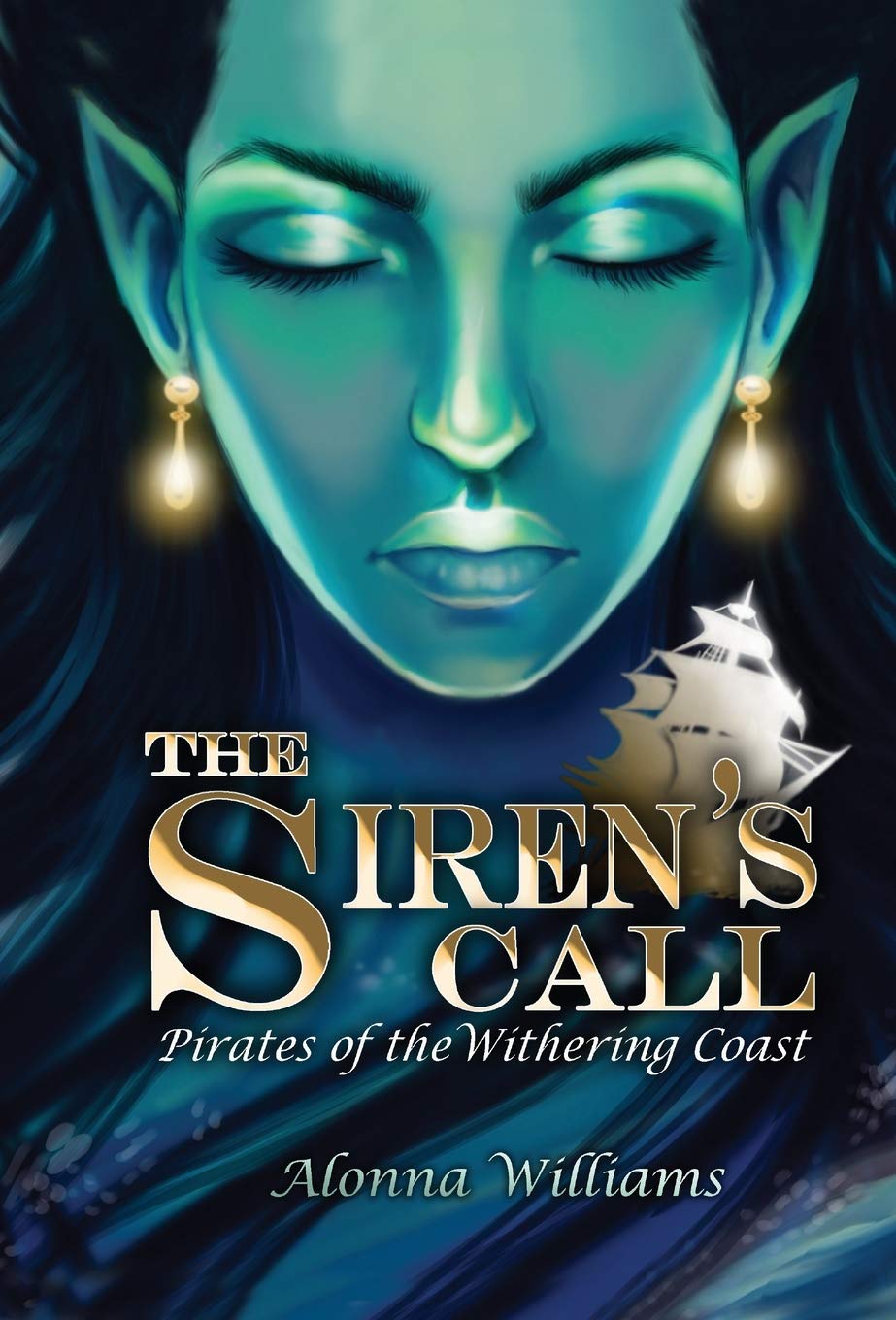
    Have you ever woken up one morning to find your hair has turned long and luscious, and your ears pointed? If so, you just might be a siren! This is the fate that befalls Trevor when he starts to go through the equivalent of siren puberty in The Siren’s Call, which leads him on a perilous journey of self discovery and adventure.

    There is much to love about this charming novel. It is rich in carefully crafted maritime mythology, drawing on a range of Atlantic and Mediterranean influences. The world the sirens and other mercreatures inhabit is beautiful and expansive, and we get the pleasure of exploring it more as the story unfolds. The pacing is pleasant, and there are some likeable and engaging characters—Nicholas in particular I found to be interesting. Bloo is another, who has a distinctive and charming pattern of speech.

    That said, the reader might be overwhelmed by just how many characters there are. There are a couple of large families, human and siren, plus a couple of friendship groups we meet along the way. The geography is also a little confusing at the start. The initial setting is late eighteenth century Manchester, UK, though there are frequent movements between the city and the sea.

    Nevertheless, this is a compelling and creative work full of mystery and excitement that it is easy to get drawn into. I love the world, and I am eager to explore the author’s other novels to find out more about it!

  • Book Review: Mad Kestrel

    Book Review: Mad Kestrel

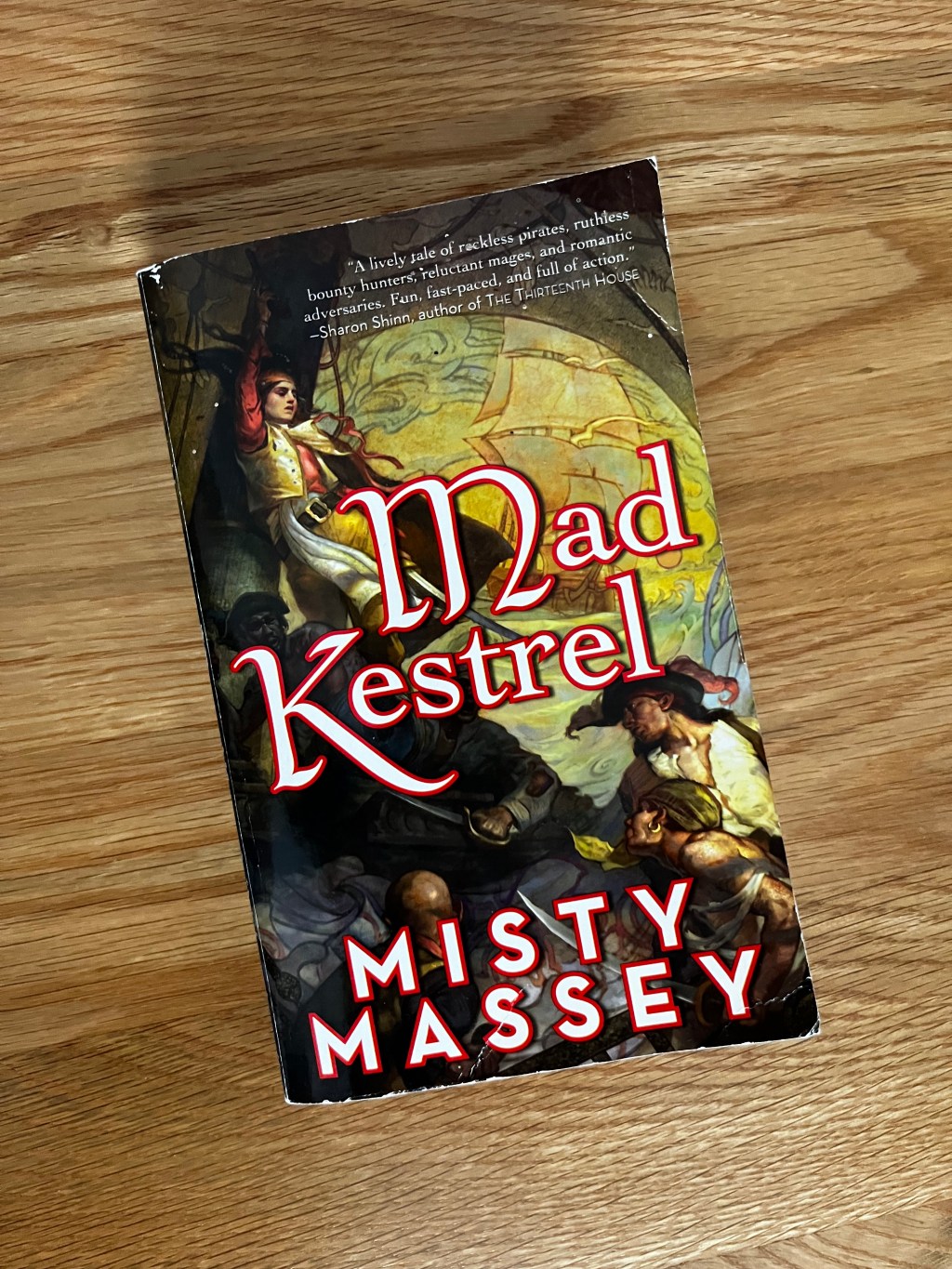
    I am a real sucker for a pirate novel. Throw some magic in there, and you’ve got me. One of my favourite books of all time is On Stranger Tides; one of my favourite movies is Pirates of the Caribbean. I’m not sure if this means my bar is set very high (I’ve read a lot of books about pirates) or very low (I’ll enjoy almost any book that has pirates in).

    Mad Kestrel, by Misty Massey, I thought was a very enjoyable read. Again, I’m late to the party—the book was released in 2008. But I’ve only just found it in my local charity shop. Sue me. It’s a thrilling adventure with a compelling female lead. There are some wonderful action sequences and pulse-raising swordplay. And, of course, some sailing through rough waters (literally and figuratively), and intriguingly handsome—but also infuriatingly charming—men.

    We follow Kestrel, a quartermaster aboard the Wolfsbane, as she attempts to rescue her captured mentor, Artemus Binns. Along the way she meets Phillip McAvery, a smooth-talking rogue who we don’t know whether or not to trust, and we are accompanied by a loyal, hard-working crew… or are we? Throughout, we are trailed by bounty hunters and a mysterious magical order, whose ceaseless pursuit keeps Kestrel constantly on her toes.

    The magic system is probably the weakest part of the book. It’s used to drive the threat more than anything—the protagonist, a special kind of magic wielder, is afraid to use her magic lest she is found by magic hunters. So, we don’t really get to see how it works until the end. And, in the end, it seems almost anything is possible with magic. Because we haven’t really been exposed to it much throughout the book, it means the payoff isn’t all that great. Oh well: Less magic means more room for swords and swashbuckling! And the sword fights and action sequences are superb.

    One thing though: I was disappointed with the author’s choice for the ending…

    SPOILER ALERT!

    The protagonist, Kestrel, is presented with a choice to take her mentor’s place as privateer for the king, or to go about her merry way as a pirate. We’ve had a whole book building up this character as a strong, independent woman who is fighting to prove her place as a leader of men; but in the end, she chooses to be under the thumb of the king. We’re told she negotiated better terms, and women are now allowed to sail on ships in the kingdom (yay!), but it feels a little flat after all that’s happened. I’d have liked for her to stick it to her (male) mentor and the king, and go off pirating into the sunset. But I can understand why the author went the other way… it certainly feels neater, and ties everything up.

    Despite some flaws, this is an enjoyable read, with thrilling adventure and strong characters. I’ll add it to the list of books I’ll recommend to anyone who dares ask me pirate stories!

  • Book Review: The Call of the Sea

    Book Review: The Call of the Sea

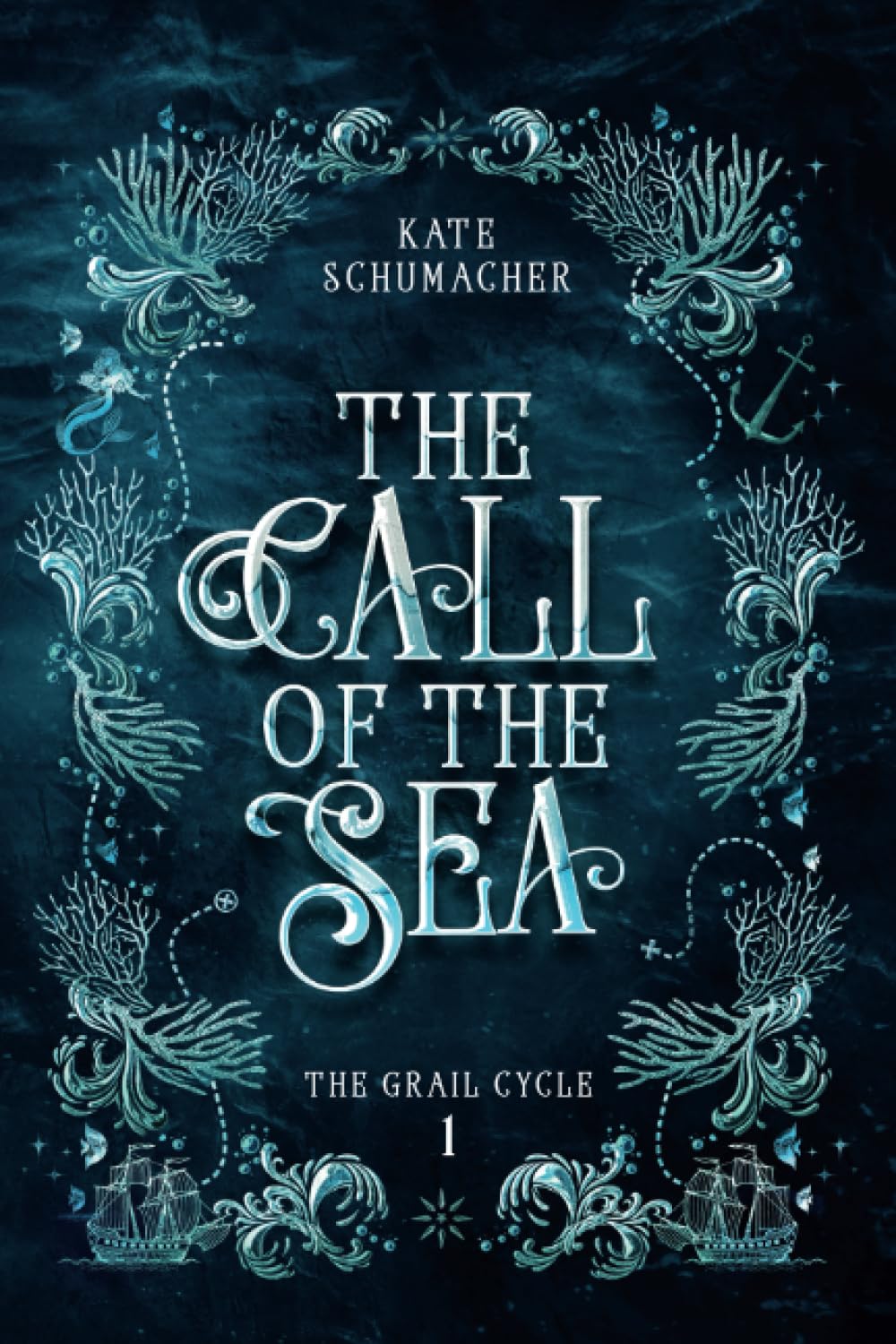
    The Call of the Sea by Kate Schumacher is a maritime take on the Arthurian legends, told with an ensemble of characters and through multiple viewpoints. It is set in a land being changed—not for the better—by a monotheistic, orthodox religion (a thinly veiled critique of christianity) that seeks to keep women bound in their homes and sees homosexuality as sinful and shameful. It also seeks to rid the world of its old magic and those who can control it (hypocritically, of course, given that to detect magic one must possess magic). A series of events leads its three core characters—Jenyfer, Ordes and Arthur—on a mission to find themselves, find each other, and, yes, find the grail.

    The story is beautifully told, with vivid descriptions of the scenery and subtle world building. At the heart of the story are the relationships between the characters, romantic and otherwise, and they are deliciously lustful and thirsty for each other (be prepared for lots of burning flesh and clenching legs). The pacing is consistent and slow, with plenty of time for reflection and characterisation. This might put some people off, but it is deliberate, and it works, and people looking for a break from breakneck pace will find something to love here.

    Given its emphasis on the persecution of women and gay people, the author is not afraid to tackle difficult subjects. There are some graphic scenes, so just be warned going in.

    The first in a trilogy, this book does more to set up the characters and the problems affecting the world, so don’t expect much resolution as you get to the end. But, given the richness and depth of the world, I don’t doubt that after finishing this you will be hungry for the next instalment.

  • The Edge Chronicles

    The Edge Chronicles

    This series will forever be one of my favourites. It was my favourite as a boy and, rereading the books now, I’m still in love. And how could I not be? The world is expansive and diverse, the characters are relatable and compelling, and the illustrations are beautiful (especially in the print books—the ebook version, perhaps not so much… the limitations of technology! Though the maps and many illustrations are available from the official website).

    The series is set on The Edge, a jutting piece of rock that sits amidst a vast expanse—no one has travelled far enough over the edge (outward, upward, or downward) and returned. A river flows into nothingness. But on The Edge are lush and dangerous forests, barren wastelands, marshes and mires, towns and cities (including the floating city of Sanctaphrax). The world is populated by a wide variety of different creatures, some coexisting, some not, from humans to humanoid beings, spindly-legged spider-like creatures, flesh-eating trees, giant banderbears, and much more in between.

    The series follows The Edge at different stages, with storylines focusing on a core of interrelated characters, all descendants of the same family across different generations. The epochs are defined by the stages of flight they go through, from ships mounted with lighter-than-air stones (flight rocks) able to keep them afloat in the sky, to specially varnished buoyant woods, to more industrial sky ships powered by stormphrax. 

    Sky pirates feature heavily, especially in the first two trilogies centred on Twig and Quint (one of the key reasons, obviously, why I love it), and the stories are bound together by sweeping adventures. The reader is taken to the variety of places across The Edge, and they meet numerous different peoples and societies, all wonderfully imagined. Within this world, the stories are able to tackle different themes: race and difference, identity and belonging, nature and industry, slavery and freedom—alongside the more familiar themes of good and evil, right and wrong.

    The world created by Paul Stewart and Chris Riddell is captivating and formidable. Enter at your peril, and be prepared to be swept along in breathless adventures to the farthest reaches of the land—and beyond!

  • On Stranger Tides

    On Stranger Tides

    One of the biggest influences on my writing has been On Stranger Tides by Tim Powers. The book is a historical fantasy novel that includes real historical figures, and involves the search for the Fountain of Youth. It is rich with magic, drawing on the ‘voodoo’ of Creole Caribbean culture. For me, one of my favourite parts of the novel is the unusual protagonist—John Chandagnac is a puppeteer, an occupation that is drawn on in a creative and entertaining way towards the end of the novel.

    The characters and their motivations are all incredibly interesting, the magic systems are rich, and the mystical world beyond the real world is beautifully crafted. I loved the story; it did lose me a bit towards the end, and there were times where, for me, the logic and flow didn’t quite work. Some have criticised it for its pacing, which I can see as an issue. But there’s nothing unforgivable. As action and adventure goes, this is a solid offering.

    The book draws on classical elements of pirate lore, such as zombies, sea battles, sword fights, and, of course, voodoo, and interweaves these in an entertaining and original narrative. The voodoo is, as far as I understand it, researched well and in keeping with traditional conceptions of the spirits (e.g., the Loa). 

    It has, of course, had an immense impact on popular culture, famously the Monkey Island video game and The Pirates of the Caribbean franchise (though the less said about that film, the better). The mixture of magic and history has directly influenced my own creative writing, and it’s something I’ve explicitly drawn upon or paid homage to in my work. Fans of pirate adventures could do worse than find themselves On Stranger Tides.