Tag: Novel

  • Book Review: Carl’s Doomsday Scenario

    Book Review: Carl’s Doomsday Scenario

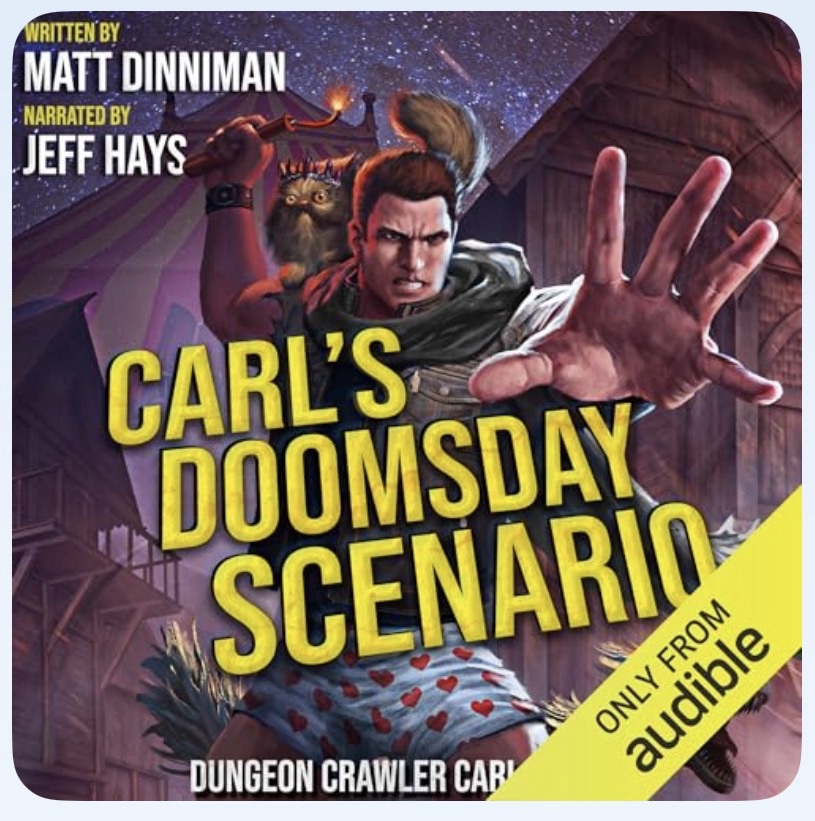
    And down we go to floor three with Carl and Princess Donut! This is where things get real…

    This is a great follow-up to Dungeon Crawler Carl that picks up right where we left off from book one. Earth has collapsed into an intergalactic dungeon crawl set up by extraterrestrial companies as part of some universe-wide capitalist hellscape.

    Safe to say, things are more dangerous, and just a tad complicated.

    If the first book was about establishing a world and proving its concept, Carl’s Doomsday Scenario is about deepening it. Dinniman writes well and with confidence, with characters you can’t help but fall deeper in love with.

    The heart of this book is the quest system. On floor three, crawlers have the option to engage in quests, which serve a quirky soap opera style addition to the crawl. NPCs have scripted storylines that run parallel to the activities of crawlers. This adds a new dimension to the world.

    As a narrative device, quests become a vehicle for exploring Carl’s empathy and fundamental decency. We see that his instinct, even in a system designed to brutalise, is to help people. And it’s through these moments that we get a window into Carl’s character. We get glimpses into his background and upbringing, which hints at something being built here for later in the series.

    Mongo, the velociraptor introduced at the tail end of book one, gets significantly more page time here, and I’m down for every minute. The creature brings out a new side to Princess Donut, a kind of maternal streak that adds warmth and depth. Mordecai, too, continues to grow into one of the most enjoyable characters in the series, with his wise and world-weary demeanor.

    The action is more intense and considerably gorier than the first book. Think Fallout’s VATS system with the gore setting turned on. Safe to say, Dinniman doesn’t hold back! But it’s not just all guns blazing action; solutions to problems feel creative, and give the book the same air of freedom you get when playing dungeons and dragons, where solutions are logical but often unexpected.

    The wider universe continues to expand in interesting ways too. The politics beyond the dungeon get murkier and more compelling, and the sense that Carl and Donut are pieces in a much larger game is growing.

    Carl’s Doomsday Scenario is an excellent sequel. It gives you what you loved from book one while raising the stakes and bringing in new elements. All the while, it still feels like the best is yet to come!
  • Book Review: Starter Villain

    Book Review: Starter Villain

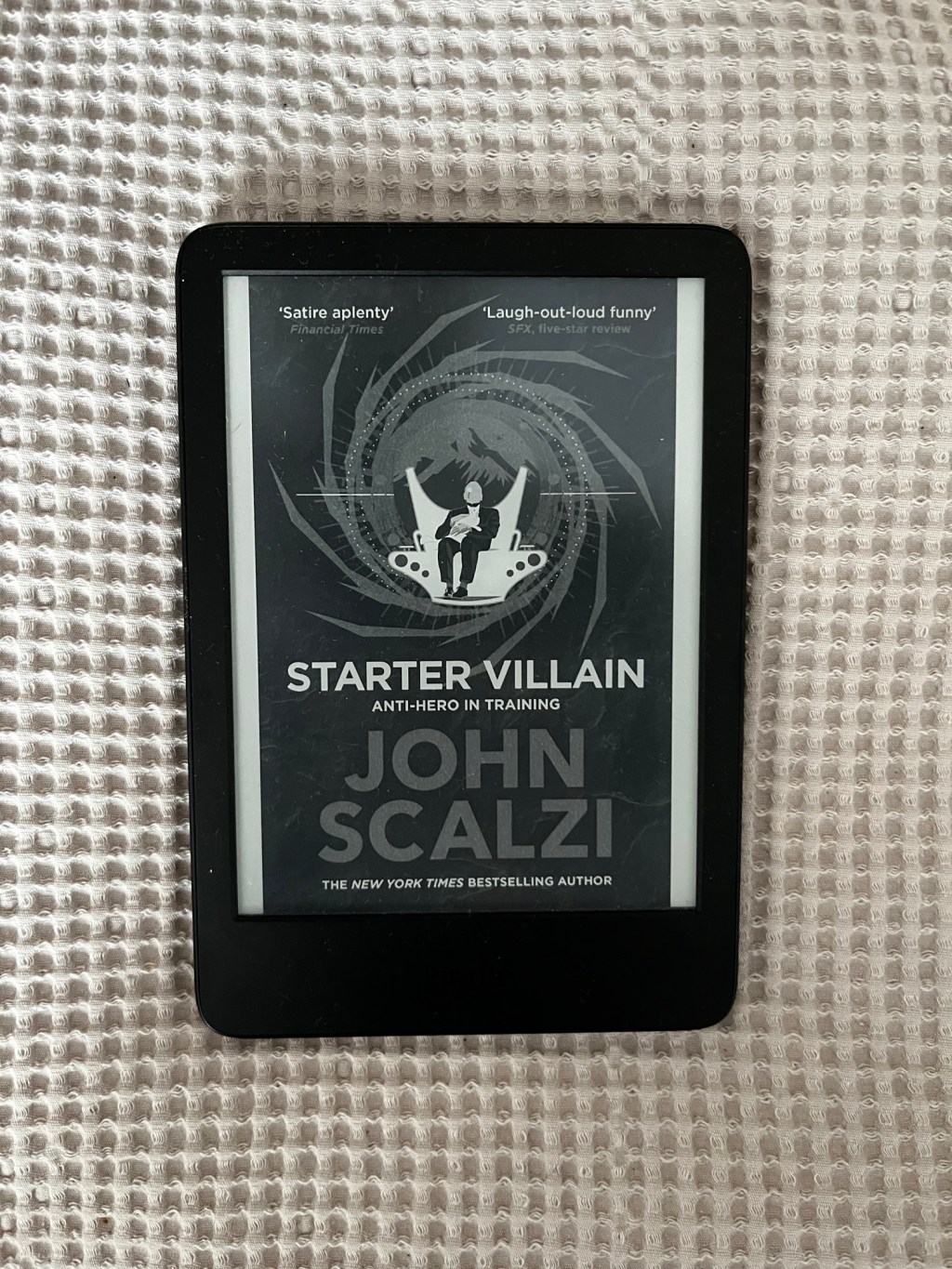
    Charlie Fitzer is a down-on-his-luck teacher with a mounting pile of problems when he unexpectedly inherits his estranged uncle’s business empire. The catch? His uncle was a supervillain. Suddenly thrust into a world of criminal syndicates and secret lairs, Charlie has to figure out not just how to survive, but whether he wants anything to do with this at all!

    Starter Villain is pacy and entertaining, and it sure packs a lot into its modest page count. For a reasonably short book there’s a lot in here. The mechanics of how villain enterprises actually function, the flow of money, the politics of organised crime, are all really well thought through. It makes it grounded, and dare I say plausible, even as it becomes more outlandish.

    And outlandish it certainly is! Negotiations with dolphin labour unions, confrontations with crime lords… a network of sentient cats operating as spies! This is excellent satire that’s well tied to real stakes. It works precisely because the world feels both ridiculous and believable at the same time.

    The characters are distinct and credible, and Charlie himself is an engaging protagonist. He’s ordinary enough to be relatable and resourceful enough to be worth following. And the plot has enough twists to keep you on your toes without ever feeling contrived.

    Part of what I loved about Starter Villain is that it’s a complete, standalone novel. There’s no loose threads or unresolved arcs. In this way, it’s very satisfying. Compelling plot and excellent satire, all packed into one easily digestible novel! What’s not to love?

  • Book Review: The Lies of Locke Lamora

    Book Review: The Lies of Locke Lamora

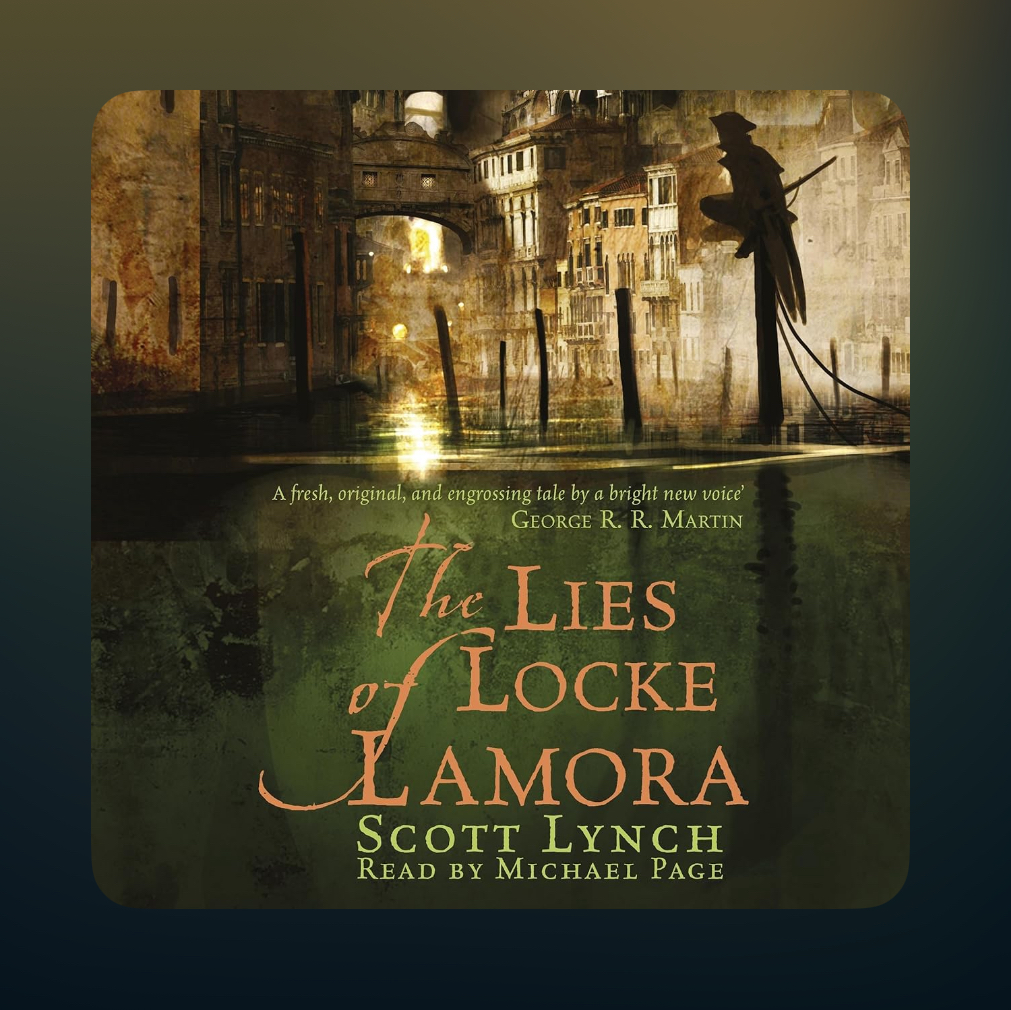
    Scott Lynch’s debut fantasy novel, The Lies of Locke Lamora, features an elaborate heist set in a beautifully realised seventeeth-century-inspired world.

    Honestly, it hit me in the same way that The Name of the Wind did. We have a physically unimpressive protagonist who makes up for a lack of brawn with guile and pure cunning. Locke Lamora is endearing in the same way the Kvothe is. He executes elaborate cons and talks his way out of deadly situations. He fits the rogue archetype to a tee. And Jean is an excellent companion (and Jean brings the physicality that Locke lacks). He’s not a simpleton or a yes-man in the way that some ‘brawler’ characters can be. He feels well defined in his own right. Above all, their friendship feels genuine and lived in. It’s easy to care about them.

    As fantasy heists go, the plot is near perfect. It’s well structured and escalates in just the right way. Just as you think you have a handle on what’s going on, something else happens and it all spirals into some bigger and more dangerous; the stakes are raised organically and plausibly at each turn. And they’re raised in ways I couldn’t see coming. There’s also backstory interwoven throughout (the kind of backstory that again reminded me of The Name of the Wind, albeit delivered in a different way). Information important to the present moment is delivered via these backstories, keeping them timely and relevant.

    The worldbuilding is immersive without being overwhelming. None of the protagonists are magic, but they encounter others who are—and so Lynch has to create problems that are challenging for the protagonists, whilst giving them scope to overcome them. I think he strikes the right balance between power and limitation, and the rules are clear enough for some satisfying loopholes to be exploited without feeling contrived.

    It’s not without its flaws. There’s hints at a romantic subplot that never quite develops. And [MODERATE SPOILERS] Locke’s heroic turn at the climax didn’t feel completely earned. I understand the choices made, but I didn’t fully buy it. There were also some stretches where plot threads were left unattended, as other parts of the plot moved forward. 

    But these complaints are relatively minor. I was entertained enough by the characters, the dialogue, and the rich world. It has enough clever problem solving and good character work to scratch the same itch as The Name of the Wind.

  • Book Review: Mort

    Book Review: Mort

    I’m about five or six books into Discworld as a series now, and so I’ve seen Death appear as a minor character a few times. But I was very intrigued to read Mort, which sees the whole story revolve around Death and the titular character, his new apprentice.

    Death wants a holiday, wants to explore his other interests, find out what it means to be alive… and who better to take over his work than a gangly farm boy that no one else wanted as their apprentice?

    Death and Mort act as counterpoints to each other. In his time away from his ‘work’, Death struggles with humanity (trying to get drunk, not really getting why people fear him—except cats, that is). 

    Mort, on the other hand, grapples with the weight of having to sever peoples’ souls from their earthly bodies, and the apparent lack of justice when they die (because, in the end, people go where they believe they’re going to go). 

    They both go through steady arcs, with Death finding peace as a chef, and Mort becoming less bumbling and more able to take on the powers of the job, even as he questions his duty.

    One of the things I loved most was the conceptualisation of time. The instigating moment for the plot was Mort’s refusal to take Princess Keli’s soul, which created an inflection point in time. She should have died, and history carries on as if she did, and eventually it all tries to self-correct. It’s clever writing and creates a set-up where the reader isn’t sure how it’s going to be resolved.

    I found the supporting cast to be hit or miss, though. I liked Ysabel and her relationship with Mort, and how it goes from antagonistic to friendship over time. Albert is an excellent character, especially when his mysterious past is unveiled. But I wasn’t so sure about Cutwell—I’m not sure if he was supposed to be annoying and off-putting, but I wasn’t really keen on him!

    This is a really interesting and unusual fantasy book showing how Pratchett continued to have a unique take on the genre. Like I said, I’m five or six books in, and none of them have really felt the same.