Tag: magic

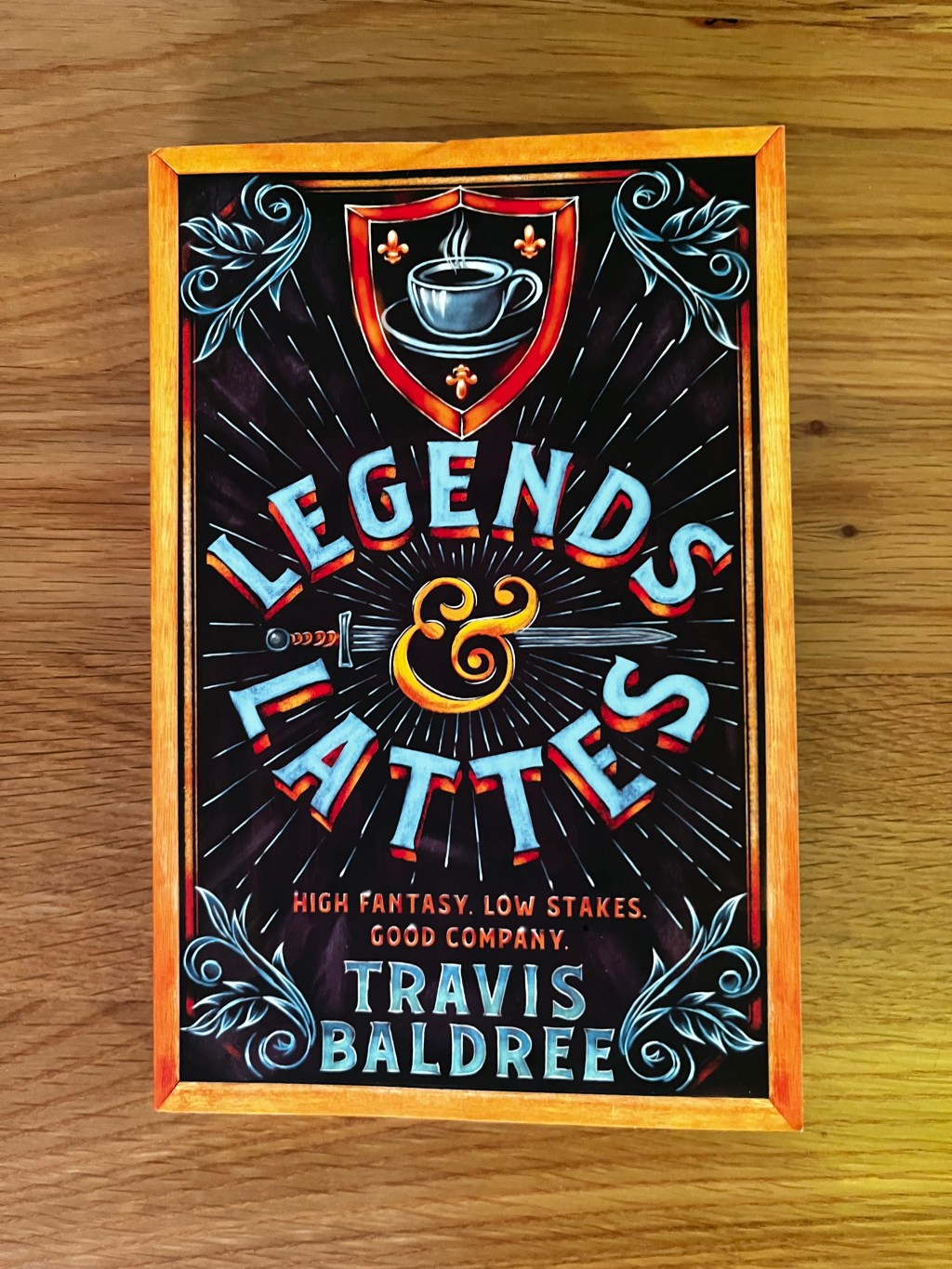
  • Book Review: Legends & Lattes

    Book Review: Legends & Lattes

    High fantasy, low stakes – with a double-shot of coffee.

    After decades of adventuring, Viv the orc barbarian is finally hanging up her sword for good. Now she sets her sights on a new dream – for she plans to open the first coffee shop in the city of Thune. Even though no one there knows what coffee actually is.

    If Viv wants to put the past behind her, she can’t go it alone. And help might arrive from unexpected quarters. Yet old rivals and new stand in the way of success. And Thune’s shady underbelly could make it all too easy for Viv to take up the blade once more.

    But the true reward of the uncharted path is the travellers you meet along the way. Whether bound by ancient magic, delicious pastries or a freshly brewed cup, they may become something deeper than Viv ever could have imagined . . .

    Travis Baldree’s Legends & Lattes is a hit for a reason. Influenced by earlier books that brought elements of daily life into fantasy, notably Terry Pratchett’s works, Baldree revised the genre for the Covid era. At a time where people were kept away from their friends and family, when local meeting places were shut, the idea of a cosy story centred around a coffee shop was the height of escapism.

    The narrative focuses on retiring adventurer Viv, who wants to trade in her sword for a quieter life. She builds her hopes around the Scalvert’s Stone, a magical item that promises to bring a ‘ring of fortune’ around its bearer. But this only draws more trouble…

    The heart of the story is its characters. Viv’s journey is anchored to her relationships, in particular with Tandri. Both are loveable and compelling, and the way they find companionship is nuanced and authentic. Supporting characters Cal, Pendry and Thimble further enrich this, with their distinctive personalities each adding warmth and subtly. (Cal was a particular favourite of mine.)

    Though the book promises ‘high fantasy, low stakes’, there is still much tension in a steadily evolving narrative. The cosy atmosphere is balanced against moments of conflict—with the cosy feeling enhanced in moments of resolution. This is driven mostly by the Scalvert’s Stone, which is surrounded by an air of intrigue and mystery—and riddles that characters struggle to fully make sense of. Quite what its presence means for the shop, and for Viv, and what it means should it disappear, is part of what drives the story forward.

    The most compelling aspect of the novel is its immersive atmosphere. Reading it, you almost feel as if you are there, smelling the coffee, tasting Thimble’s cooking, hearing Pendry’s music. It made me really want to just sit down with a coffee and pastry, with a bit of a frost and a chill outside and a nice warming mug of something hot.

    And, at the end of the day, that’s just what reading this book feels like. A nice, warming mug of something hot!

  • Book Review: Thornhedge

    Book Review: Thornhedge

    There’s a princess trapped in a tower. This isn’t her story.

    Meet Toadling. On the day of her birth, she was stolen from her family by the fairies, but she grew up safe and loved in the warm waters of faerieland. Once an adult though, the fae ask a favor of Toadling: return to the human world and offer a blessing of protection to a newborn child. Simple, right?

    If only.

    Centuries later, a knight approaches a towering wall of brambles, where the thorns are as thick as your arm and as sharp as swords. He’s heard there’s a curse here that needs breaking, but it’s a curse Toadling will do anything to uphold…

    Thornhedge by T. Kingfisher is a beautiful novella that both honours and subverts traditional fairy tales: This is, after all, not a story about the princess in the tower!

    One of the most striking aspects of the novella for me was the writing style. Kingfisher has a way of writing where the words seem strange and unusual together, but they’re formed in such a way that help you understand what the characters are feeling. Even something like this:

    She would never be able to describe the ride. No one ever asked her, but she would have liked to have the words to fit around it, if only for herself. It was like a dream that went on for many hours, and in the morning the fragments still lay dusted across her shoulders.

    It just reminds me why I love reading. When done well, writing is such a beautiful art form.

    The magic system is well crafted—simple, but effective, and aesthetically very pleasing. Toadling, the main character, is able to draw on the water around her, and that gives the magic a ‘wetness’, which lends itself well to analogies:

    The drops became a stream, became a torrent, and then Toadling was swimming in the magic, surrounded by it.

    The novel’s structure is equally sophisticated. We move between past and present with a growing urgency. As the narrative progresses, these switches happen more quickly as the book goes on, with the backstory and current events drawing closer together until they finally meet.

    And, of course, at the heart of the story are its characters, Toadling and Halim. Toadling in particular is irresistible. Her quirks and imperfections only make her more endearing. She forms a relationship with the self-deprecating and overly apologetic Halim in a way that feels natural and authentic.

    Together these elements combine in a way that feels fresh in a space so heavily saturated—fairy tales and fae are, of course, long-written and well-read genres. But I think even seasoned readers will find something new in this novella. It is a short read that will stay with you for long after you finish.

  • Book Review: Impossible Creatures

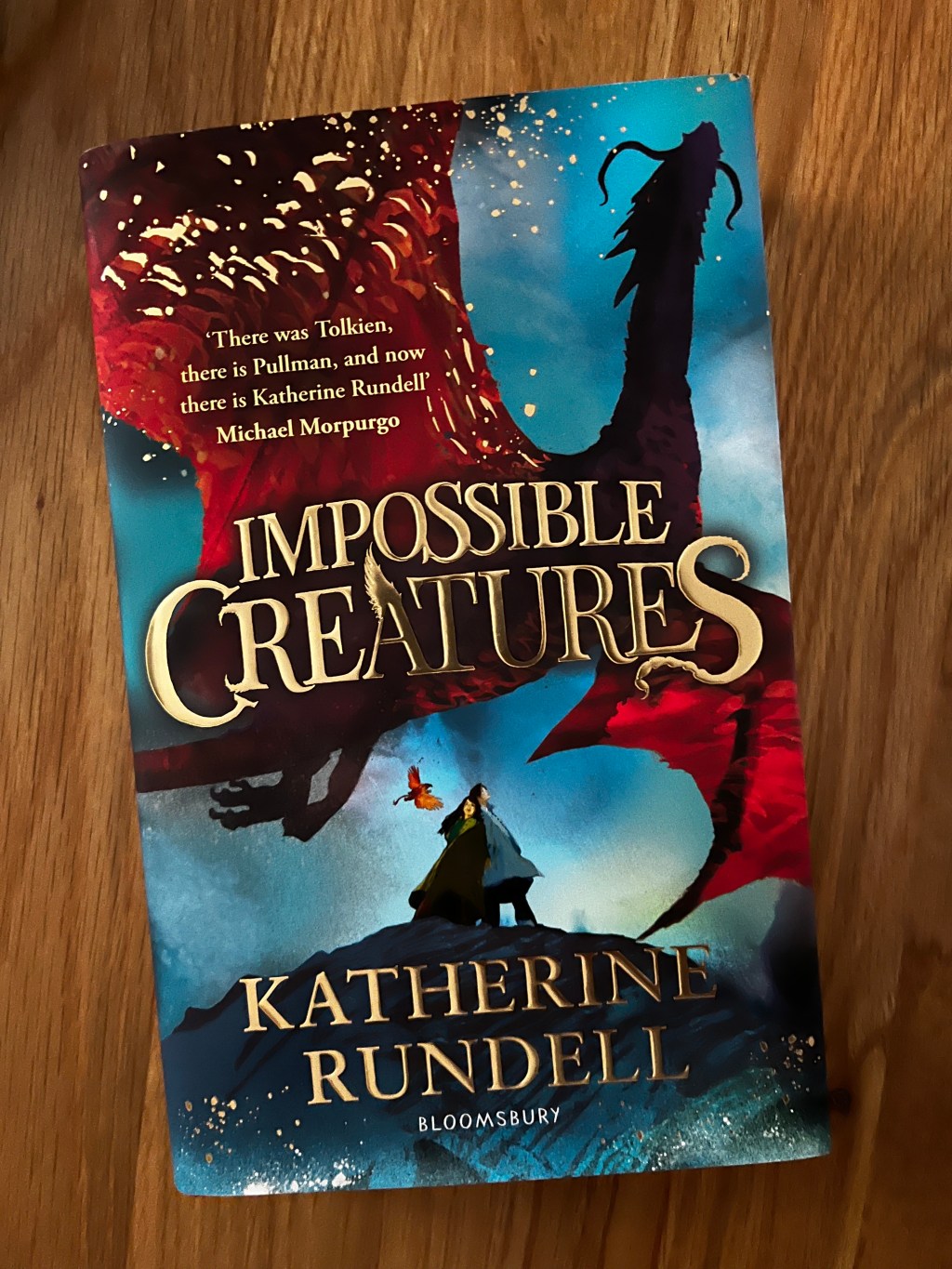
    Book Review: Impossible Creatures

    Impossible Creatures is the latest fantasy novel by Katherine Rundell. It follows Christopher, a boy with a special connection to animals, and Mal, a girl with the unusual ability to fly using a special coat, as they try to stop the glimourie (magic) fading from the Archipelago. The Archipelago is, simply, a collection of islands hidden by magic in the Atlantic Ocean that is home to all sorts of mystical and magical creatures—creatures who had been saved there to prevent their extinction.

    But the islands are under threat, and the magic is fading, and so Christopher and Mal set off on a journey to save all the creatures who rely on this magic. They are joined by Nighthand, an alcoholic who was formerly a bodyguard to the Immortal, the protector of magic since lost for a hundred years, and Irian, a scientist who is similarly investigating the afflictions affecting the creatures.

    It is a wild seafaring adventure that takes the reader to far off places, and we meet, as the title promises, a whole host of mythical beasts. Each has their own personality, their own tendencies, and they are a real joy to behold. I love the creatures—they are the heart and soul of this book. They are present on the island because they were, at some point in history, saved from extinction at human hands. It is curious that other (non-mythical) creatures who became extinct in the years since did not make it on. It would have been nice to encounter a dodo or two. Oh well. Jacques the tiny dragon more than makes up for it.

    The story flows nicely, though there are a few convenient moments were information is handed to the characters just at the right time. We have, at one point, a wealthy women flying about the islands on a longma to places otherwise inaccessible to the protagonists and gathering information for them. At another point, a manticore begins, without being prompted, monologuing on a topic that the characters could conveniently do with some more information about. All this is to keep the story moving at a good, consistent pace, but it does pull the reader out a bit.

    But otherwise, it is a magical and enjoyable read. I liked the ending, which was heart-breaking and inspiring all at once. The antagonist, who we don’t meet until the end, is set well in the broader lore of the island, so it still feels like a good payoff when we meet. And, above all, the bond that forms between Christopher and Mal is a treasure.

  • Book Review: The Plight of the Guardians

    Book Review: The Plight of the Guardians

    This book is the latest in Alonna William’s instalments of the Fables from Wyanidus Lystria series. It takes us on a journey of a changing of the guard, so to speak, of the Guardians, the powerful beings entrusted by the island to look after the weather, over the people, and generally maintain good order. Our heroes are Azari’ah and Ariad’na, who we follow as they turn from rivals into lovers, rise to become guardians, and help solve the island’s problems.

    The relationship between Azari’ah and Ariad’na is the beating heart of this book, and their relationship as it shifts and changes over time drives the plot forward. When they meet, Azari’ah, serious and studious, resents Ariad’na’s careful and playful attitude; Ariad’na, for her part finds Azari’ah’s joylessness off-putting. But when they are forced into proximity by the current guardians, who are training them up, they start to become close. Very close. This yields its own problems, as guardians are forbidden from forming attachments with specific people, lest it bias their judgement. The interplay between the two is great, and I love the dialogue and characterisation.

    In exploring its plot and relationships, the author delves into some hard-hitting themes. She explores issues of poverty and childhood trauma, and the impact this has on later relationships and values. She also digs into themes of toxic masculinity in a way that I think is really well done. Throughout the book, Azari’ah is told by his mentor to be strong and suppress his emotions, to let go of his attachments to people, to be ruled by strict logic. But we see the damage that this has on his psyche, and the struggles it pushes him through.

    The broader world is luscious and expansive. The author clearly has so much care for this land she has created, and that really shines through. All the different creatures, the magic of the island, the interplay of how they all connect—it’s enchanting! It’s a world where, after I put down the book, I can’t wait to get stuck back in.

  • Book Review: Mad Kestrel

    Book Review: Mad Kestrel

    I am a real sucker for a pirate novel. Throw some magic in there, and you’ve got me. One of my favourite books of all time is On Stranger Tides; one of my favourite movies is Pirates of the Caribbean. I’m not sure if this means my bar is set very high (I’ve read a lot of books about pirates) or very low (I’ll enjoy almost any book that has pirates in).

    Mad Kestrel, by Misty Massey, I thought was a very enjoyable read. Again, I’m late to the party—the book was released in 2008. But I’ve only just found it in my local charity shop. Sue me. It’s a thrilling adventure with a compelling female lead. There are some wonderful action sequences and pulse-raising swordplay. And, of course, some sailing through rough waters (literally and figuratively), and intriguingly handsome—but also infuriatingly charming—men.

    We follow Kestrel, a quartermaster aboard the Wolfsbane, as she attempts to rescue her captured mentor, Artemus Binns. Along the way she meets Phillip McAvery, a smooth-talking rogue who we don’t know whether or not to trust, and we are accompanied by a loyal, hard-working crew… or are we? Throughout, we are trailed by bounty hunters and a mysterious magical order, whose ceaseless pursuit keeps Kestrel constantly on her toes.

    The magic system is probably the weakest part of the book. It’s used to drive the threat more than anything—the protagonist, a special kind of magic wielder, is afraid to use her magic lest she is found by magic hunters. So, we don’t really get to see how it works until the end. And, in the end, it seems almost anything is possible with magic. Because we haven’t really been exposed to it much throughout the book, it means the payoff isn’t all that great. Oh well: Less magic means more room for swords and swashbuckling! And the sword fights and action sequences are superb.

    One thing though: I was disappointed with the author’s choice for the ending…

    SPOILER ALERT!

    The protagonist, Kestrel, is presented with a choice to take her mentor’s place as privateer for the king, or to go about her merry way as a pirate. We’ve had a whole book building up this character as a strong, independent woman who is fighting to prove her place as a leader of men; but in the end, she chooses to be under the thumb of the king. We’re told she negotiated better terms, and women are now allowed to sail on ships in the kingdom (yay!), but it feels a little flat after all that’s happened. I’d have liked for her to stick it to her (male) mentor and the king, and go off pirating into the sunset. But I can understand why the author went the other way… it certainly feels neater, and ties everything up.

    Despite some flaws, this is an enjoyable read, with thrilling adventure and strong characters. I’ll add it to the list of books I’ll recommend to anyone who dares ask me pirate stories!

  • Book Review: The Name of the Wind

    Book Review: The Name of the Wind

    I’m a bit late to the party with this one, I know. The book had been sat on my shelf for two years before I read it. It has been published even longer. (I’ve had a lot on, okay… don’t judge me!) I have now read it, and I understand why it has become an instant classic of the genre. And yes, I can now join the legions of fans anxiously clamouring for the third instalment. Hopefully by the time I’m done reading the sequel…

    The Name of the Wind is an epic fantasy ambitious in scope. It truly lives up to the ‘epic’ part of the genre. Told in both third person (in the present) and first person (as the protagonist recounts his life story), it follows Kvothe as he grows up and attends university. It is a detailed, thorough, character-driven story that rarely relents in excitement. The character development is superb. I love a character with a background in the performing arts—it’s a great way of explaining their charisma, and giving them a way of plausibly talking their way out of trouble (or talking their way into trouble). It also makes them a little more dynamic than the warrior-hero archetype. Rothfuss strikes a great balance between the genius of Kvothe’s character (he learns fast, has great instincts for almost all his studies) and his flaws—he still has obstacles he finds difficult to overcome. He is intelligent, but occasionally foolish, and brash, sometimes over confident. He is limited by his background as part of a travelling troupe as much as he his aided by it.

    There is an overarching story that the book sets up but delves little into. Despite this, I didn’t feel in too much of a rush for that side of things to develop. The drama of Kvothe’s life as he moves from travelling performer to street urchin to university student keeps the reader hooked. There is also an expansive world with different magic systems, from runes and artificery to more abstract controlling-the-elements-by-speaking-their-names. The wider world is nicely constructed, with different peoples and customs that intersect at different places. It gives the setting depth, and let’s the reader know that there is more to explore.

    The story slows down a little towards the last third, around the time that Kvothe finds out that he’s a heterosexual male and that women exist. Periods of courtship and pining after an elusive and mysterious woman become a little drawn out at times, but I can see why they’re there, and it doesn’t stall things for too long. In the end, the relationship the protagonist has with his love interest does drive the story forward.

    So, safe to say, I am hooked! This is an epic story with excellent character development and an expansive world. I look forward to reading The Wise Man’s Fear

  • Book Review: The Call of the Sea

    Book Review: The Call of the Sea

    The Call of the Sea by Kate Schumacher is a maritime take on the Arthurian legends, told with an ensemble of characters and through multiple viewpoints. It is set in a land being changed—not for the better—by a monotheistic, orthodox religion (a thinly veiled critique of christianity) that seeks to keep women bound in their homes and sees homosexuality as sinful and shameful. It also seeks to rid the world of its old magic and those who can control it (hypocritically, of course, given that to detect magic one must possess magic). A series of events leads its three core characters—Jenyfer, Ordes and Arthur—on a mission to find themselves, find each other, and, yes, find the grail.

    The story is beautifully told, with vivid descriptions of the scenery and subtle world building. At the heart of the story are the relationships between the characters, romantic and otherwise, and they are deliciously lustful and thirsty for each other (be prepared for lots of burning flesh and clenching legs). The pacing is consistent and slow, with plenty of time for reflection and characterisation. This might put some people off, but it is deliberate, and it works, and people looking for a break from breakneck pace will find something to love here.

    Given its emphasis on the persecution of women and gay people, the author is not afraid to tackle difficult subjects. There are some graphic scenes, so just be warned going in.

    The first in a trilogy, this book does more to set up the characters and the problems affecting the world, so don’t expect much resolution as you get to the end. But, given the richness and depth of the world, I don’t doubt that after finishing this you will be hungry for the next instalment.