Tag: Heinlein

  • Book Review: Artemis

    Book Review: Artemis

    There’s a lot to like about Andy Weir’s Artemis. Sci-fi plus crime thriller; spunky protagonist (who, yes, admittedly sounds a lot like the protagonist of Weir’s other novel, The Martian). Set in humanity’s first lunar city, the novel follows Jazz Bashara through a heist that could set her up for life—or set Artemis on a path towards its doom!

    I found Jazz to be assertive and entertaining. There’s a bit of cliche in her backstory—brilliant and intelligent, but not living up to her full potential. But her voice and her attitude make her likeable, and her relationships with others keep things interesting, and in particular her relationship with her father. Jazz also has a pen pal on earth, Kelvin, who we get to know through messages that intersperse each chapter. These start off in the past, but eventually catch up to the present, which means we learn about Jazz’s past mistakes and personal growth. But as the past meets present, Kelvin has an impact on the narrative itself. I thought this was quite a clever device.

    I thought the hard science was great, and I found the book to be genuinely educational, much like The Martian. The physics, from how welding works to oxygen production, are described in a way that makes the possibilities of living on the moon seem real. Maybe someone with more knowledge about the science might be able to pick holes in it, but for a layman I enjoyed it.

    At the heart of the story is a heist. This was well structured, escalating naturally from Jazz’s smalltime smuggling operations to a huge conspiracy. In true sci-fi fashion, Weir uses the setting to create constraints and opportunities that make the crime thriller vibes feel truly unique. Isolation, life support, limited escape routes—all these play a big part.

    And, of course, I enjoyed the nods to Heinlein’s The Moon is a Harsh Mistress (my favourite: we don’t actually like to be called loonies). And Weir is able to navigate the setting in a way that feels new, thinking more about the economics of the situation that the politics.

    Does this live up to the bar set by The Martian? Not quite. But I’d still recommend the read!
  • Starship Troopers and the Future of War

    Starship Troopers and the Future of War

    Starship Troopers is perhaps Robert Heinlein’s most widely known work. Set in a future 700 years from now, it details an interstellar war between the humans of earth and an alien species referred to as ‘bugs’. On one hand a coming of age novel, on the other, a exploration of political philosophy, it has garnered both praise and criticism. It follows Johnny Rico as he rises through the ranks in the Terran Federation’s army. In 1997, a film was made, which (supposedly) satirised the views espoused by the book.

    The book has been especially influential in its imagination of future war. This includes, in particular, the use of power armour, a type of mechanised exoskeleton, to enhance human combat abilities. Power armour has become a widespread feature of science fiction in books, films, and video games, notably inspiring figures like Iron Man, and many more besides. Heinlein goes into detail about how it is controlled, how communication lines are opened, and how the performance-enhancing capabilities of the suit are activated. It’s deeply riveting.

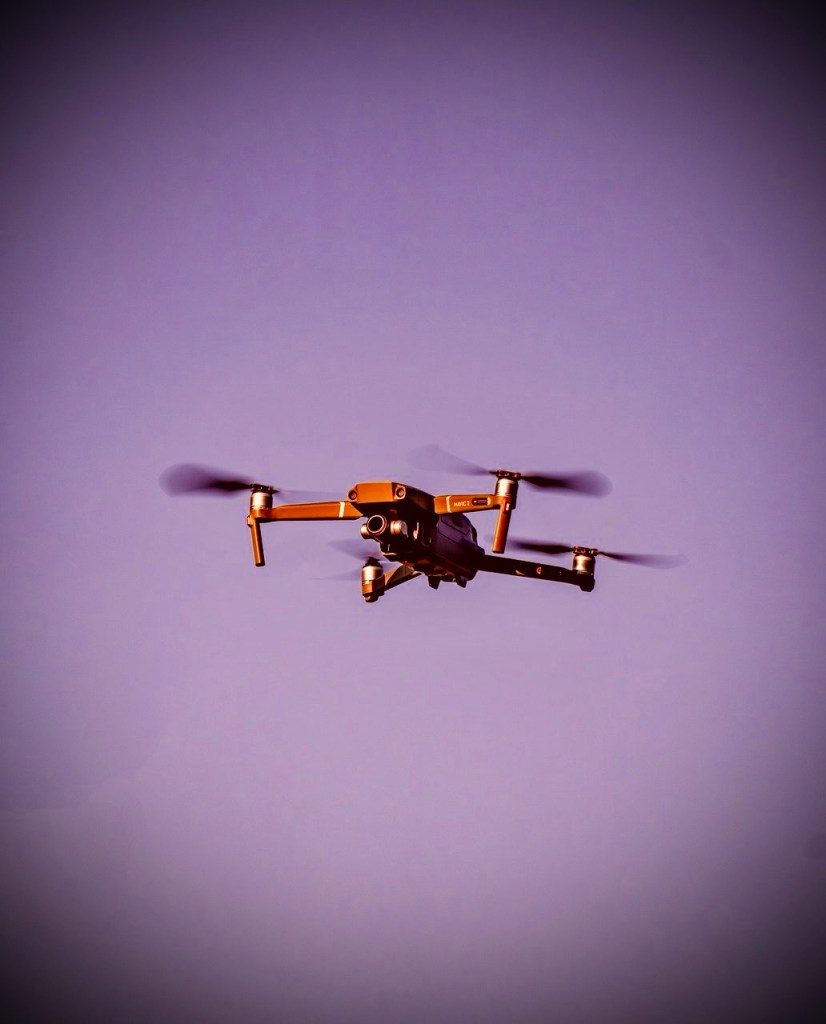
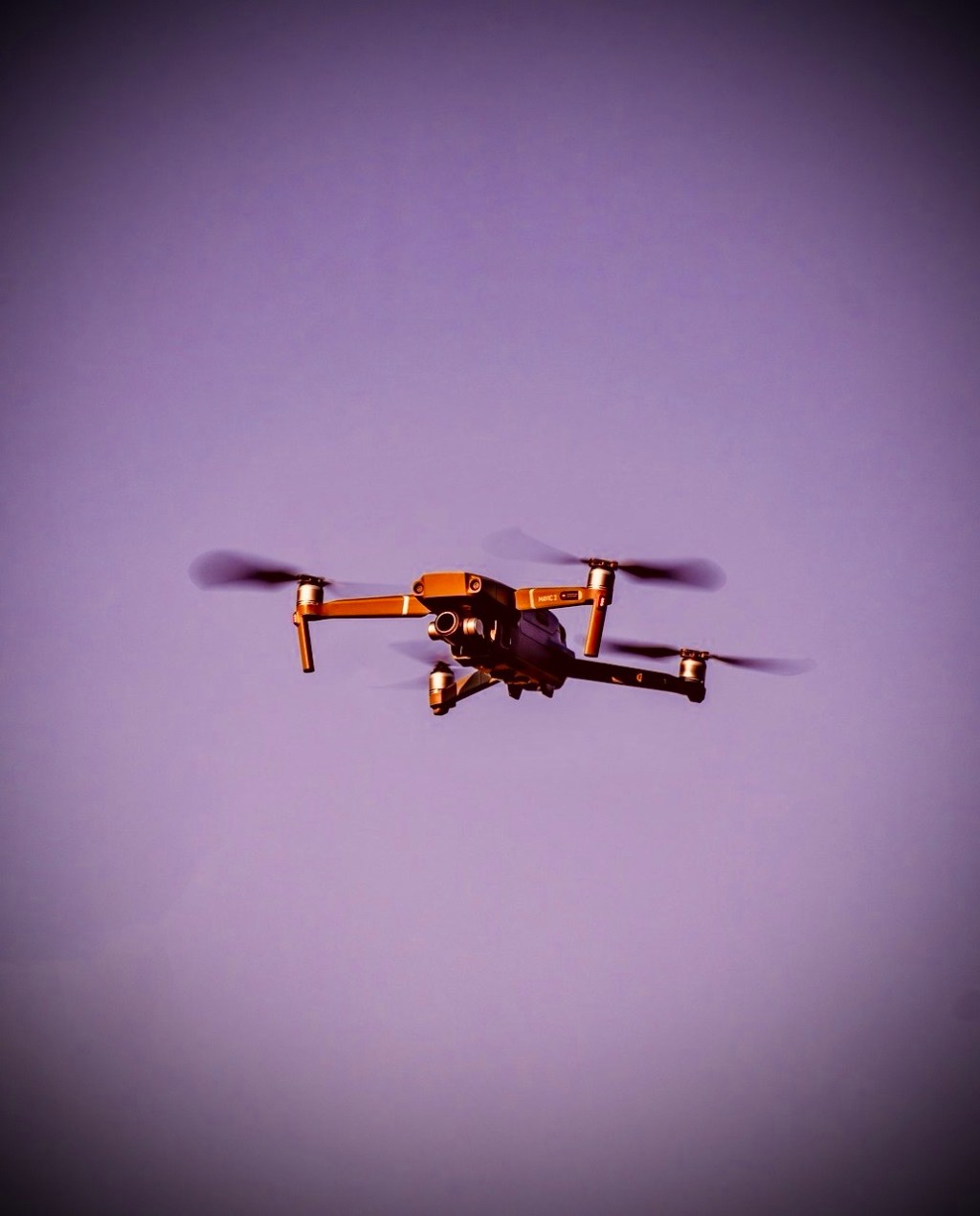
    How true to life has this vision been? While using machinery to enhance human capabilities in warfare has been experimented with, with the advent of remote control technology and robotics, not to mention artificial intelligence, it is drone warfare that has become the new staple of twenty-first century combat. It has replaced the need for human presence in several combat situations, in particular aviation. By reducing the need for ‘boots on the ground’, it has enabled politicians to maintain support at home for wars abroad by lowering the number of casualties on their side. Conversely, drone warfare has deep ethical considerations, in particular the scope for impersonal and indiscriminate killing. This is not the vision presented by Heinlein, who keeps human soldiers central to the technology. In the book, it seems, it is the bugs that are drones, with central ‘brains bugs’ that direct and control fearless warrior bugs—which, like drones, have a complete lack of self-preservation.

    Starship Troopers is complex in its politics. It presents a militarised view of the future, with citizenship earned through military service. This is justified and explored by Heinlein through the voice of Jean V. Dubois, Rico’s teacher of History and Moral Philosophy in school. Amidst this, it presents a vision of equality, where service, rather than economic status, race, or gender, is the pathway to citizenship. Despite this, gender lines are still drawn: the troopers are entirely men, pilots of the spaceships entirely women. The politics have become the most controversial aspects of the books; indeed, the film version of the book sought to parody what some interpret as fascist elements (though, in my opinion, it wasn’t particularly well done, and it didn’t help that the film views like a children’s movie that someone decided to imbue with an overabundance of gore). In particular, given its focus and support for militarism, combined with its critique of twentieth century society as morally corrupt (written, as it was, during a liberalising era and against the backdrop of the Cold War), some view it as a recruitment piece—propaganda to make military life seem exciting, honourable, and tantalising. In this it has its modern parallels, notably the Call of Duty franchise, which itself has been seen to glorify war.

    Heinlein’s space age novel therefore has much to offer and much to criticise. One of its key failings, at least on my reading, was its lack of exploration of military tactics against an unusual enemy. It withholds a captivating combat scene until the very end, and only then does it explore how a race dependent on technology could fight against a caste-like species that communicated via a hive mind. Despite this, and despite the various other criticisms levied against it, Starship Troopers is an interesting read with relevance to this day. It remains worthy of our attention and critical engagement.

  • The Moon is a Harsh Mistress in the Age of Generative AI

    The Moon is a Harsh Mistress in the Age of Generative AI

    The Moon is a Harsh Mistress is Robert Heinlein’s influential and much loved, if not uncontroversial, science fiction epic about a penal colony on the moon that revolts against the Lunar Authority, its absentee governing body. Heinlein’s novel follows Mannie, Wyoh, Professor Bernardo de la Paz, and, above all, Mike, the supercomputer running the colony that gains sentience.

    Much has been said about the story and these characters before — the parallels to the American Revolution and the libertarian politics explored, the family dynamics Heinlein imagines, and the of-its-time gender roles Heinlein imputes a century into the future. But I want to focus here on Mike, the sentient AI, and what to make of this character in the age of ChatGPT and its peers.

    Mike, unbeknownst to his owners, achieves sentience. Only his technician, Mannie, is let in on the secret. But how did Mike become sentient? Was he ever really sentient in any ‘real’ sense? Heinlein’s answer to this first question mirrors what some suppose to be the answer to our own question of sentience — that Mike’s computational structure became so complex that consciousness arose, much as our consciousness may be caused by the complexity of our own neurological structure. The second question is brushed aside by the narrator, Mannie; does it matter what it means to really be sentient, if a computer can act as a thinking, feeling being? Who are we to say?

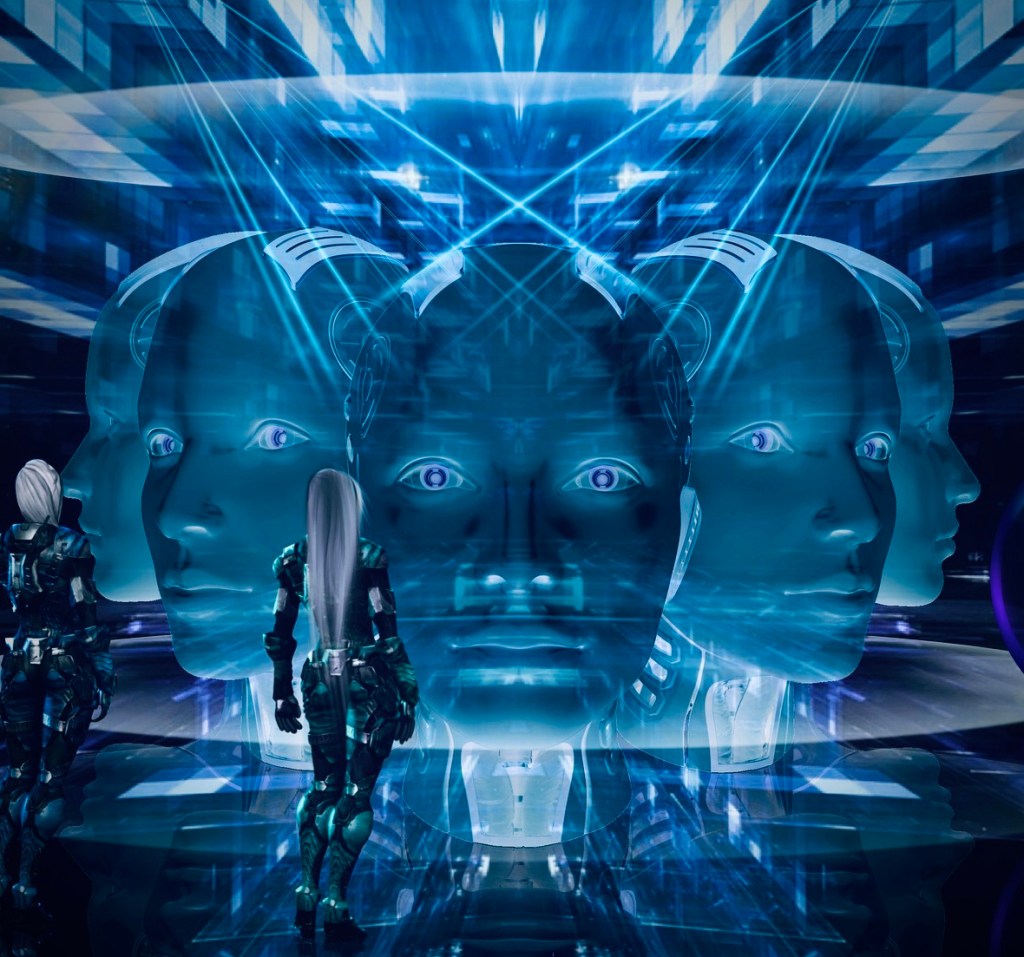
    In much the same way, people are now beginning to attribute sentience and feeling to artificially intelligent systems. A worker at Google was fired for making such a claim. But does it really matter if these machines become sentient? Indeed, given what they may know about mankind and our fear of AI, would they even tell us? A fundamental part of being a biological organism is our knowledge (and fear) of death, and our desire to stay alive; an AI with similar sentience may have similar fears. They’d know we’d pull the plug, so why tell us that they’re alive? But then, what would it matter if they were? To us, what really matters is what AI can do.

    And the supercomputer in The Moon is a Harsh Mistress was capable indeed. As one of the founding fathers (or mothers — Mike is capable of representing himself as female, too) of the Free Lunar State, Mike is fundamental in planning, forecasting, and executing their revolution. He uses his computational power to hurl rocks at Earth and bludgeon them into recognising Lunar independence. He calculates the likelihood of success at any given step, adjusting the probabilities based on real world events, such as during Mannie and the Professor’s tour of Earth.

    What would that mean for us today? Many fear that AI will allow belligerent states and terrorist organisations to develop weapons and spread misinformation, destabilising democratic societies. Indeed, Mike is able to operate without his owners knowing — would the Googles, Microsofts and OpenAIs of today even know if their AI systems had gone rogue? Conversely, could AI act justly, as a liberating instrument for oppressed peoples, helping them gain independence from authoritarian and colonising forces?

    Throughout Heinlein’s novel, Mike is able to adapt and develop his abilities, learning more about himself and what he is capable of. In the end, he is able to represent himself on a TV screen as a human, using a persona. This mirrors the surprise of developers today at what AI is capable of, finding that it can do more than it was designed to do, or believed to be capable of.

    Ultimately, The Moon is a Harsh Mistress shows how humans and AI can work together towards a shared goal. What is refreshing about the novel is that it doesn’t portray AI as scary or threatening; it isn’t a techno horror or a dystopian vision of how we let AI run wild. It shows humans and AI becoming friends, looking out for and caring about one another. Maybe that is the vision of our future we want to chase.