Tag: epic fantasy

  • Book Review: Shadow of the Gods

    Book Review: Shadow of the Gods

    I’m not sure I was ready to read Shadow of the Gods… It is a brutal, violent dark fantasy. The start of John Gwynne’s Bloodsworn Saga, it journeys through three different perspectives, with characters traversing a world left bloody and divided in the wake of fallen gods.

    The combat sequences are visceral and expertly crafted. Every fight scene is choreographed with brutal precision, from the intimate duels to the massive battles, each one weighted with consequence. The gore—gore that I was not fully prepared for—raises the stakes and makes every confrontation feel genuinely dangerous.

    I had some issues with the three different perspectives. They had strong thematic coherence—overall, Shadow of the Gods is an intertwined story of family bonds and revenge. But I found Orka and Varg’s storylines to be much more interesting, and the characters more compelling, than Elvar’s. It put me in that uncomfortable position where (and I don’t like feeling this) I felt I was waiting for her parts to be over so I could go back to the other perspectives. It’s only in the final act that Elvar’s storyline finally started to engage me.

    What I loved was the worldbuilding. It is built on the same mythological foundation as Skyrim, and that gave me a certain sense of nostalgia. The echo of the dead gods and the impact it has on the characters (in particular the ‘tainted’) drives the story, making it feel truly epic in scope. The magic system integrates well into this world, providing moments of genuine wonder and power.

    On balance, the atmosphere and immersive worldbuilding overcome what I personally felt were structural weaknesses in combining the different storylines. But I admit that I may be in the minority in feeling this. And I certainly feel driven to keep going with the series!
  • Book Review: The Summer Tree

    Book Review: The Summer Tree

    Content Warning: This review discusses a book containing sexual assault.

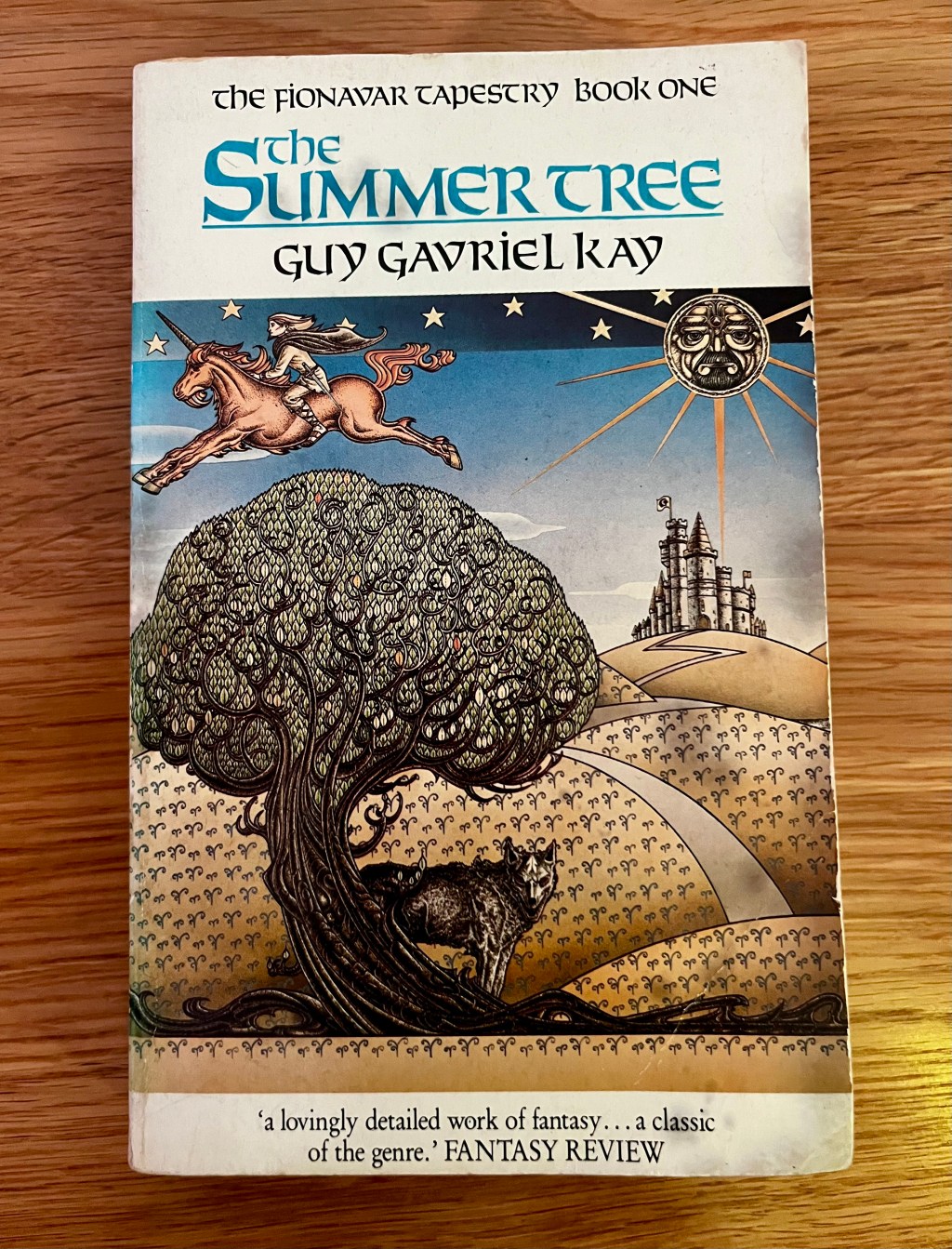
    The Summer Tree, a richly imagined fantasy adventure, is the first of Guy Gavriel Kay’s Fionavar Tapestry trilogy. The novel follows five university students from Toronto who are transported to Fionavar, the ‘first of all worlds’, where they become entangled in an ancient conflict against a dark god breaking free from imprisonment.

    Kay’s worldbuilding is probably the highlight of the novel. The magic system, where mages must be tied to other individuals who serve as ‘sources’ of power, is a nice mechanic. Also nicely done is the imprisonment of dark god Rakoth Maugrim beneath a mountain. The mountain looms visibly in the landscape as a prison in plain sight of all who live there. And the ritual of the Summer Tree itself introduces a compelling concept: kings are traditionally expected to sacrifice themselves during times of crisis, offering their lives to the gods. But they can send others in their place, and this puts one of the protagonists in an interesting position. Throughout, the metaphor of a tapestry and a weaver (symbolising fate and determinism) is contrasted with the dark god—the ‘unweaver’.

    The narrative mostly focuses on its classical fantasy setting—think kings and castles and mages—but it takes a refreshing turn in the final third when we finally reconnect with Dave, the fifth member of the transported group, who went missing during the journey into Fionavar. Kay’s incorporation of Native American-inspired elements here adds a level of cultural diversity to what otherwise might have been a purely European-inspired fantasy setting. The pacing of the story is fine, and the prose is accessible throughout. There’s the odd name you have to remember, but you’re not drowned in unnecessarily complicated language.

    Of the ensemble cast, certain characters stand out with more memorable moments and clear arcs. Paul, driven by grief, finds his place on The Summer Tree; Kevin’s personality comes through. However, this is also where some of the novel’s weaknesses emerge. With five modern-day characters thrust into this fantasy realm, Kay effectively shows different reactions to this strange new world, but this breadth comes at the cost of depth for some characters. We get more substantive development for some protagonists, while others remain relatively undeveloped.

    This imbalance is particularly noticeable in the female characters, both from our world and Fionavar itself. Too often, women in the narrative exist primarily as romantic interests, objects of desire, or victims of violence. In the final pages, there is an instance of sexual assault—unnecessarily graphic as far as I was concerned—as a plot device to show how evil the dark god is. Reading this book forty years after it was first published, it certainly feels dated in this regard.

    Kay has earned comparisons to Tolkien, and not undeservedly so. His own work with Christopher Tolkien in drawing together the stories for the The Silmarillion undoubtedly impacted him, and he has brought to the genre a blend of different mythologies and influences. But I don’t think I was so enamoured by this book that I’d want to continue the trilogy.

  • Book Review: The Name of the Wind

    Book Review: The Name of the Wind

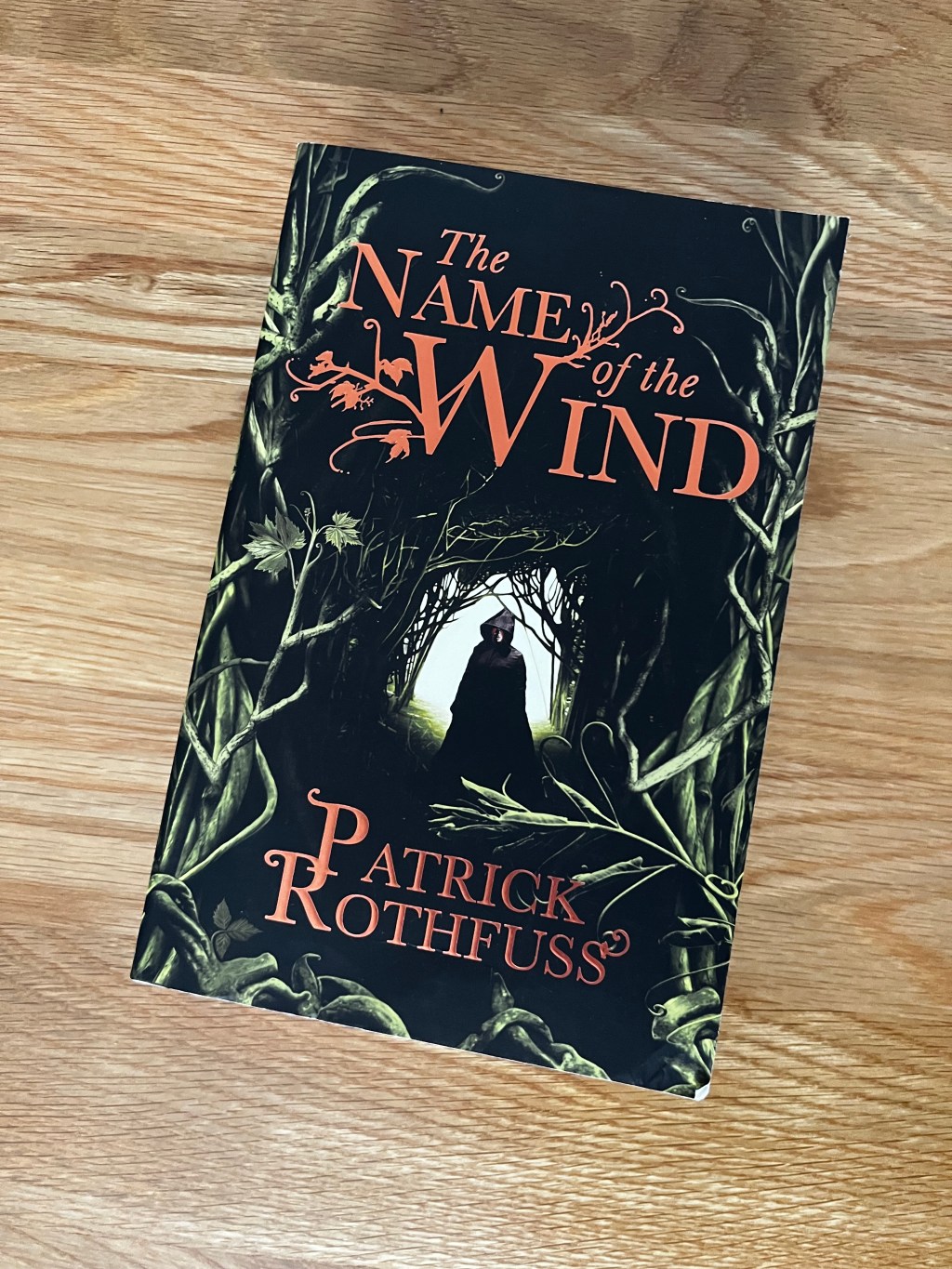
    I’m a bit late to the party with this one, I know. The book had been sat on my shelf for two years before I read it. It has been published even longer. (I’ve had a lot on, okay… don’t judge me!) I have now read it, and I understand why it has become an instant classic of the genre. And yes, I can now join the legions of fans anxiously clamouring for the third instalment. Hopefully by the time I’m done reading the sequel…

    The Name of the Wind is an epic fantasy ambitious in scope. It truly lives up to the ‘epic’ part of the genre. Told in both third person (in the present) and first person (as the protagonist recounts his life story), it follows Kvothe as he grows up and attends university. It is a detailed, thorough, character-driven story that rarely relents in excitement. The character development is superb. I love a character with a background in the performing arts—it’s a great way of explaining their charisma, and giving them a way of plausibly talking their way out of trouble (or talking their way into trouble). It also makes them a little more dynamic than the warrior-hero archetype. Rothfuss strikes a great balance between the genius of Kvothe’s character (he learns fast, has great instincts for almost all his studies) and his flaws—he still has obstacles he finds difficult to overcome. He is intelligent, but occasionally foolish, and brash, sometimes over confident. He is limited by his background as part of a travelling troupe as much as he his aided by it.

    There is an overarching story that the book sets up but delves little into. Despite this, I didn’t feel in too much of a rush for that side of things to develop. The drama of Kvothe’s life as he moves from travelling performer to street urchin to university student keeps the reader hooked. There is also an expansive world with different magic systems, from runes and artificery to more abstract controlling-the-elements-by-speaking-their-names. The wider world is nicely constructed, with different peoples and customs that intersect at different places. It gives the setting depth, and let’s the reader know that there is more to explore.

    The story slows down a little towards the last third, around the time that Kvothe finds out that he’s a heterosexual male and that women exist. Periods of courtship and pining after an elusive and mysterious woman become a little drawn out at times, but I can see why they’re there, and it doesn’t stall things for too long. In the end, the relationship the protagonist has with his love interest does drive the story forward.

    So, safe to say, I am hooked! This is an epic story with excellent character development and an expansive world. I look forward to reading The Wise Man’s Fear