Tag: character-driven

  • Book Review: The Dungeon Anarchist’s Cookbook

    Book Review: The Dungeon Anarchist’s Cookbook

    Downward to floor four! We join Carl, Princess Donut, and Katia in the Iron Tangle, an impossible and complicated subway system with thousands of intersecting railway lines. It’s like someone based it on a bowl of spaghetti they dropped on the floor. The routes are a claustrophobic mess, and the trains are, of course, full of monsters.

    Each book in this series finds a new way to frame the dungeon, and the Iron Tangle is one of Dinniman’s more ambitious settings. It’s also not my favourite. There’s an inherent constraint to a train-based floor that the previous book’s more open, expansive world didn’t have. It doesn’t give the characters as much room to manoeuvre.

    That said, this is an enjoyable read. The plot unfolds at a steady pace, with exciting set pieces and a central mystery that gradually reveals itself. In particular, we have ominous revelations about the Krakaren that feel like pieces of something much larger clicking into place. Of all the monsters, the mantaurs are a highlight. They’re physically odd, but it’s their Viking-esque obsession with dying gloriously in battle that gives them a layer of dark humour that stuck out to me.

    The titular cookbook is a clever device. Past crawlers passing their hard-won wisdom to Carl adds depth and intrigue. The talk show epilogues continue to be one of the series’ most distinctive features. They offer a way of stepping back from the dungeon action to reflect on what’s happened and seed what’s coming. It may feel like a bit exposition heavy to some, but it works for me.

    The characters remain the central draw to this series. A highlight here is Katia. Her doppelganger ability to reshape her body leads to some memorably creative (and gory) problem solving. It’s her stint as a makeshift cowcatcher on the front of a train that stands out. It’s just the right blend of seriousness and absurdity. The only shame is that Mordecai disappears for most of the book!

    The previous book has been my favourite of the series so far, but The Dungeon Anarchist’s Cookbook remains an entertaining instalment that keeps the larger story moving in an intriguing direction. Onwards to the next floor!
  • Book Review: The Lies of Locke Lamora

    Book Review: The Lies of Locke Lamora

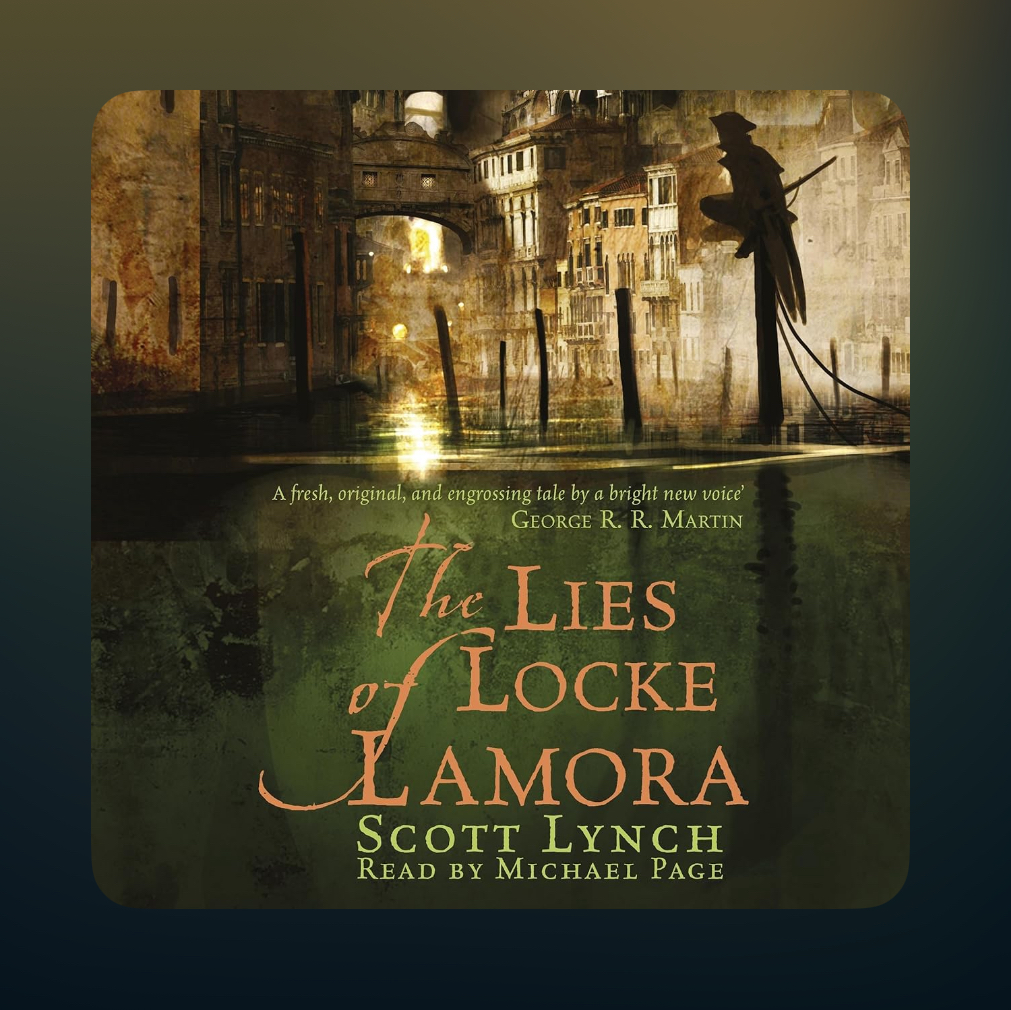
    Scott Lynch’s debut fantasy novel, The Lies of Locke Lamora, features an elaborate heist set in a beautifully realised seventeeth-century-inspired world.

    Honestly, it hit me in the same way that The Name of the Wind did. We have a physically unimpressive protagonist who makes up for a lack of brawn with guile and pure cunning. Locke Lamora is endearing in the same way the Kvothe is. He executes elaborate cons and talks his way out of deadly situations. He fits the rogue archetype to a tee. And Jean is an excellent companion (and Jean brings the physicality that Locke lacks). He’s not a simpleton or a yes-man in the way that some ‘brawler’ characters can be. He feels well defined in his own right. Above all, their friendship feels genuine and lived in. It’s easy to care about them.

    As fantasy heists go, the plot is near perfect. It’s well structured and escalates in just the right way. Just as you think you have a handle on what’s going on, something else happens and it all spirals into some bigger and more dangerous; the stakes are raised organically and plausibly at each turn. And they’re raised in ways I couldn’t see coming. There’s also backstory interwoven throughout (the kind of backstory that again reminded me of The Name of the Wind, albeit delivered in a different way). Information important to the present moment is delivered via these backstories, keeping them timely and relevant.

    The worldbuilding is immersive without being overwhelming. None of the protagonists are magic, but they encounter others who are—and so Lynch has to create problems that are challenging for the protagonists, whilst giving them scope to overcome them. I think he strikes the right balance between power and limitation, and the rules are clear enough for some satisfying loopholes to be exploited without feeling contrived.

    It’s not without its flaws. There’s hints at a romantic subplot that never quite develops. And [MODERATE SPOILERS] Locke’s heroic turn at the climax didn’t feel completely earned. I understand the choices made, but I didn’t fully buy it. There were also some stretches where plot threads were left unattended, as other parts of the plot moved forward. 

    But these complaints are relatively minor. I was entertained enough by the characters, the dialogue, and the rich world. It has enough clever problem solving and good character work to scratch the same itch as The Name of the Wind.

  • Book Review: Ashen Dawn

    Book Review: Ashen Dawn

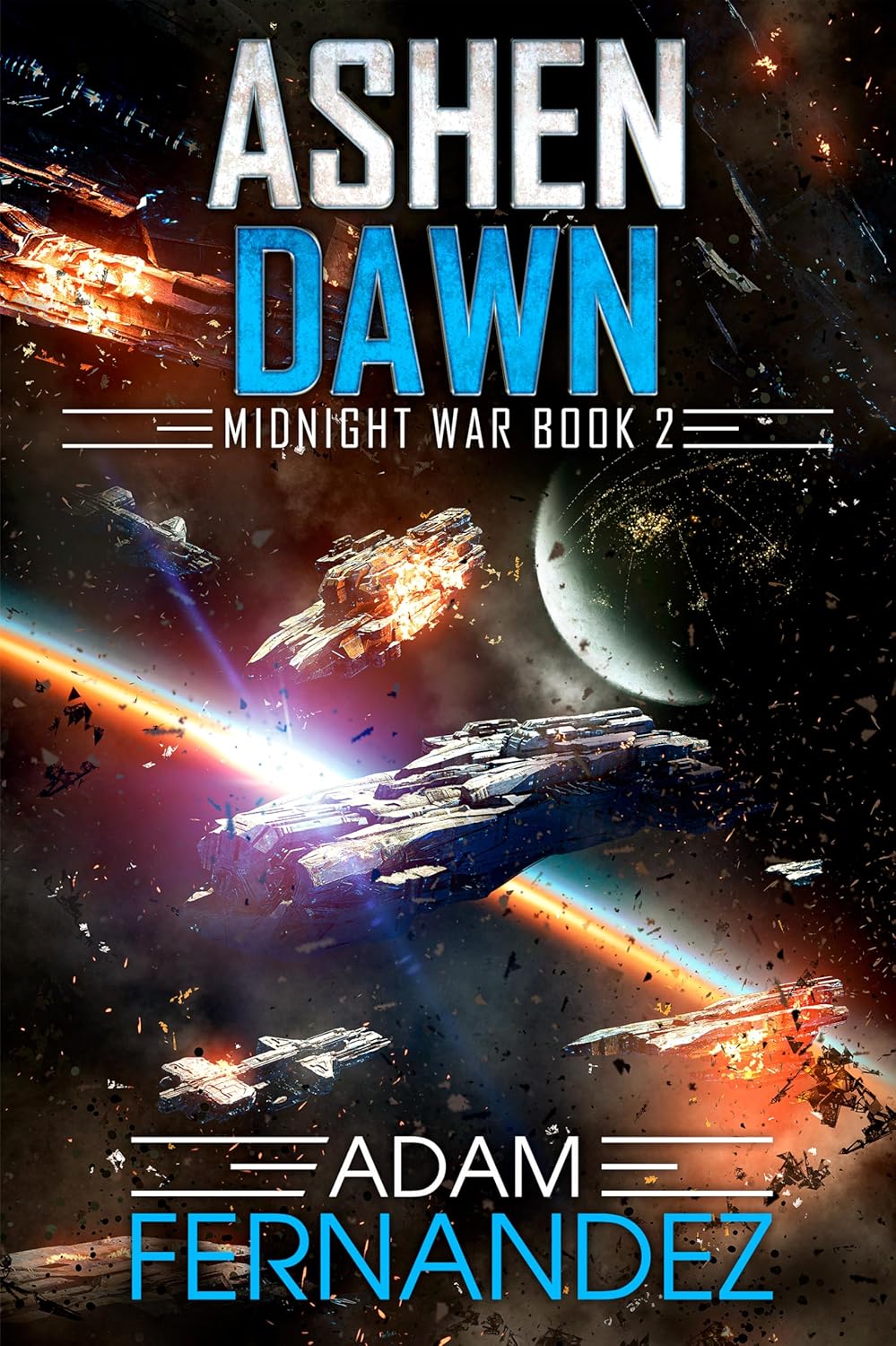
    Ashen Dawn, the second book in the Midnight Wars sci-fi/space opera saga, follows on where Vermillion Flames left off. We accompany Silas, Kaya, and Aron as they continue their respective quests—Silas to bring the Pandora fleet back to fighting strength, Kaya as she finds herself stranded on Earth, and Aron as he continues the fight on Mars.

    As with the first book, Fernandez builds a rich and expansive universe, revealing a deep history as we progress through the story. The reader is left with a sense that there is much to explore, and that these adventures are only scratching the surface. The role of religion is again central—it is foundational to how the society functions, and it forms a core part of Silas’ motivation. The author does well to explore how faith can be at odds with the theocratic systems of power, in a way that helps the reader deeply sympathise with the character’s struggles. Indeed, one of my favourite parts of the book was when Silas, through a traumatic event, comes to accept how he can move forward against the established religious system with his faith still in tact. I won’t spoil it, but that passage is as vivid and engaging as anything Fernandez has written.

    Kaya, too, continues to grow in confidence, asserting herself as she explores the remains of Earth.  Here she uncovers many dark secrets…

    The plot itself is a rollercoaster, with plenty of twists and turns that will keep you reading. It is told through multiple points of view. This choice in itself is effective, though I did find the pacing to be a little off. Successive chapters focus on the same character, and I felt that these could have been more evenly spread. Regardless, the different perspectives do help capture the varying parts of an intricate storyline. The inclusion of Aron and, later on, Henry as POV characters is welcome. And, as before, the battle scenes are engaging and the side characters are endearing (Marcus, once more, a personal favourite!). 

    The ending of the book is satisfying but, as one would expect, as some questions are answered, more are raised, and we are left eagerly awaiting the next instalment!