Tag: character development

  • Book Review: Equal Rites

    Book Review: Equal Rites

    Terry Pratchett’s Equal Rites is a fun blend of fantasy and social commentary. It is told through the story of Eskarina Smith (known as Esk), a girl who accidentally inherits wizard magic in a world that insists women can only be witches.

    The characters are the book’s greatest strength. Esk is wonderfully ambitious, relentlessly driving the story forward with her determination to become a wizard. Granny Weatherwax is magnificently assertive and dominant—a true force of nature. Even Simon, the awkward young wizard, is delightfully written with genuine charm. All three develop beautifully throughout the story, their growth feeling organic rather than forced.

    Pratchett’s magic system lavishes the world with superb chaotic energy. The way magic literally seeks to escape from books, how the very walls of the Unseen University absorb magical energy and gain sentience—these details create a world where magic feels truly wild and dangerous… and real! The characters must navigate not just social obstacles but a fundamentally unstable magical environment that adds genuine tension to their journey.

    Perhaps most fascinating is Pratchett’s exploration of competing magical philosophies. Witch magic—practical, intuitive, and grounded in real-world problems—stands in sharp contrast to wizard magic, which is academic, hierarchical, and theoretical. This isn’t just for flavour; the genuine debates about different ways of knowing and learning that arise form a core part of the plot.

    Building on this, the satire of Unseen University spears traditional academic establishments everywhere (as someone who has worked in that environment, you can recognise some of the characters!). Pratchett sets focus on the politics, traditions, and resistance to change that plague many institutions. Indeed, there is an inherent contradiction between the University’s self-importance and its actual dysfunction that encapsulates the book’s themes.

    The story itself succeeds despite—or perhaps because of—its straightforward allegory. Yes, the gender dynamics critique is fairly obvious and somewhat on the nose, but Pratchett grounds it in genuine character motivations and real stakes. And to this day it remains eminently readable and relatable.
  • Book Review: Tress of the Emerald Sea

    Book Review: Tress of the Emerald Sea

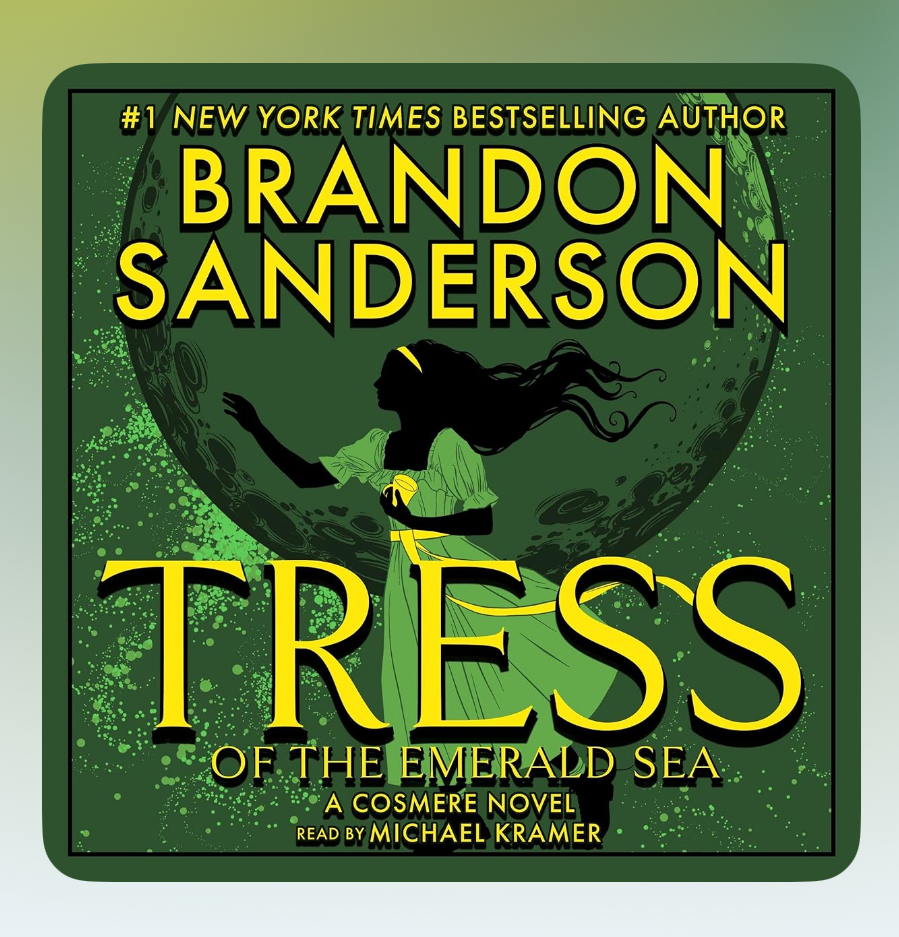
    Tress of the Emerald Sea is a wonderful, layered adventure that evolves as the priorities of Tress, our main character, ebb and shift. Tress is a young girl from a barely habitable rock, surrounded by a sea of spores that turn into vines when they touch water. Her friend and love interest, Charlie, the son of the island’s Duke, is sent to the island of the King to be married. When he makes himself completely undesirable, the King sends him to the Midnight Sea (another of several spore seas, each with their own distinct properties) where he is captured by the fearsome Sorceress. 

    Tress, when she finds out, sets off on a grand adventure to save him. On the way, she becomes part of a pirate crew, driven by the fearsome Captain Crow, and meets Fort, Ann, and Salay, as well as Hoid, a world-hopping character of the wider Cosmere who is cursed by the Sorceress. As Tress seeks Charlie, she becomes embroiled in a conflict between the crew and their captain. This multi-tiered adventure keeps the story fresh and engaging. Of the people Tress meets, Ulaam in particular stands out as a delightful character whose presence brings fun and unpredictability to his scenes. An ear on your arm, anyone?

    One of the key strengths of the novel is how its conflicts are solved through different means. Some through combat, sure, but also through wit and quick-thinking. These keep the tension high in the right places, and show Sanderson’s skill in crafting a variety of situations and solutions for his characters. I am a massive fan of different ways of solving problems beyond force—the scene with Xixis the dragon was my favourite—so this scratched a real itch for me.

    The world building, as one would expect of Sanderson, is top-tier. The spores and how they function are cool and varied, and the way they are built into the story is very satisfying. Likewise, the narrative voice, provided by the cursed Hoid (who is rendered to something of a ‘village idiot’ with no fashion sense), connects the novel to the broader Cosmere. Hoid is witty and fun, and this keeps the narrative light. It is also refreshing to have the story told by a third party who is able to comment personally on what is happening without being the centre of the story. I did find some of Hoid’s observations to disrupt the immersion in places—e.g., the reference to ‘laptops’ being a key one. I get that this is supposed to broaden out the links to the world beyond, but, as someone unfamiliar with the rest of the universe, I found it a little jarring.

    Also, Tress’s character development, while clearly central to the story, does sometimes suffer from exposition that I found a little heavy-handed. There are moments when the narrative explicitly states that Tress is changing or growing, even when I think readers can see these changes organically. It’s a little unnecessary and on-the-nose. And, lastly—SPOILERS—certain plot elements create minor inconsistencies that detract from the otherwise cohesive world. For example, the Sorceress has inhabited the planet for years and possesses advanced knowledge of technology that Tress is only beginning to develop. When Tress offers to trade this technology, the Sorceress dismisses it—yet later, her guards are defeated by this very same technology. This inconsistency feels like an oversight that somewhat weakens the internal logic of the story.

    Regardless of some minor flaws, Tress of the Emerald Sea is an easygoing, refreshing sci-fi/fantasy adventure with a cast of loveable characters. The story is accessible and easy to follow, is told with humour, and sits against a well-fleshed-out and intriguing world. It gets a big ‘recommend’ from me!

  • Book Review: Legends & Lattes

    Book Review: Legends & Lattes

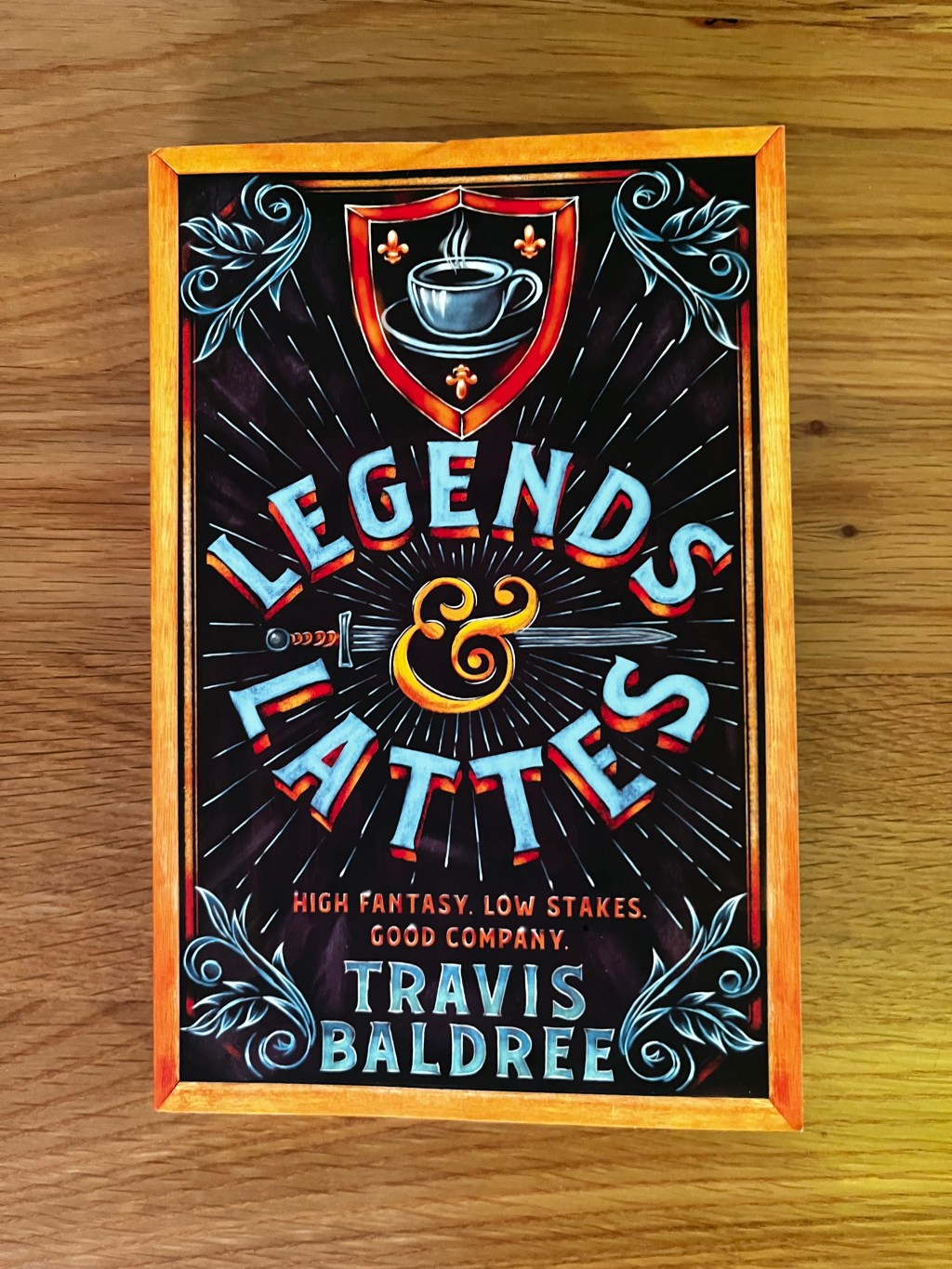
    High fantasy, low stakes – with a double-shot of coffee.

    After decades of adventuring, Viv the orc barbarian is finally hanging up her sword for good. Now she sets her sights on a new dream – for she plans to open the first coffee shop in the city of Thune. Even though no one there knows what coffee actually is.

    If Viv wants to put the past behind her, she can’t go it alone. And help might arrive from unexpected quarters. Yet old rivals and new stand in the way of success. And Thune’s shady underbelly could make it all too easy for Viv to take up the blade once more.

    But the true reward of the uncharted path is the travellers you meet along the way. Whether bound by ancient magic, delicious pastries or a freshly brewed cup, they may become something deeper than Viv ever could have imagined . . .

    Travis Baldree’s Legends & Lattes is a hit for a reason. Influenced by earlier books that brought elements of daily life into fantasy, notably Terry Pratchett’s works, Baldree revised the genre for the Covid era. At a time where people were kept away from their friends and family, when local meeting places were shut, the idea of a cosy story centred around a coffee shop was the height of escapism.

    The narrative focuses on retiring adventurer Viv, who wants to trade in her sword for a quieter life. She builds her hopes around the Scalvert’s Stone, a magical item that promises to bring a ‘ring of fortune’ around its bearer. But this only draws more trouble…

    The heart of the story is its characters. Viv’s journey is anchored to her relationships, in particular with Tandri. Both are loveable and compelling, and the way they find companionship is nuanced and authentic. Supporting characters Cal, Pendry and Thimble further enrich this, with their distinctive personalities each adding warmth and subtly. (Cal was a particular favourite of mine.)

    Though the book promises ‘high fantasy, low stakes’, there is still much tension in a steadily evolving narrative. The cosy atmosphere is balanced against moments of conflict—with the cosy feeling enhanced in moments of resolution. This is driven mostly by the Scalvert’s Stone, which is surrounded by an air of intrigue and mystery—and riddles that characters struggle to fully make sense of. Quite what its presence means for the shop, and for Viv, and what it means should it disappear, is part of what drives the story forward.

    The most compelling aspect of the novel is its immersive atmosphere. Reading it, you almost feel as if you are there, smelling the coffee, tasting Thimble’s cooking, hearing Pendry’s music. It made me really want to just sit down with a coffee and pastry, with a bit of a frost and a chill outside and a nice warming mug of something hot.

    And, at the end of the day, that’s just what reading this book feels like. A nice, warming mug of something hot!