Tag: Book Reviews

  • Book Review: Project Hail Mary

    Book Review: Project Hail Mary

    I’m a big fan of The Martian. I enjoyed Artemis. But I was blown away by Project Hail Mary. I went in knowing nothing about it—I didn’t even read the blurb. And I think that was the right thing to do. The plot was unveiled like a true mystery adventure. If anyone wants the same experience as me, stop reading here, and just take my word for it that it’s worth your time!

    Andy Weir’s latest sci-fi novel opens with our protagonist waking up with complete amnesia aboard a spaceship. Safe to say, amnesia has been done (All My Circuits, anyone?). But the way Weir uses the memory loss to gradually reveal both the present crisis and the backstory is excellent. The pacing was just right, and all the pieces of the puzzle, from why humanity is facing extinction, how our narrator ended up alone in space, what his actual mission is, all slowly click into place alongside his returning memories.

    What absolutely sold me on this book, though, is Rocky. Creating a compelling alien character is incredibly difficult (how many different alien species have sci-fi writers conjured up?). But Weir manages to bring this spider-like creature to life in a way that feels both genuinely alien and deeply relatable. Rocky isn’t just a cool biological concept (though he is that too). He’s impatient, intelligent, funny, and flawed. The sections exploring how they learn to communicate reminded me strongly of Arrival, in a good way. And I loved watching their friendship develop as they worked together against a threat to both their species.

    As you might expect, Weir’s protagonist is… very similar to his other protagonists. If I have one criticism, it seems he can only write one main character: the brilliant-but-anxious, funny, slightly neurotic scientist. Luckily for Weir, I like this character! As with The Martian, this kind of character is executed well. His voice is engaging and the he scientific problem-solving is immensely satisfying. (I love that Weir makes me feel like I’m secretly learning while being entertained!)

    And in a world of sci-fi where in so many stories first contact means invasion and destruction, Project Hail Mary offers something refreshingly different: the idea that when faced with extinction, different species might choose cooperation over conflict. The plot escalates organically and believably, the challenges build, the emotional complexity is just at the right level… It’s one of those where you know they’re going to get through it, you just don’t know how, or at what cost.
  • Book Review: The Lies of Locke Lamora

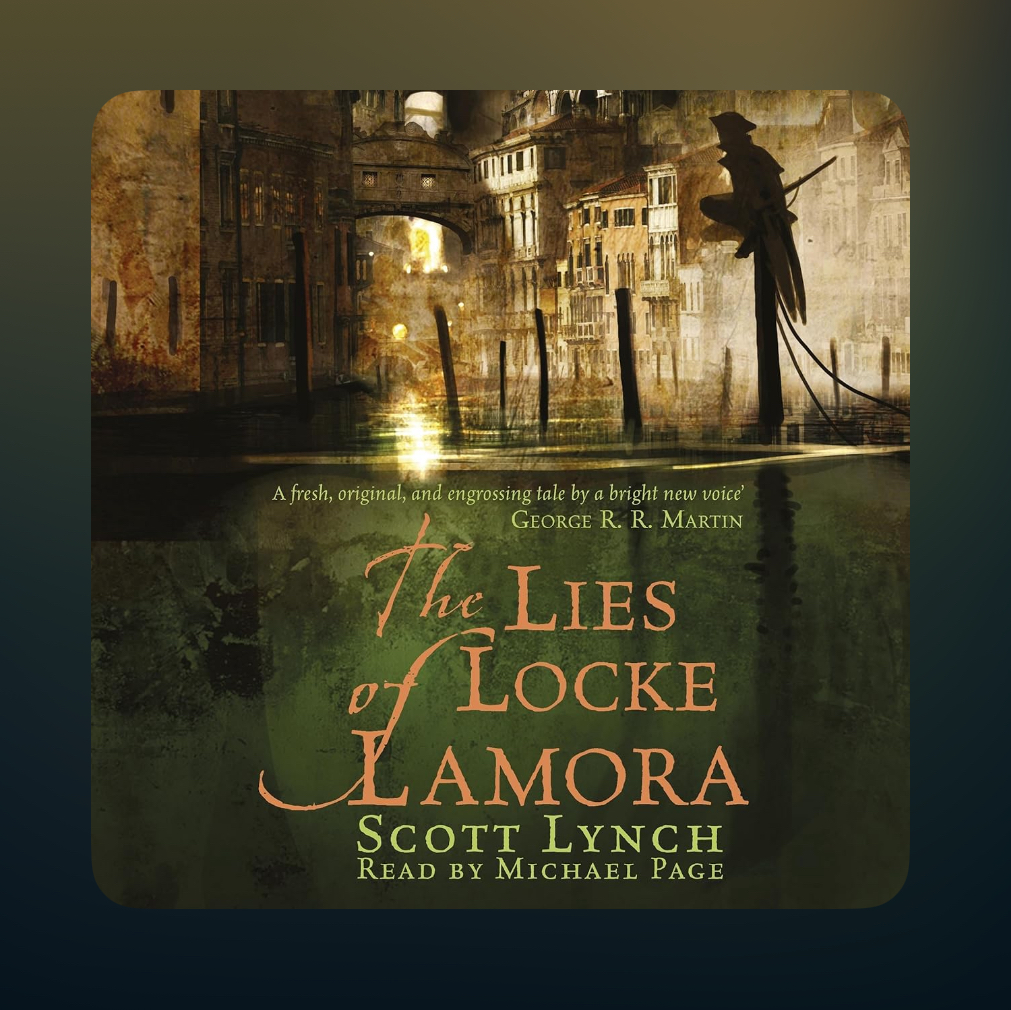
    Book Review: The Lies of Locke Lamora

    Scott Lynch’s debut fantasy novel, The Lies of Locke Lamora, features an elaborate heist set in a beautifully realised seventeeth-century-inspired world.

    Honestly, it hit me in the same way that The Name of the Wind did. We have a physically unimpressive protagonist who makes up for a lack of brawn with guile and pure cunning. Locke Lamora is endearing in the same way the Kvothe is. He executes elaborate cons and talks his way out of deadly situations. He fits the rogue archetype to a tee. And Jean is an excellent companion (and Jean brings the physicality that Locke lacks). He’s not a simpleton or a yes-man in the way that some ‘brawler’ characters can be. He feels well defined in his own right. Above all, their friendship feels genuine and lived in. It’s easy to care about them.

    As fantasy heists go, the plot is near perfect. It’s well structured and escalates in just the right way. Just as you think you have a handle on what’s going on, something else happens and it all spirals into some bigger and more dangerous; the stakes are raised organically and plausibly at each turn. And they’re raised in ways I couldn’t see coming. There’s also backstory interwoven throughout (the kind of backstory that again reminded me of The Name of the Wind, albeit delivered in a different way). Information important to the present moment is delivered via these backstories, keeping them timely and relevant.

    The worldbuilding is immersive without being overwhelming. None of the protagonists are magic, but they encounter others who are—and so Lynch has to create problems that are challenging for the protagonists, whilst giving them scope to overcome them. I think he strikes the right balance between power and limitation, and the rules are clear enough for some satisfying loopholes to be exploited without feeling contrived.

    It’s not without its flaws. There’s hints at a romantic subplot that never quite develops. And [MODERATE SPOILERS] Locke’s heroic turn at the climax didn’t feel completely earned. I understand the choices made, but I didn’t fully buy it. There were also some stretches where plot threads were left unattended, as other parts of the plot moved forward. 

    But these complaints are relatively minor. I was entertained enough by the characters, the dialogue, and the rich world. It has enough clever problem solving and good character work to scratch the same itch as The Name of the Wind.

  • Book Review: The Restaurant at the End of the Universe

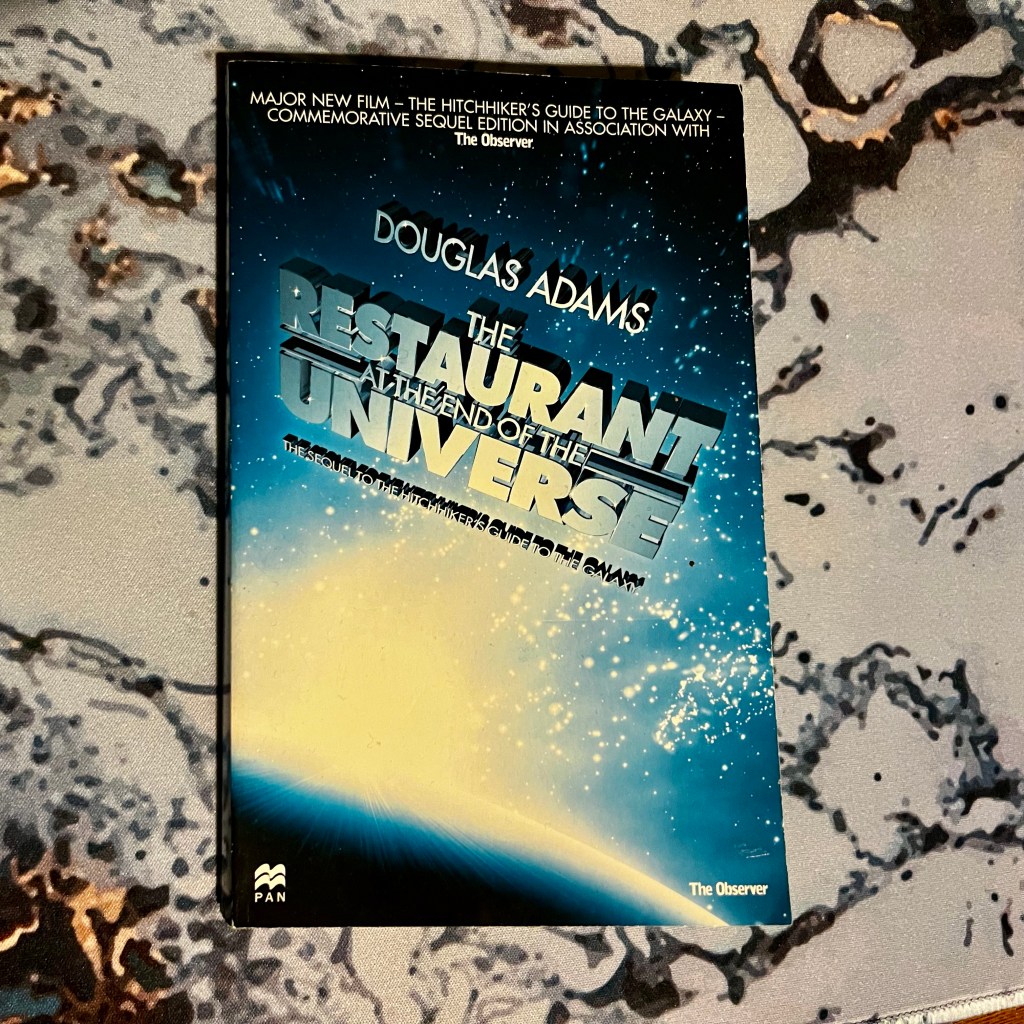
    Book Review: The Restaurant at the End of the Universe

    The Restaurant at the End of the Universe by Douglas Adams is full of the same zany, unpredictable storytelling that made The Hitchhiker’s Guide to the Galaxy such a hit. 

    What I love most about this book is how the book jumps from one impossible situation to another. I had no idea where the story was going to go, and neither did the characters. This is made possible by the technology within Adams’ universe, whether it be teleportation, time travel, or reality manipulation. I think the thing that makes it work as a narrative device is that the stupid, unpredictable situation the characters find themselves in always makes things harder, or worse; they might be rescued from one situation, but find themselves jumping out of the frying pan into the fire. This makes it really effective storytelling.

    I think the character work wasn’t as strong as the preceding novel. Marvin remains one of the best characters in modern literature, and I really enjoyed having large chunks of the story told from Zaphod’s perspective. His journey to meet the ruler of the universe revealed some great backstory. But Arthur, Ford, and Trillian’s storylines were undeveloped and not quite as interesting by comparison.

    The ending was a little flat for me, as well. Zaphod finally meets the ruler of the universe and, [SPOILERS], it turns out he doesn’t have any idea that he’s making decisions that impact the entire universe (a universe the ruler isn’t sure exists). I get the joke Adams is making, but the execution, especially how quickly Zarniworp becomes frustrated, didn’t hit for me. Similarly, Arthur and Ford wandering around prehistoric Earth was a bit of a drag. That said, the revelation of the Ultimate Question was exactly the kind of comic deflation that worked really well.

    I’ve been reading a lot of Terry Pratchett and Douglas Adams recently. I’m still at the starting point of my journey through their respective universes, but I’m finding myself preferring Adams’ humour and writing style at the moment (though don’t get my wrong, both are fantastic). Where Pratchett sometimes breaks the fourth wall with references to our world, Adams creates alien societies that mirror our own absurdities without winking directly at the reader. This makes the satire feel more integrated and immersive.

    So, onwards I journey! Next stop: Life, the Universe and Everything.

  • Book Review: Mort

    Book Review: Mort

    I’m about five or six books into Discworld as a series now, and so I’ve seen Death appear as a minor character a few times. But I was very intrigued to read Mort, which sees the whole story revolve around Death and the titular character, his new apprentice.

    Death wants a holiday, wants to explore his other interests, find out what it means to be alive… and who better to take over his work than a gangly farm boy that no one else wanted as their apprentice?

    Death and Mort act as counterpoints to each other. In his time away from his ‘work’, Death struggles with humanity (trying to get drunk, not really getting why people fear him—except cats, that is). 

    Mort, on the other hand, grapples with the weight of having to sever peoples’ souls from their earthly bodies, and the apparent lack of justice when they die (because, in the end, people go where they believe they’re going to go). 

    They both go through steady arcs, with Death finding peace as a chef, and Mort becoming less bumbling and more able to take on the powers of the job, even as he questions his duty.

    One of the things I loved most was the conceptualisation of time. The instigating moment for the plot was Mort’s refusal to take Princess Keli’s soul, which created an inflection point in time. She should have died, and history carries on as if she did, and eventually it all tries to self-correct. It’s clever writing and creates a set-up where the reader isn’t sure how it’s going to be resolved.

    I found the supporting cast to be hit or miss, though. I liked Ysabel and her relationship with Mort, and how it goes from antagonistic to friendship over time. Albert is an excellent character, especially when his mysterious past is unveiled. But I wasn’t so sure about Cutwell—I’m not sure if he was supposed to be annoying and off-putting, but I wasn’t really keen on him!

    This is a really interesting and unusual fantasy book showing how Pratchett continued to have a unique take on the genre. Like I said, I’m five or six books in, and none of them have really felt the same.

  • Book Review: The Light Fantastic

    Book Review: The Light Fantastic

    The Light Fantastic is a strange, unpredictable book that is subject to its own whims and internal logic.

    So, essentially, exactly what you’d expect from a Terry Pratchett novel.

    It follows on from The Colour of Magic, though with more confidence in the narrative and voice. It overcomes some of the structural hiccups of the previous book, and its full of the beautiful, absurdist humour that we all love about Pratchett. We follow Rincewind and Twoflower as they continue their journey through Discworld on a mission to save it from certain doom.

    There are some really memorable scenes in this book. The computer created by the druids is wonderfully funny (and another great example of Pratchettian satire), as is Rincewind’s voyage into Death’s home to rescue the unperturbed Twoflower. The latter parts of the book, with mobs of increasingly erratic inhabitants of the soon-to-be-destroyed world, are both gripping and hilarious.

    The characters themselves are the heart of the novel. Rincewind and Twoflower are, of course, central, and their opposites-attract-style relationship is timeless. But others, notably Cohen the Barbarian, steal the show. Of Pratchett’s gentle parody at the expense of fantasy tropes, this is one of my favourites.

    At the same time, the plot builds in that uniquely Pratchett way, with a blend of absurdity and genuine stakes. And the ending is surprisingly touching and unexpected, and feels like a natural conclusion to this part of Rincewind’s adventure.

    If you’re looking for a natural entry point to Pratchett’s world, you could do worse than reading The Light Fantastic.

  • Book Review: Make Room! Make Room!

    Book Review: Make Room! Make Room!

    I was gifted Harry Harrison’s 1966 dystopian novel Make Room! Make Room! for my birthday and I wasn’t sure what to expect. I knew it was the basis for Soylent Green (a film I knew the plot of but haven’t seen), but that was about it. It’s set in a future was millions of people are crammed together in small cities and, like many dystopian stories from the 60s, it’s eerily prescient, while at the same time despite its accurate predictions, things haven’t become as bad as the book expected. (We’ve already passed the population levels that Harrison predicted would lead to some kind of apocalypse.)

    The worldbuilding is where the book really shines. The author explores how welfare policies actually make overpopulation worse, and how religious attitudes get weaponised to prevent birth control, which is clever social commentary. I found myself thinking about our own political debates while reading, which shows how relevant the book remains.

    The characters fit well in the world, my favourite of which is Sol, an older man whom the protagonist shares an apartment with. He has a great story arc, transforming from someone just trying to get by to a genuine radical. The author also does a good job of showing how the system forces characters like Andy (the protagonist) and Tab (the bodyguard of the protagonist’s love interest) into jobs where they hurt people they care about. 

    While the worldbuilding and social commentary works well, Make Room! is let down by its plot. There is a detective story moving things forward but, unlike Asimov’s Robots series where the mystery format actually explores the sci-fi concepts, Harrison’s storyline felt completely disconnected from everything interesting about his world. There was a missed opportunity to explore, for example, how law enforcement works in an overcrowded world. 

    And while the social issues and overcrowding remain relevant, Harrison doesn’t find an alternative vision for how gender works (e.g., in the same way that authors like Le Guin or Heinlein have). Shirl and other female characters exist mainly as domestic workers or objects, not really as full participants. And in a way that didn’t quite feel like part of the social commentary. 

    So if you’re interested in dystopian fiction or want to understand 1960s anxieties about population and environment, it’s definitely worth reading. Just don’t expect the plot to be as compelling as the world Harrison builds around it.

  • Book Review: Shadow of the Gods

    Book Review: Shadow of the Gods

    I’m not sure I was ready to read Shadow of the Gods… It is a brutal, violent dark fantasy. The start of John Gwynne’s Bloodsworn Saga, it journeys through three different perspectives, with characters traversing a world left bloody and divided in the wake of fallen gods.

    The combat sequences are visceral and expertly crafted. Every fight scene is choreographed with brutal precision, from the intimate duels to the massive battles, each one weighted with consequence. The gore—gore that I was not fully prepared for—raises the stakes and makes every confrontation feel genuinely dangerous.

    I had some issues with the three different perspectives. They had strong thematic coherence—overall, Shadow of the Gods is an intertwined story of family bonds and revenge. But I found Orka and Varg’s storylines to be much more interesting, and the characters more compelling, than Elvar’s. It put me in that uncomfortable position where (and I don’t like feeling this) I felt I was waiting for her parts to be over so I could go back to the other perspectives. It’s only in the final act that Elvar’s storyline finally started to engage me.

    What I loved was the worldbuilding. It is built on the same mythological foundation as Skyrim, and that gave me a certain sense of nostalgia. The echo of the dead gods and the impact it has on the characters (in particular the ‘tainted’) drives the story, making it feel truly epic in scope. The magic system integrates well into this world, providing moments of genuine wonder and power.

    On balance, the atmosphere and immersive worldbuilding overcome what I personally felt were structural weaknesses in combining the different storylines. But I admit that I may be in the minority in feeling this. And I certainly feel driven to keep going with the series!

  • Book Review: Equal Rites

    Book Review: Equal Rites

    Terry Pratchett’s Equal Rites is a fun blend of fantasy and social commentary. It is told through the story of Eskarina Smith (known as Esk), a girl who accidentally inherits wizard magic in a world that insists women can only be witches.

    The characters are the book’s greatest strength. Esk is wonderfully ambitious, relentlessly driving the story forward with her determination to become a wizard. Granny Weatherwax is magnificently assertive and dominant—a true force of nature. Even Simon, the awkward young wizard, is delightfully written with genuine charm. All three develop beautifully throughout the story, their growth feeling organic rather than forced.

    Pratchett’s magic system lavishes the world with superb chaotic energy. The way magic literally seeks to escape from books, how the very walls of the Unseen University absorb magical energy and gain sentience—these details create a world where magic feels truly wild and dangerous… and real! The characters must navigate not just social obstacles but a fundamentally unstable magical environment that adds genuine tension to their journey.

    Perhaps most fascinating is Pratchett’s exploration of competing magical philosophies. Witch magic—practical, intuitive, and grounded in real-world problems—stands in sharp contrast to wizard magic, which is academic, hierarchical, and theoretical. This isn’t just for flavour; the genuine debates about different ways of knowing and learning that arise form a core part of the plot.

    Building on this, the satire of Unseen University spears traditional academic establishments everywhere (as someone who has worked in that environment, you can recognise some of the characters!). Pratchett sets focus on the politics, traditions, and resistance to change that plague many institutions. Indeed, there is an inherent contradiction between the University’s self-importance and its actual dysfunction that encapsulates the book’s themes.

    The story itself succeeds despite—or perhaps because of—its straightforward allegory. Yes, the gender dynamics critique is fairly obvious and somewhat on the nose, but Pratchett grounds it in genuine character motivations and real stakes. And to this day it remains eminently readable and relatable.

  • Book Review: Tress of the Emerald Sea

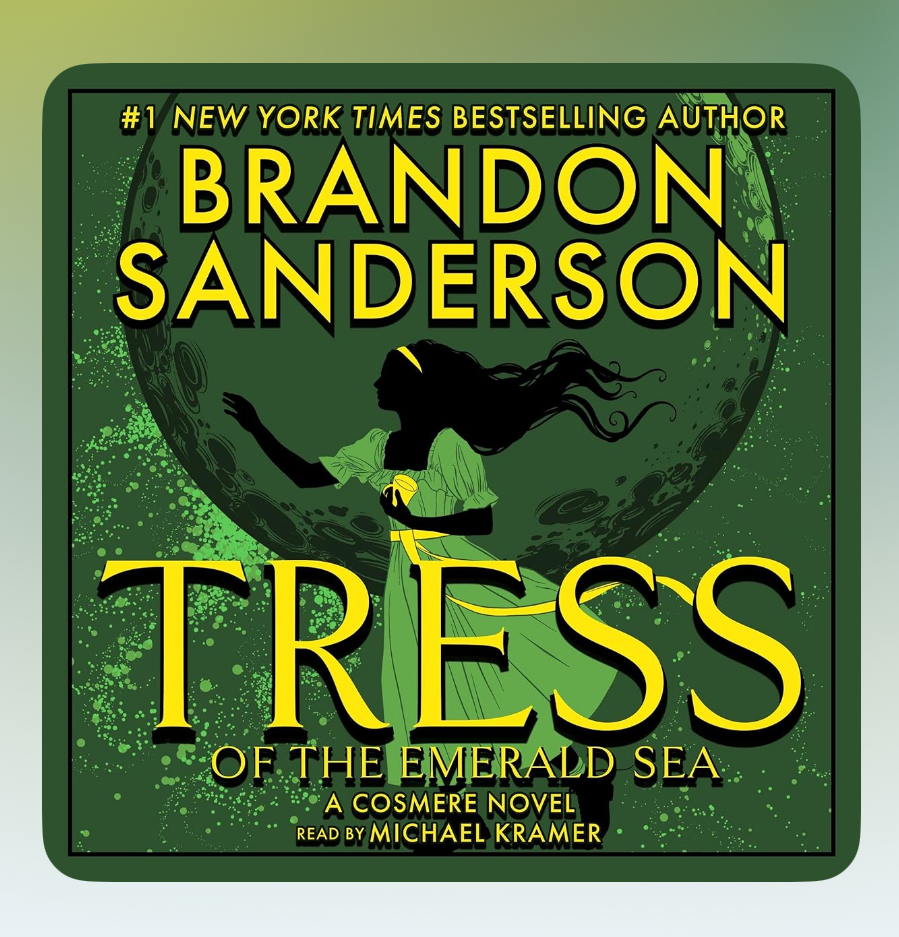
    Book Review: Tress of the Emerald Sea

    Tress of the Emerald Sea is a wonderful, layered adventure that evolves as the priorities of Tress, our main character, ebb and shift. Tress is a young girl from a barely habitable rock, surrounded by a sea of spores that turn into vines when they touch water. Her friend and love interest, Charlie, the son of the island’s Duke, is sent to the island of the King to be married. When he makes himself completely undesirable, the King sends him to the Midnight Sea (another of several spore seas, each with their own distinct properties) where he is captured by the fearsome Sorceress. 

    Tress, when she finds out, sets off on a grand adventure to save him. On the way, she becomes part of a pirate crew, driven by the fearsome Captain Crow, and meets Fort, Ann, and Salay, as well as Hoid, a world-hopping character of the wider Cosmere who is cursed by the Sorceress. As Tress seeks Charlie, she becomes embroiled in a conflict between the crew and their captain. This multi-tiered adventure keeps the story fresh and engaging. Of the people Tress meets, Ulaam in particular stands out as a delightful character whose presence brings fun and unpredictability to his scenes. An ear on your arm, anyone?

    One of the key strengths of the novel is how its conflicts are solved through different means. Some through combat, sure, but also through wit and quick-thinking. These keep the tension high in the right places, and show Sanderson’s skill in crafting a variety of situations and solutions for his characters. I am a massive fan of different ways of solving problems beyond force—the scene with Xixis the dragon was my favourite—so this scratched a real itch for me.

    The world building, as one would expect of Sanderson, is top-tier. The spores and how they function are cool and varied, and the way they are built into the story is very satisfying. Likewise, the narrative voice, provided by the cursed Hoid (who is rendered to something of a ‘village idiot’ with no fashion sense), connects the novel to the broader Cosmere. Hoid is witty and fun, and this keeps the narrative light. It is also refreshing to have the story told by a third party who is able to comment personally on what is happening without being the centre of the story. I did find some of Hoid’s observations to disrupt the immersion in places—e.g., the reference to ‘laptops’ being a key one. I get that this is supposed to broaden out the links to the world beyond, but, as someone unfamiliar with the rest of the universe, I found it a little jarring.

    Also, Tress’s character development, while clearly central to the story, does sometimes suffer from exposition that I found a little heavy-handed. There are moments when the narrative explicitly states that Tress is changing or growing, even when I think readers can see these changes organically. It’s a little unnecessary and on-the-nose. And, lastly—SPOILERS—certain plot elements create minor inconsistencies that detract from the otherwise cohesive world. For example, the Sorceress has inhabited the planet for years and possesses advanced knowledge of technology that Tress is only beginning to develop. When Tress offers to trade this technology, the Sorceress dismisses it—yet later, her guards are defeated by this very same technology. This inconsistency feels like an oversight that somewhat weakens the internal logic of the story.

    Regardless of some minor flaws, Tress of the Emerald Sea is an easygoing, refreshing sci-fi/fantasy adventure with a cast of loveable characters. The story is accessible and easy to follow, is told with humour, and sits against a well-fleshed-out and intriguing world. It gets a big ‘recommend’ from me!

  • Book Review: The Great Gatsby and Brideshead Revisited

    Book Review: The Great Gatsby and Brideshead Revisited

    I’ve just finished reading The Great Gatsby for the first time, and yes, I can see why it’s become a classic of American literature. The underlying themes, the gradual reveal of the Gatsby’s elusive past, the inevitable tragedy, are subtle and enduring. It reminded me of Brideshead Revisited in a way. The tragic nature of wealth, the decay beneath all that glitz and glamour—Gatsby is to American literature what Brideshead is to English.

    Both are narrated by outside observers, Nick Carraway (Gatsby) and Charles Ryder (Brideshead). And both of these men are drawn into the world of wealth from modest backgrounds, and both are simultaneously invested and detached in what they see. Nick establishes a relationship with Jordan Baker, a socialite part of Gatsby’s world, and Charles with Julia, the sister of Sebastian Flyte. And both watch as Gatsby and Sebastian struggle through their personal issues.

    Those observed are haunted in their own way by their past. Gatsby is obsessed with Daisy Buchanan, while Sebastian and his family are consumed by their heritage, the death of the English nobility and struggling Catholic traditions. And Gatsby and Sebastian’s family are both eventually consumed—Gatsby is killed following the attempted renewal of his relationship with Daisy, and Sebastian descends into alcoholism.

    But there are, of course, key differences. Brideshead’s driving theme is the Catholic religion and English aristocracy; Gatsby’s is the American Dream, a quasi-religion in itself, I suppose, and chased with similar fervour. Fitzgerald critiques a particular form of social mobility and how it can be achieved, and amidst this the hidden classes that define American society, while Waugh explores, with nostalgia, the decline of English nobility, its relationship to faith, education, and tradition. Significantly, wealth, for Gatsby, comes from questionable means, and for the Flytes, wealth is inherited and comes with its own obligations. But, of course, wealth ends up destroying them both, and the people they love.

    Do these differences reveal the contrasting nature of English and American societies? Or do they simply represent the differing perspectives of their authors on the nature of wealth and status? There’s something of both, clearly, in this. But regardless, both are significant reads.