Tag: adventure

  • Flash Fiction: A Vision of What Might Have Been

    Flash Fiction: A Vision of What Might Have Been

    There wasn’t always a castle on the hill. The seed was planted many years ago. A warc carried a stone, a vision of what might have been, and buried it six inches below the surface of the earth.

    The warc covered it with loose soil, its gritted, gnarled hands clawing desperately at the ground.

    A vision of what might have been.

    The castle grew over time, stones assembling themselves piece by piece, year on year. The locals in the village below watched with curiosity, waking every morning to see it risen slightly higher. None ever saw the workman. They went to bed and woke each morning feeling just a little safer.

    It was just what the warc had wanted. A gift for the village, unsolicited, but earned.

    The warc stepped backwards through time. The journey is linear, and to a creature that appears more branch and moss than flesh and bone, it is the correct and only direction.

    So to see what might have been is, for a warc, to see and anticipate the future.

    And the walk backwards, step by step, is, for those whose feet go against that flow, to see the future with utmost clarity.

    The villagers did not survive the strangers, who arrived one night carrying torches and flame, and put to waste thatch roofs and wooden walls. They took with them wheat and mutton and stores of fresh water. And carried on their quest.

    It was an important quest, of that they were certain, but the details matter not. To the villagers, the quest meant nothing; and yet they perished at its hand, and valiantly. They fought against the tide, with pitchforks and sharpened poles, but to no avail. They were swept out to a starless sea.

    The warc watched, and was moved by what it saw. And so it vowed to reward the villagers for their bravery. A stone was fashioned such that it would bless the village with strength and fortitude. A place for them to retreat.

    And so it was that the stone was planted.

    And, so it was, that a hundred years hence, in the deep past of the warc’s journey, as time flowed back against the grain of its footprints, the villagers retreated to the walls of this castle at the first sign of flame.

    And the thatch roofs burned, and the wheat and mutton was taken, but the villagers, brave as they were in that vision of what might have been, lived long enough to rebuild their homes and replenish their stocks.

    And they cursed the strangers who rode through their lands. But they knew not the vision of what might have been, for to them the castle had always been there, a steadfast relic of generations gone.

  • Book Review: The Dungeon Anarchist’s Cookbook

    Book Review: The Dungeon Anarchist’s Cookbook

    Downward to floor four! We join Carl, Princess Donut, and Katia in the Iron Tangle, an impossible and complicated subway system with thousands of intersecting railway lines. It’s like someone based it on a bowl of spaghetti they dropped on the floor. The routes are a claustrophobic mess, and the trains are, of course, full of monsters.

    Each book in this series finds a new way to frame the dungeon, and the Iron Tangle is one of Dinniman’s more ambitious settings. It’s also not my favourite. There’s an inherent constraint to a train-based floor that the previous book’s more open, expansive world didn’t have. It doesn’t give the characters as much room to manoeuvre.

    That said, this is an enjoyable read. The plot unfolds at a steady pace, with exciting set pieces and a central mystery that gradually reveals itself. In particular, we have ominous revelations about the Krakaren that feel like pieces of something much larger clicking into place. Of all the monsters, the mantaurs are a highlight. They’re physically odd, but it’s their Viking-esque obsession with dying gloriously in battle that gives them a layer of dark humour that stuck out to me.

    The titular cookbook is a clever device. Past crawlers passing their hard-won wisdom to Carl adds depth and intrigue. The talk show epilogues continue to be one of the series’ most distinctive features. They offer a way of stepping back from the dungeon action to reflect on what’s happened and seed what’s coming. It may feel like a bit exposition heavy to some, but it works for me.

    The characters remain the central draw to this series. A highlight here is Katia. Her doppelganger ability to reshape her body leads to some memorably creative (and gory) problem solving. It’s her stint as a makeshift cowcatcher on the front of a train that stands out. It’s just the right blend of seriousness and absurdity. The only shame is that Mordecai disappears for most of the book!

    The previous book has been my favourite of the series so far, but The Dungeon Anarchist’s Cookbook remains an entertaining instalment that keeps the larger story moving in an intriguing direction. Onwards to the next floor!

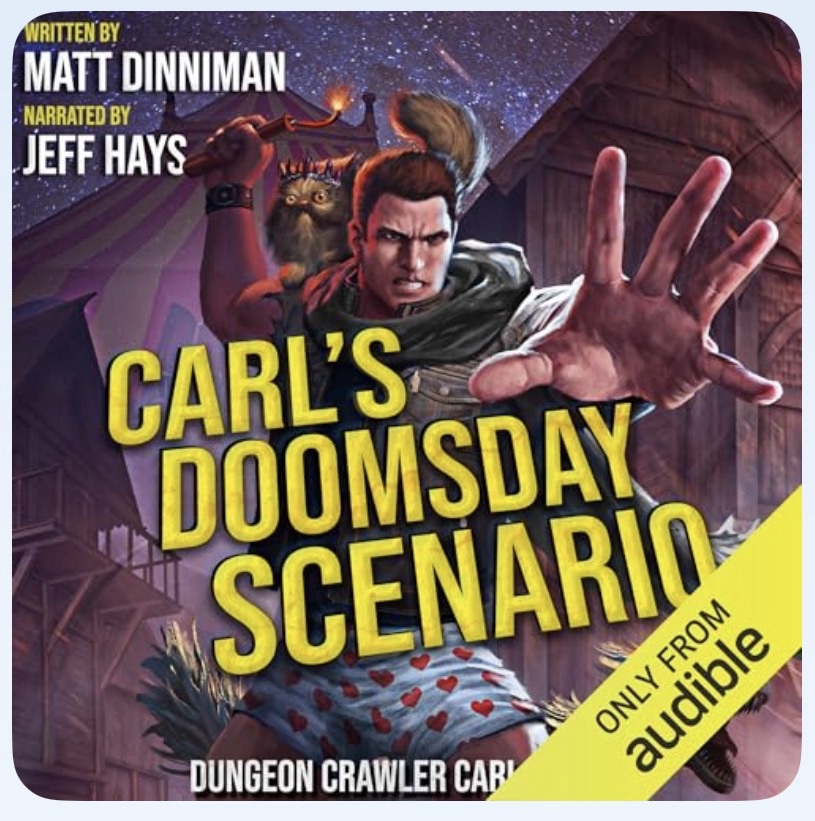
  • Book Review: Carl’s Doomsday Scenario

    Book Review: Carl’s Doomsday Scenario

    And down we go to floor three with Carl and Princess Donut! This is where things get real…

    This is a great follow-up to Dungeon Crawler Carl that picks up right where we left off from book one. Earth has collapsed into an intergalactic dungeon crawl set up by extraterrestrial companies as part of some universe-wide capitalist hellscape.

    Safe to say, things are more dangerous, and just a tad complicated.

    If the first book was about establishing a world and proving its concept, Carl’s Doomsday Scenario is about deepening it. Dinniman writes well and with confidence, with characters you can’t help but fall deeper in love with.

    The heart of this book is the quest system. On floor three, crawlers have the option to engage in quests, which serve a quirky soap opera style addition to the crawl. NPCs have scripted storylines that run parallel to the activities of crawlers. This adds a new dimension to the world.

    As a narrative device, quests become a vehicle for exploring Carl’s empathy and fundamental decency. We see that his instinct, even in a system designed to brutalise, is to help people. And it’s through these moments that we get a window into Carl’s character. We get glimpses into his background and upbringing, which hints at something being built here for later in the series.

    Mongo, the velociraptor introduced at the tail end of book one, gets significantly more page time here, and I’m down for every minute. The creature brings out a new side to Princess Donut, a kind of maternal streak that adds warmth and depth. Mordecai, too, continues to grow into one of the most enjoyable characters in the series, with his wise and world-weary demeanor.

    The action is more intense and considerably gorier than the first book. Think Fallout’s VATS system with the gore setting turned on. Safe to say, Dinniman doesn’t hold back! But it’s not just all guns blazing action; solutions to problems feel creative, and give the book the same air of freedom you get when playing dungeons and dragons, where solutions are logical but often unexpected.

    The wider universe continues to expand in interesting ways too. The politics beyond the dungeon get murkier and more compelling, and the sense that Carl and Donut are pieces in a much larger game is growing.

    Carl’s Doomsday Scenario is an excellent sequel. It gives you what you loved from book one while raising the stakes and bringing in new elements. All the while, it still feels like the best is yet to come!

  • Book Review: Dungeon Crawler Carl

    Book Review: Dungeon Crawler Carl

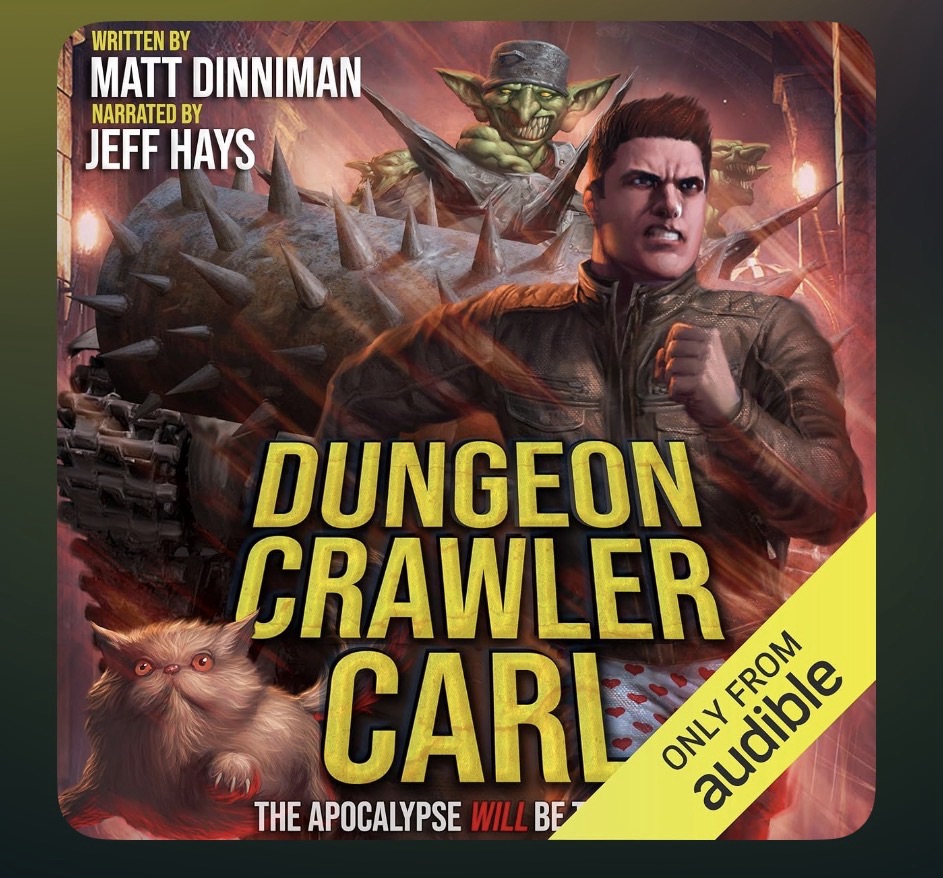
    Carl is a former member of the Coast Guard who, along with Princess Donut (his ex-girlfriend’s cat) survives the rather sudden transformation of Earth into an eighteen-level dungeon. And it turns out it’s not just a dungeon; it’s an intergalactic reality TV show!

    Let’s get something out of the way. Yes, this book is worth the hype. Yes, if you like sci fi and fantasy with heart and humour, you’ll probably like Dungeon Crawler Carl. The book is a heady blend of Hitchhiker’s Guide to the Galaxy, The Hunger Games, and Dungeons & Dragons. The humour is irreverent and at times absurd, but the story has heart and emotional weight.

    For a start, it’s well written. Dinniman does the basics well. Details introduced early in the story reappear later with satisfying pay off. The dungeon is well-designed, with cool mechanics and layout. And there’s a vast world outside the dungeon that’s strongly hinted at. It has depth in its politics, corporations, and inhabitants, all of which feel richly conceived. The use of TV talk shows as a device for revealing what’s happening beyond the dungeon walls works really well as a technique.

    The characters are brilliant. Carl and Princess Donut are both excellent. They’re funny and loveable, and their dynamic carries the book when the stakes are both low and high.

    And I don’t normally comment on the medium of my book consumption, but I feel a special mention is needed for the audiobook, which is very well produced. Jeff Hays’ narration adds texture and personality to the story, and in many ways elevates and adds to the experience.

    So, yes, I recommend this. At the time of writing this review, I’m already on book 3… which probably tells you all you need to know!

  • Flash Fiction: The Tomb and the Broom

    Flash Fiction: The Tomb and the Broom

    I entered the tomb.

    In the room of the tomb was a broom.

    The broom was sweeping the floor.

    The floor was poor.

    The flaw of the floor was its scores of doors.

    They were trap doors, of course.

    Not traps for rats or cats, but traps hidden under mats.

    I lifted a trap and found stairs.

    Stairs to where, I did not care.

    Descending the stairs, I entered a lair.

    I said a silent prayer.

    For in the lair was the mayor.

    The hair of the mayor was fair, his stare austere.

    What he said as he turned his head filled me with dread.

    He said, ‘Hi, I’m Fred. And I’m dead.’

    Dead Fred led me to a shed, that he said contained a bed.

    In the bed was Ted.

    So he said.

    But Ted had fled the bed and in his stead was Theodore.

    It was Theodore under the door in the floor, in Fred’s bed where Ted was led, in the lair of the mayor, oh so austere.

    It was not what I thought I would find.

    Not that I ought to mind.

    For I entered the tomb and looked through the gloom for a magical broom that could sweep a whole room.

  • Book Review: Off to Be the Wizard

    Book Review: Off to Be the Wizard

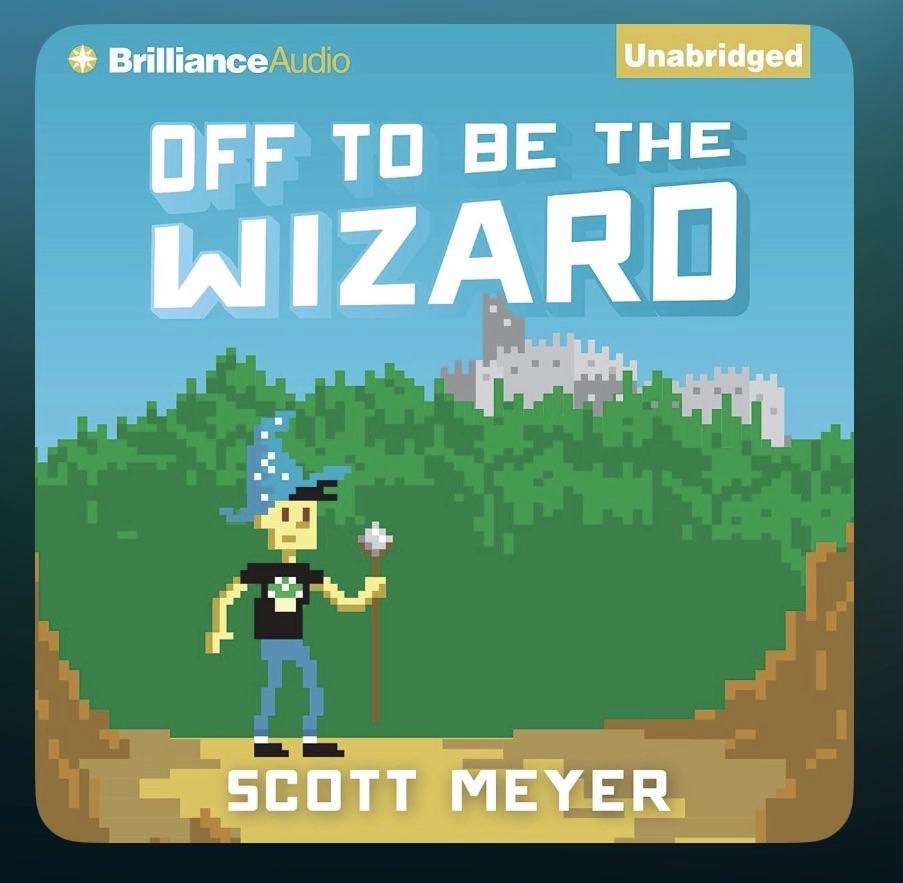
    Martin Banks is an unremarkable young man until he discovers something extraordinary: a file that appears to contain the source code of reality itself! Naturally, he does what you or I might do; he uses it to give himself more money. When this attracts the wrong kind of attention, he takes the next logical step and flees to medieval England to live as a wizard. Here he meets Philip and a host of other men from the future who all had a similar backstory.

    Off to Be the Wizard is a lot of fun. Meyer keeps the time travel logic deliberately light rather than getting bogged down too much in the mechanics. This is, at its heart, a comedy adventure, and Meyer, to the benefit of the story, keeps things moving.

    Scattered throughout are some lighthearted nods to nerd culture, with references that make sense for the characters and the book. It also handles its notably male-dominated world pretty well, wherein women who discover the file are redirected to Atlantis rather than staying in the ‘historical’ past. This is a neat solution that acknowledges the uncomfortable reality that women practising magic has rarely ended well across history.

    But what impressed me most is how Meyer smuggles in some genuinely weighty themes, such as free will versus determinism and nihilism, without ever losing the lighthearted energy that makes the book so enjoyable. The plot structure also makes this feel earned. The early sections focus on Martin finding his feet among the wizards, but there are hints placed carefully along the way that build toward something darker. By the time the real conflict emerges, Martin’s growth feels genuine and purposeful.

    The characters are brilliant, all memorable and (mostly) likeable, even comic book-style villain Jimmy, and the comedic moments land well. Off to Be the Wizard is a very enjoyable read and it gets a hearty recommend from me!

  • Book Review: The Lies of Locke Lamora

    Book Review: The Lies of Locke Lamora

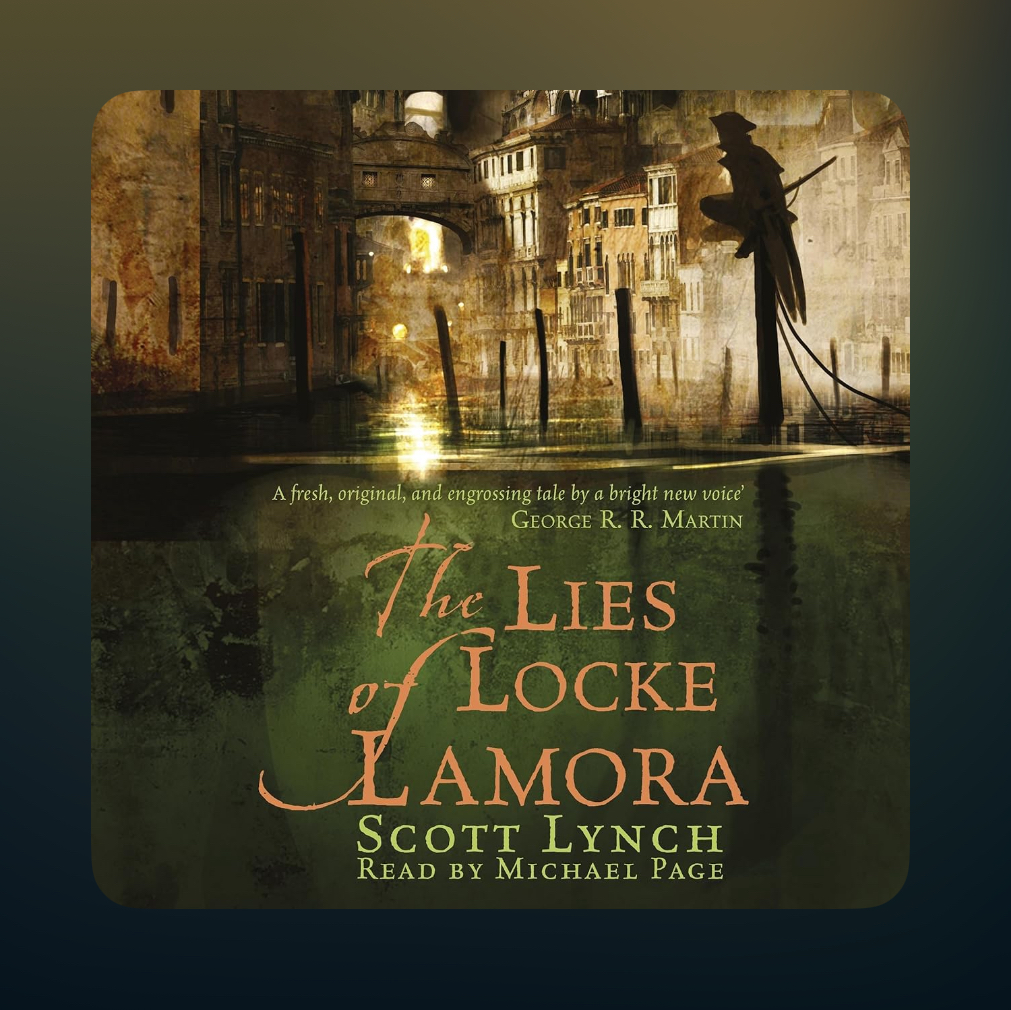
    Scott Lynch’s debut fantasy novel, The Lies of Locke Lamora, features an elaborate heist set in a beautifully realised seventeeth-century-inspired world.

    Honestly, it hit me in the same way that The Name of the Wind did. We have a physically unimpressive protagonist who makes up for a lack of brawn with guile and pure cunning. Locke Lamora is endearing in the same way the Kvothe is. He executes elaborate cons and talks his way out of deadly situations. He fits the rogue archetype to a tee. And Jean is an excellent companion (and Jean brings the physicality that Locke lacks). He’s not a simpleton or a yes-man in the way that some ‘brawler’ characters can be. He feels well defined in his own right. Above all, their friendship feels genuine and lived in. It’s easy to care about them.

    As fantasy heists go, the plot is near perfect. It’s well structured and escalates in just the right way. Just as you think you have a handle on what’s going on, something else happens and it all spirals into some bigger and more dangerous; the stakes are raised organically and plausibly at each turn. And they’re raised in ways I couldn’t see coming. There’s also backstory interwoven throughout (the kind of backstory that again reminded me of The Name of the Wind, albeit delivered in a different way). Information important to the present moment is delivered via these backstories, keeping them timely and relevant.

    The worldbuilding is immersive without being overwhelming. None of the protagonists are magic, but they encounter others who are—and so Lynch has to create problems that are challenging for the protagonists, whilst giving them scope to overcome them. I think he strikes the right balance between power and limitation, and the rules are clear enough for some satisfying loopholes to be exploited without feeling contrived.

    It’s not without its flaws. There’s hints at a romantic subplot that never quite develops. And [MODERATE SPOILERS] Locke’s heroic turn at the climax didn’t feel completely earned. I understand the choices made, but I didn’t fully buy it. There were also some stretches where plot threads were left unattended, as other parts of the plot moved forward. 

    But these complaints are relatively minor. I was entertained enough by the characters, the dialogue, and the rich world. It has enough clever problem solving and good character work to scratch the same itch as The Name of the Wind.

  • Book Review: The Siren’s Call

    Book Review: The Siren’s Call

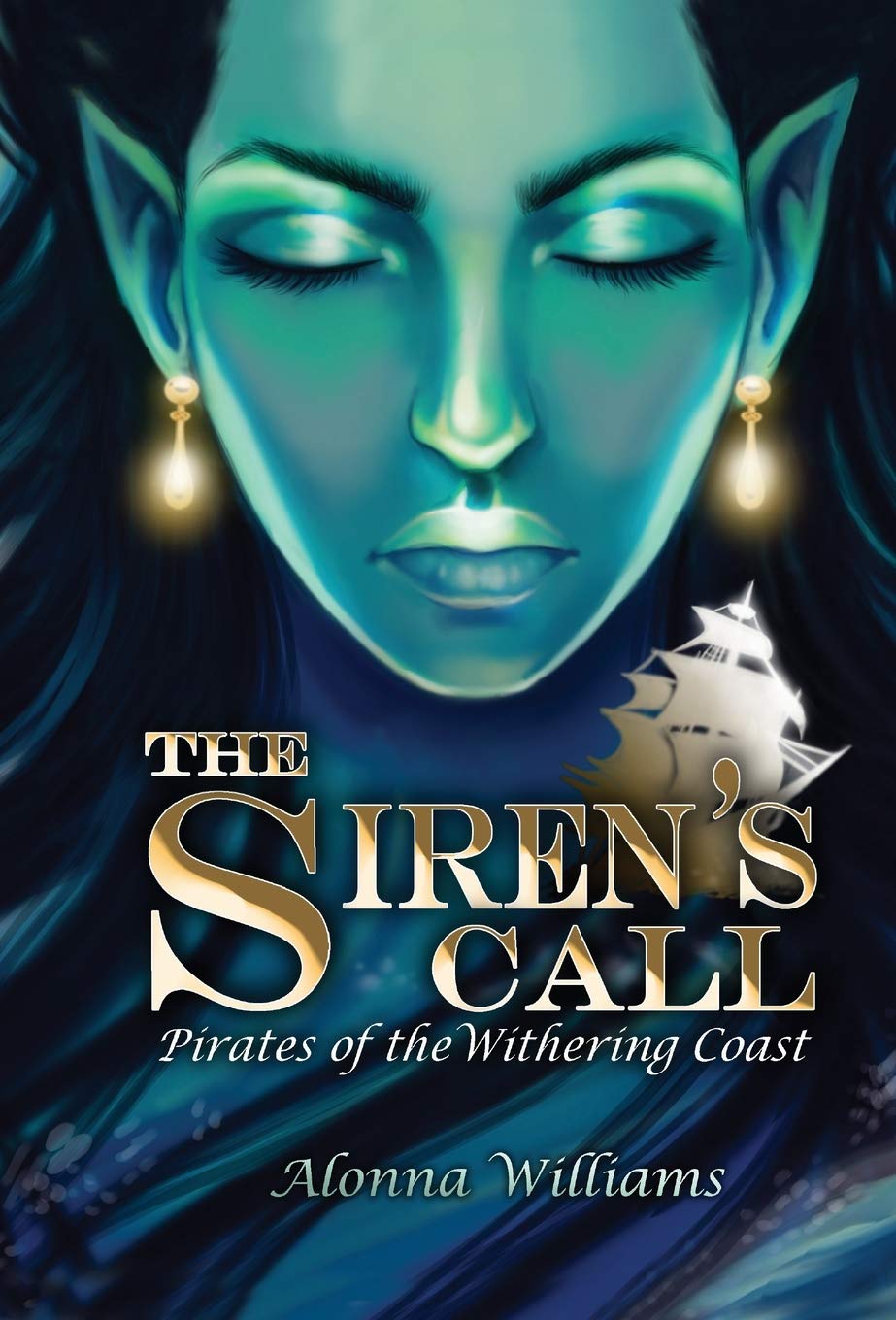
    Have you ever woken up one morning to find your hair has turned long and luscious, and your ears pointed? If so, you just might be a siren! This is the fate that befalls Trevor when he starts to go through the equivalent of siren puberty in The Siren’s Call, which leads him on a perilous journey of self discovery and adventure.

    There is much to love about this charming novel. It is rich in carefully crafted maritime mythology, drawing on a range of Atlantic and Mediterranean influences. The world the sirens and other mercreatures inhabit is beautiful and expansive, and we get the pleasure of exploring it more as the story unfolds. The pacing is pleasant, and there are some likeable and engaging characters—Nicholas in particular I found to be interesting. Bloo is another, who has a distinctive and charming pattern of speech.

    That said, the reader might be overwhelmed by just how many characters there are. There are a couple of large families, human and siren, plus a couple of friendship groups we meet along the way. The geography is also a little confusing at the start. The initial setting is late eighteenth century Manchester, UK, though there are frequent movements between the city and the sea.

    Nevertheless, this is a compelling and creative work full of mystery and excitement that it is easy to get drawn into. I love the world, and I am eager to explore the author’s other novels to find out more about it!